
Canadian peaches have a short season and a clear price pattern: prices are typically most competitive during the peak of the domestic crop in August, when supply of Ontario’s Niagara region and BC’s Okanagan peaches are both in at their highest. Outside of that window, fresh peaches at Canadian grocery stores are imported, primarily from the United States and South America, and are available year-round at a different price point.
This matters to shoppers in two practical ways. First, buying in quantity during peak Canadian season and freezing the surplus is one of the most effective ways to extend a seasonal product at good value into the colder months. Second, knowing the difference between a Canadian peach in August and an imported peach in January helps set realistic expectations for price and eating quality across the year.
For the full seasonal picture, see What’s in Season? Peaches.




When Are Peaches Cheapest in Canada?
Peach pricing is directional: the domestic season, particularly when both Niagara and Okanagan crops are at their peak in late July and August, typically brings more competitive prices at grocery stores on Canadian-grown product. The price advantage is not always dramatic, unlike some produce where domestic season represents a steep discount. The combination of better price and significantly better eating quality makes this the optimal window to buy fresh peaches.
Look for “Product of Canada” on packaged peaches at the grocery store to identify Canadian-grown product during the season.
Prices vary by retailer, region, and week. For Ontario shoppers, Foodland Ontario’s availability guide is a good reference for when Ontario produce is expected to peak. For BC shoppers, BC fresh peach supply is heaviest in August.
Where to Buy Canadian Peaches for the Best Value
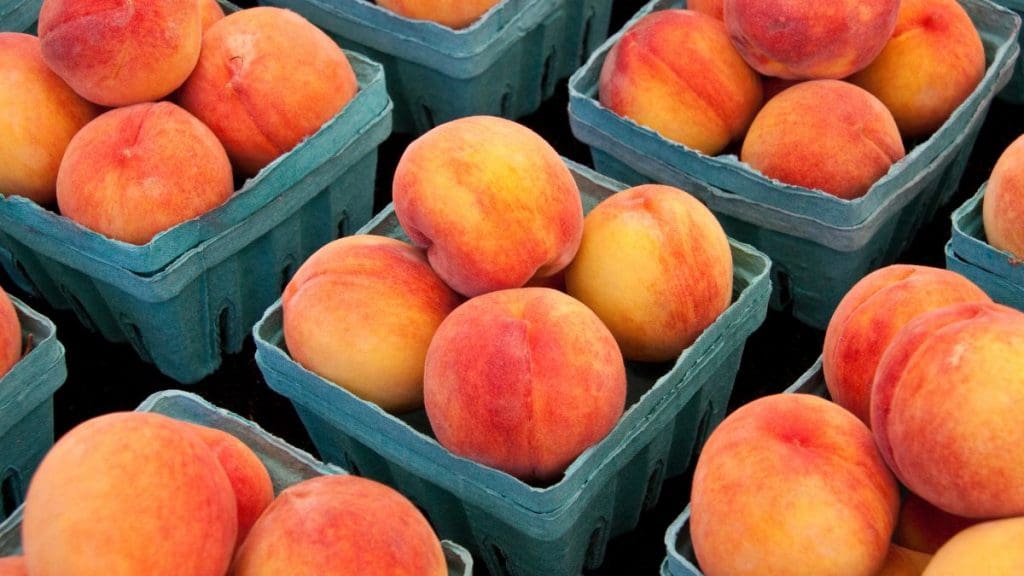
Farm stands and U-pick orchards (highest value): Buying directly from a grower in the Niagara region of Ontario or the Okanagan of BC during peak season typically offers the best combination of price, freshness, and eating quality. Farm stands often sell peaches by the basket or flat (a flat is typically about 11 kilograms), which brings the per-kilogram price down relative to grocery store pricing and makes bulk purchase for freezing practical.
U-pick peach operations exist in both regions and are worth checking for in season. You pay for the time, but the per-kilogram price can be very competitive and the freshness is immediate.
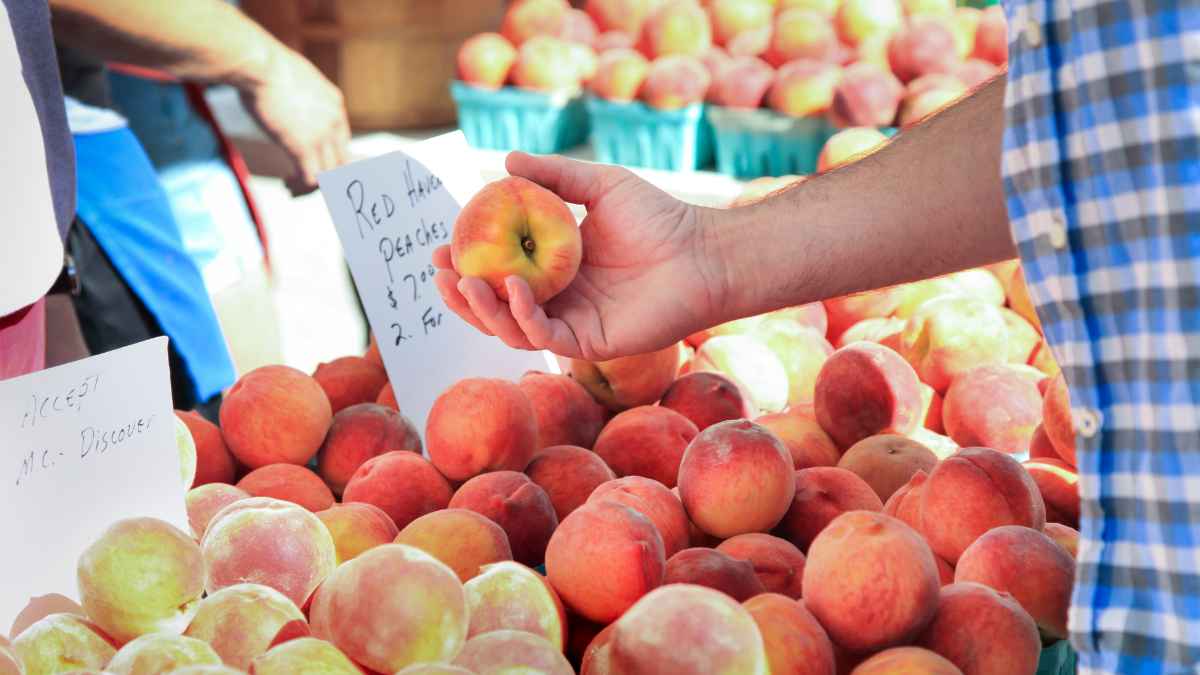
Farmers markets: A practical urban option for buying directly from growers during the season. Prices at farmers markets are often similar to or slightly above farm stand pricing, reflecting transport and market fees, but the quality advantage over cold-chain grocery store peaches during peak season is significant.
Grocery stores: Most accessible for most Canadian shoppers. Look for Canadian-grown peaches in August and check for the “Product of Canada” label. Loss-leader pricing on peaches appears occasionally during peak season; check flyers in July and August for competitive pricing.
Buy in Bulk and Freeze: The Core Peach Budget Strategy
Unlike some produce where buying in bulk creates a waste problem, peaches are ideally suited to the buy-and-freeze approach during peak season. The freezing method is straightforward, the results are excellent for most cooked and blended applications, and a single afternoon of work in August can stock a freezer with Canadian peaches through the winter.
The math: A flat of Ontario peaches bought directly from a farm stand or at peak grocery pricing in August, at a lower per-kilogram rate, and processed into frozen slices, will typically cost less than importing frozen peaches (when these are available) and significantly less than buying fresh imported peaches in the off-season. The eating quality is also better for most applications.
For the full freezing method, see How to Store Peaches.
Fresh vs. Canned vs. Frozen: A Practical Comparison
These forms of peaches all have a role in a Canadian kitchen, at different price points and for different uses.
Fresh Canadian peaches in season (July to September): Best eating quality; best for fresh preparations; requires no planning to preserve. The price-to-quality peak of the year for peaches.
Fresh imported peaches (October to June): Available year-round; eating quality is variable and generally lower than peak-season Canadian peaches, as they are picked before full ripeness to survive transport. Price does not typically fall below peak-season Canadian pricing.
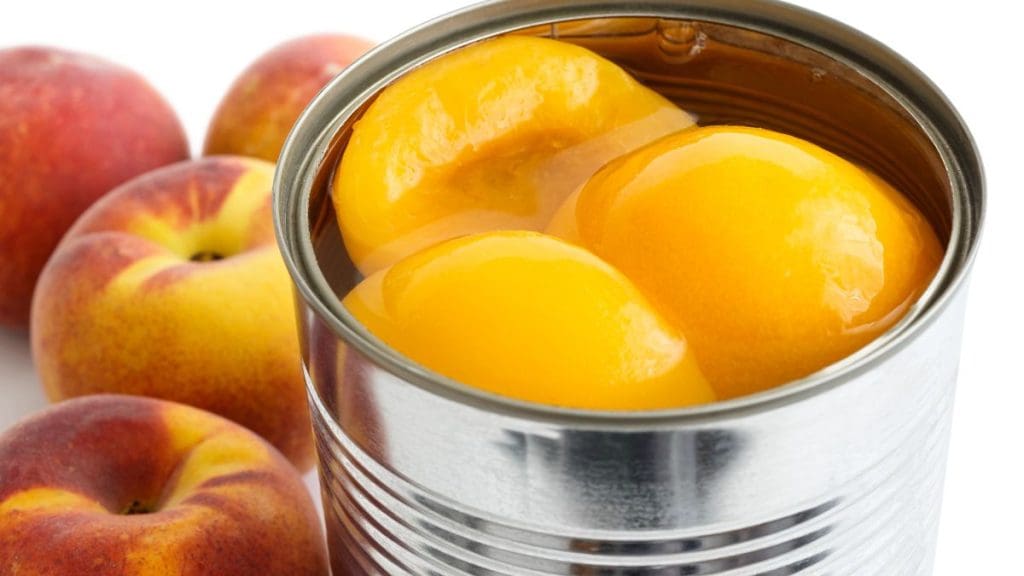
Commercially canned peaches: Year-round availability; long shelf life; significantly lower per-serving cost than fresh. Peaches canned in juice or light syrup retain most of their nutritional value. Canned in heavy syrup, the added sugar content increases significantly per serving. Canned peaches are a sound option for baking, smoothies, and recipes where the texture of canned product suits the application.
Commercially frozen peaches: Where available, frozen Canadian or domestic peaches are a good year-round option. Check the label for country of origin.
Home-frozen peaches: The best budget option for locking in peak-season quality at peak-season pricing. Labour cost is the only real disadvantage.
Reducing Peach Waste
Peach waste usually comes from two sources: buying more fresh peaches than can be eaten before they overripen, and buying peaches before they are ripe and refrigerating them prematurely.
Prevent buying-ahead waste: Peaches ripen in one to three days at room temperature. Do not buy more fresh peaches than can be eaten within a few days unless you are buying specifically to freeze. If the farm stand visit produces a large haul, process the extras for the freezer immediately rather than letting them become overripe.
What to do with soft peaches: A very ripe peach, even one slightly past its ideal fresh-eating window, is still excellent in smoothies, peach compote, jam, or baked goods. See Easy Ways to Use Peaches for ideas.
Peel scraps and pits: Peach peels can be simmered in water with a little sugar to make a light peach syrup, useful in cocktails, sparkling water, or as a simple syrup for baking. Peach pits should be composted, not eaten.
Peach Nutrition: Value Beyond the Price Tag
Peaches provide vitamins A, C, and E, dietary fibre, potassium, and niacin. They are low in calories and fat. Because the domestic season is short, buying in quantity at peak and preserving through freezing or canning ensures these nutrients are available year-round.
Canned peaches in juice retain most of their nutritional value and are a practical way to include peaches in the diet year-round at a lower cost per serving than fresh. For full nutrient data, see Health Canada’s nutrient database and Canada’s Food Guide on fruit intake recommendations.
Check Out These Related Articles






 Gluten-Free Oat Crust Pizza
