
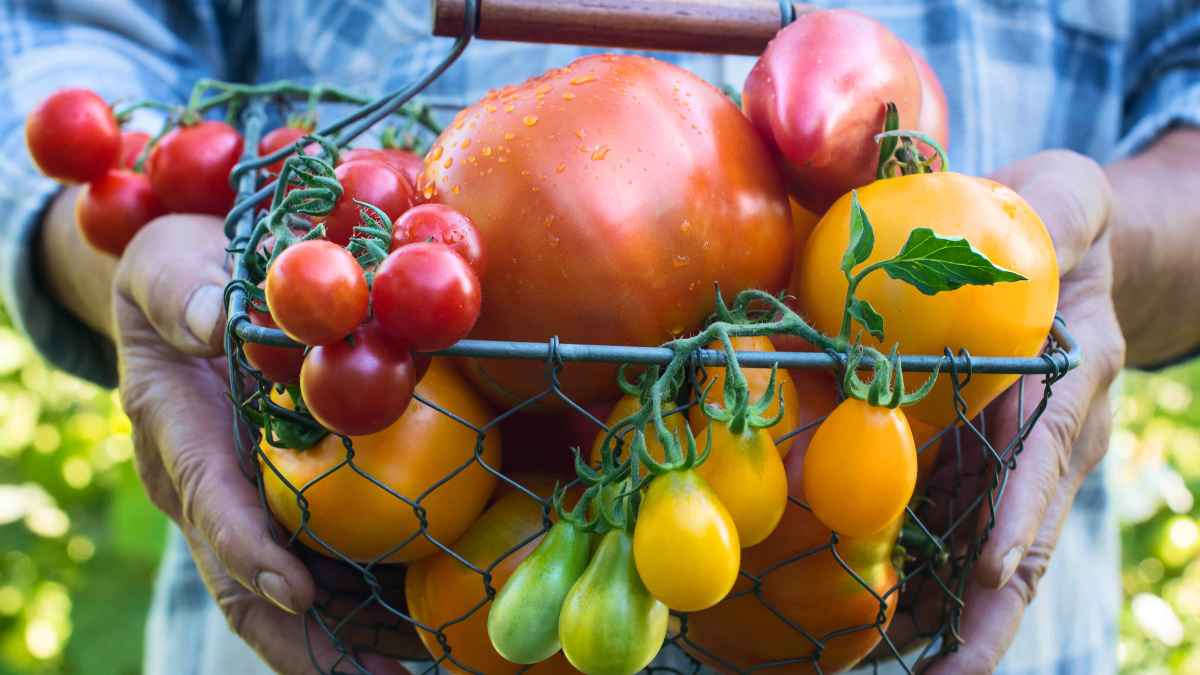
Canadian tomatoes have a more interesting story than most people realize. With a world-class greenhouse sector producing fresh tomatoes year-round, a field season that peaks in late summer, and four main types that each have a distinct best use, there is more to know about this everyday vegetable than its place on the grocery store shelf suggests. This article answers the most common questions about Canadian tomatoes, with links to the detailed guides in each topic area. For the full seasonal overview, start with What’s in Season? Tomatoes.





Seasonality Questions
Are Canadian tomatoes available year-round?
Yes. Canadian greenhouse operations in Ontario, BC, and Quebec produce fresh tomatoes continuously throughout the year, and greenhouse tomatoes account for over 95 per cent of fresh tomatoes sold in Canadian retail. This makes tomatoes one of the few vegetables where a “Product of Canada” label is reliably available in every month. For a breakdown of types and production methods, see Canadian Tomato Types and Best Uses.
When are field tomatoes in season in Canada?
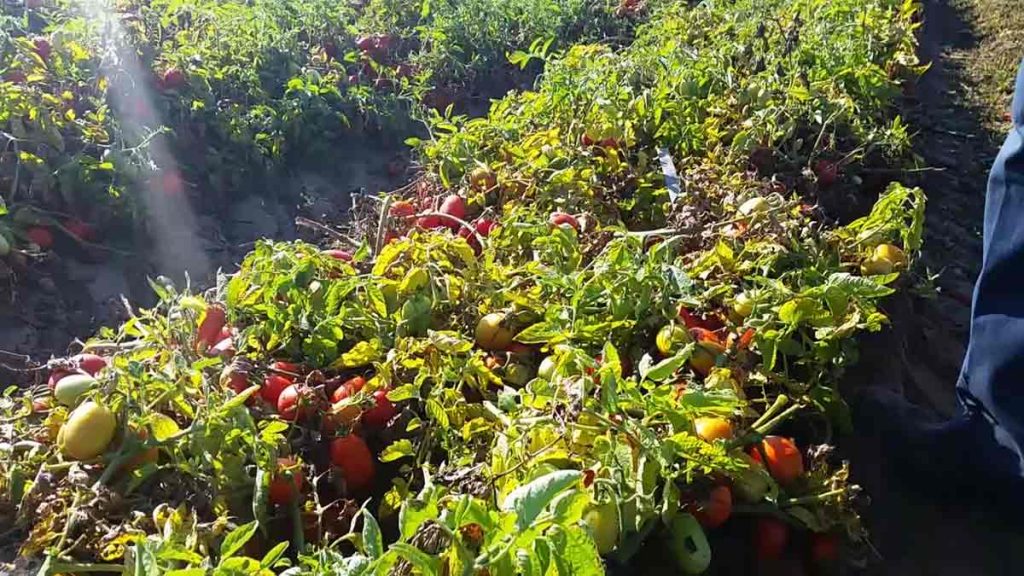
Field tomatoes peak from August through October in southern Ontario, with smaller volumes in Quebec and BC following a similar seasonal window. Fresh field tomatoes appear at farmers’ markets and farm stands during this period; most of Canada’s field tomato crop goes to processing rather than fresh retail markets. For more on the field season and when to buy in volume for preserving, see Seasonal Tomatoes and Your Grocery Budget in Canada.
Why is the local field tomato season so short?
Canada’s climate limits outdoor tomato production to the months when soil and air temperatures are consistently warm enough to support growth and fruit development. Field tomato transplants go into Ontario fields in May after being started in greenhouses, and the harvest runs until the first fall frosts end the season, typically in October. The same climate constraint that limits field production is what drove the growth of Canada’s greenhouse sector. For more on how both systems work, see Canadian Tomato Types and Best Uses.
When are tomatoes most affordable in Canada?
Greenhouse tomato pricing tends to be relatively stable year-round because Canadian production is consistent. During peak field season in August and September, farmers’ markets and farm stands often offer competitive pricing on field tomatoes, particularly when buying in volume for canning or sauce-making. For practical guidance on timing purchases and reducing waste, see Seasonal Tomatoes and Your Grocery Budget in Canada.
Growing and Origin Questions
Where are most Canadian tomatoes grown?
Most fresh Canadian tomatoes come from greenhouse operations concentrated in the Leamington area of southwestern Ontario, BC’s Lower Mainland and Fraser Valley, and Quebec. Field tomatoes for processing are grown primarily in southern Ontario. Canada leads North America in greenhouse tomato production. For a full regional overview, see What’s in Season? Tomatoes.
How do I tell if a tomato is Canadian?
Look for “Product of Canada” or “Grown in Canada” on the package or bin card at retail. This label applies to both greenhouse and field-grown tomatoes from Canadian operations. At farmers’ markets and farm stands, you can ask the grower directly about the source. Canadian greenhouse tomatoes are available year-round, so the label can apply in any month. For guidance on what to look for when buying, see Canadian Tomato Types and Best Uses.
What is the difference between greenhouse and field tomatoes?
Greenhouse tomatoes are grown in controlled-environment facilities year-round, in soilless media with precise nutrient and climate management. They make up the vast majority of Canada’s fresh tomato supply and are available at most grocery stores in every province throughout the year. Field tomatoes are grown outdoors in soil during the warm months, with peak harvest from August through October, and most Canadian field tomatoes go to processing rather than fresh retail. For the full comparison, including how each production method affects flavour and shopping decisions, see Canadian Tomato Types and Best Uses.

Are Canadian tomatoes genetically modified?
The vast majority of fresh tomatoes in Canadian grocery stores are conventionally bred varieties, not genetically modified. However, a new genetically modified tomato received Health Canada approval for food use in 2025 and is expected to appear in Canadian stores: the Purple Tomato, developed by Norfolk Healthy Produce. It is a cherry-type tomato modified to produce higher levels of anthocyanins, the natural pigment that also gives blueberries their colour, resulting in a distinctively purple fruit. Health Canada conducted a thorough safety assessment and found no concerns related to food safety, nutrition, toxicology, or allergenicity. The purple colour makes it visually distinct from all conventionally bred tomatoes, so it is straightforward to identify on the shelf.
The history of GM tomatoes in Canada includes one earlier example: the Flavr Savr™, developed in the 1990s to stay firmer longer. Health Canada reviewed it and found no safety concerns, but it was withdrawn from commercial markets before the end of that decade and has not been part of the Canadian supply since. For more on how Canadian tomatoes are grown, see What’s in Season? Tomatoes.
Are greenhouse tomatoes as nutritious as field tomatoes?
Generally, yes. Both greenhouse and field tomatoes are good sources of vitamin C and provide vitamin A, folacin, and potassium. Nutritional content varies somewhat by variety, ripeness at harvest, and how quickly the tomato reaches the consumer after picking, but there is no meaningful basis for treating greenhouse tomatoes as nutritionally inferior. For a full nutrition overview, see What’s in Season? Tomatoes.
Buying and Storage Questions
How do I pick a ripe tomato?
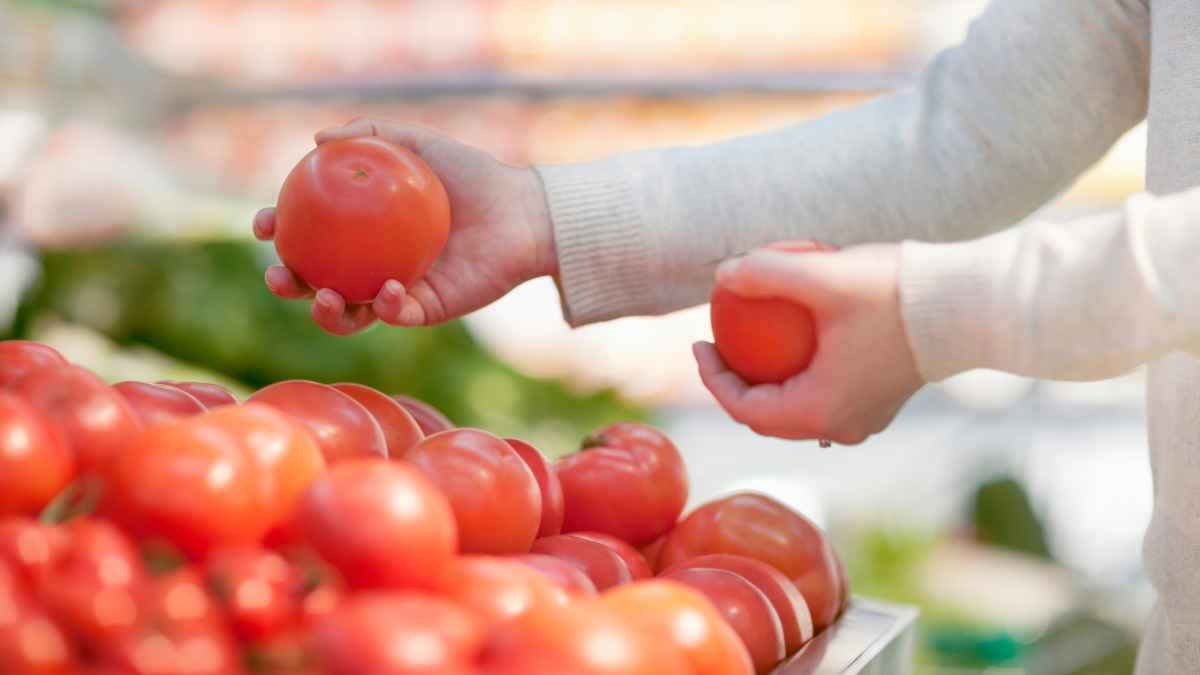
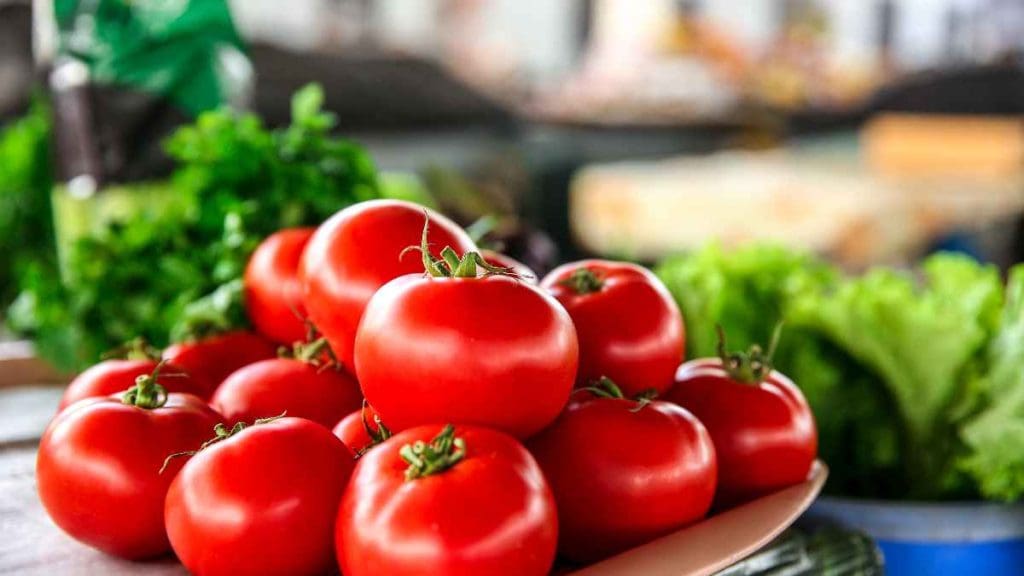
A ripe tomato yields slightly under gentle finger pressure without feeling soft or mushy, is heavy for its size, has no cracks or surface mould, and has a noticeable fragrance at the stem end, especially in field-grown types at peak season. On greenhouse cluster tomatoes, a fresh green stem cluster is a useful freshness indicator. A small star-shaped marking at the blossom end of a greenhouse tomato signals it has begun its final ripening stage and is a good choice. For full buying guidance by type, see Canadian Tomato Types and Best Uses.
Should I store tomatoes in the fridge?
Not until they are fully ripe. Cold temperatures halt ripening and can make the texture mealy and the flavour flat, and this change is permanent. Once a tomato is fully ripe and you need to extend its life by a few days, refrigerating it briefly is fine; bring it back to room temperature before eating for best flavour. For the complete storage guide including counter, fridge, and freezer guidance, see How to Store Tomatoes.
How long do tomatoes last?
Ripe tomatoes at room temperature are best used within two to four days. Fully ripe tomatoes in the refrigerator may hold for an additional two to four days, though flavour and texture are better when tomatoes are stored at room temperature. Frozen tomatoes keep well for up to three months and are best used in cooked dishes. For a full storage life guide by ripeness and method, see How to Store Tomatoes.
Can I freeze tomatoes?
Yes. Whole or chopped tomatoes freeze well and hold for up to three months. Freezing changes the texture significantly; tomatoes become soft and watery once thawed, so frozen tomatoes are best used in soups, stews, sauces, and chili rather than fresh applications. The skins slip off easily once thawed, which can be useful when making sauce. For step-by-step freezing instructions, see How to Store Tomatoes.
Nutrition and Use Questions
Are tomatoes good for you?
Yes. Tomatoes are a nutritious everyday vegetable. A medium tomato contains approximately 25 calories and is a good source of vitamin C, with additional amounts of vitamin A, folacin, and potassium. They also contain lycopene, a naturally occurring antioxidant that research suggests may be more readily absorbed when tomatoes are cooked or processed, meaning tomato soup and pasta sauce carry real nutritional value alongside fresh tomatoes. For the full nutrition overview, see What’s in Season? Tomatoes.
What can I do with tomatoes that are getting soft?
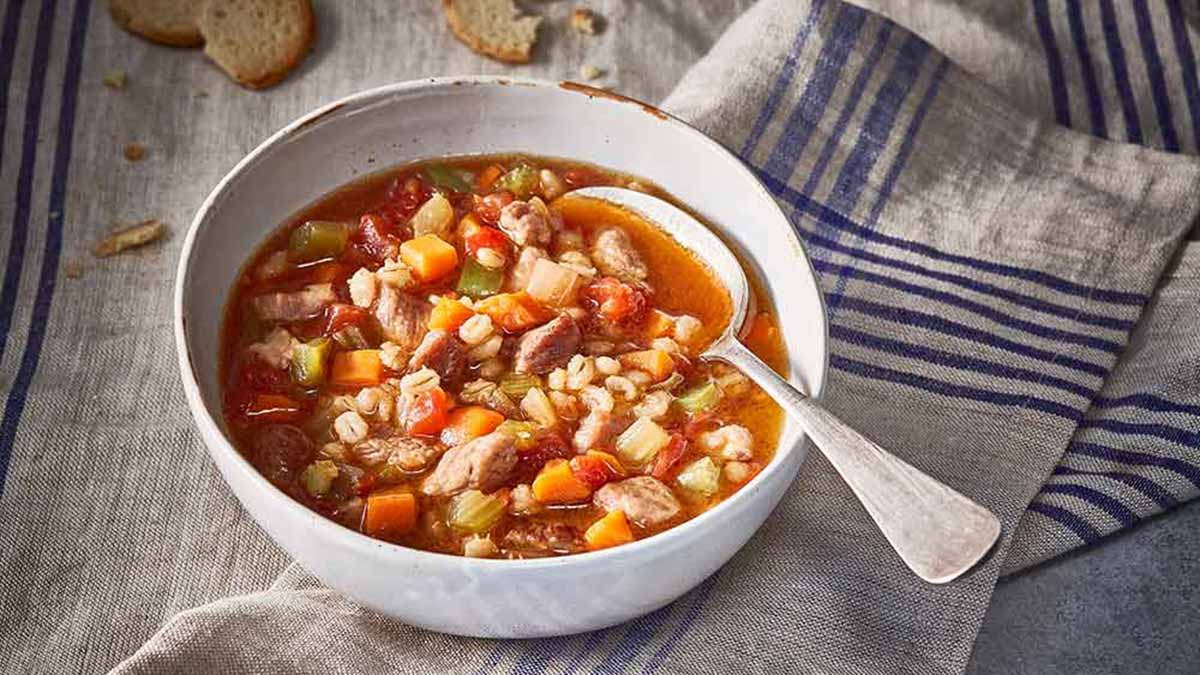
Soft tomatoes are ideal for cooking. A quick stovetop pasta sauce, a pot of tomato soup, shakshuka, or a chili base are all good choices for tomatoes that have passed their fresh-eating window but are otherwise clean-smelling with no mould. Roasting soft tomatoes at high heat also works well, concentrating the flavour rather than wasting it. For a full list of ideas, see Easy Ways to Use Tomatoes.
Which tomato type is best for making sauce?
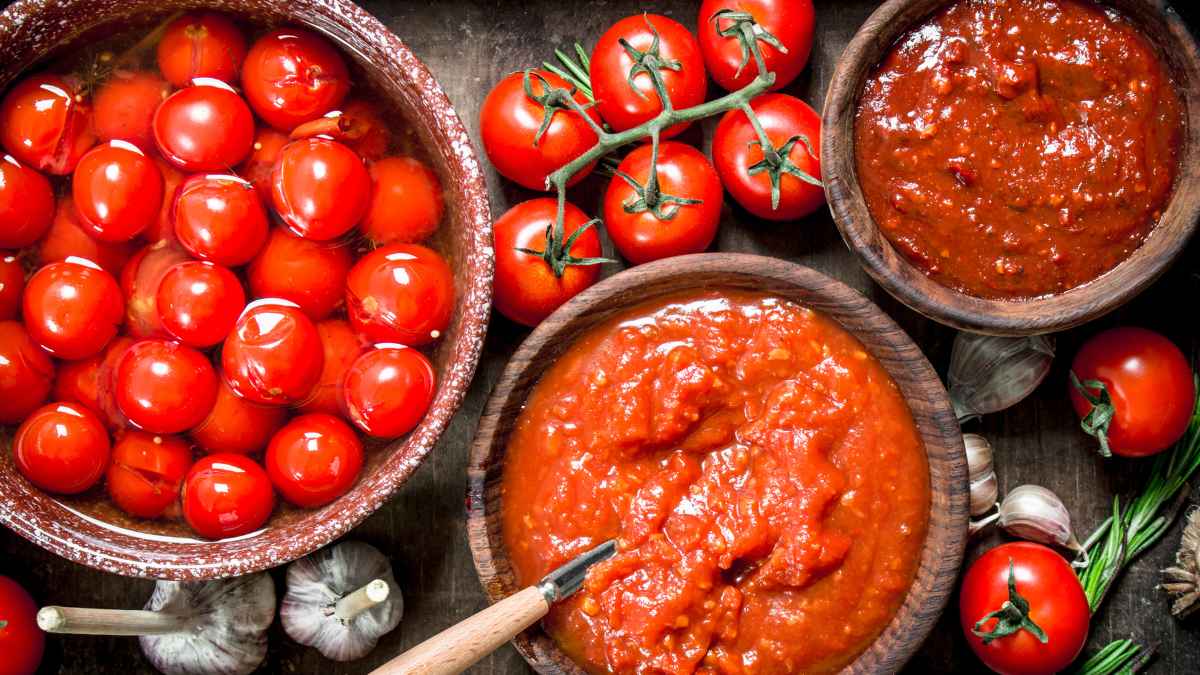
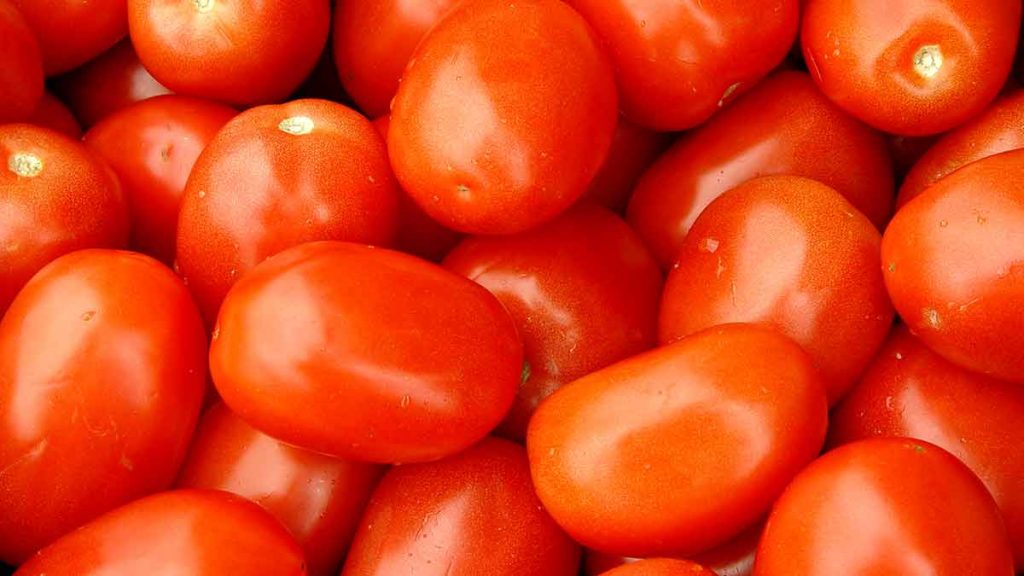
Roma (plum) tomatoes are the classic choice for sauce, paste, and canning. Their thick flesh and lower moisture content mean less time reducing and a richer, more concentrated result. Round tomatoes also work well for sauce, particularly if you are comfortable with a slightly thinner consistency. For the full type-by-type guide including what each type is best for, see Canadian Tomato Types and Best Uses.

Additional Articles to Explore






 Seasonal Tomatoes and Your Grocery Budget in Canada
