
The Canadian peach season is short, the fruit is fragile, and the gap between a peach at its peak and one that is not is bigger than with almost any other summer produce. Most peach questions come down to a few common themes: when to buy, how to tell if a peach is ripe, what to do with one that is not, and whether freezing or canning makes sense. This article answers the most common ones.
For the full seasonal picture, see What’s in Season? Peaches.




Seasonality Questions
When are Canadian peaches in season?
The Canadian peach season runs from approximately mid-July through mid-September, with timing that varies by type and region. Semi-freestone types come in first, in mid-July; freestone types follow from mid-August. The window is genuinely short: roughly eight to ten weeks for any given region. Both Ontario’s Niagara Peninsula and BC’s Okanagan Valley are at their peach peak in August.
Peaches from Ontario’s Niagara region may start a few days earlier than Okanagan peaches in a given season, but the timing overlap in August is significant. Outside of this window, fresh peaches at Canadian grocery stores are imported, primarily from the US and South America.
Where are Canadian peaches grown?
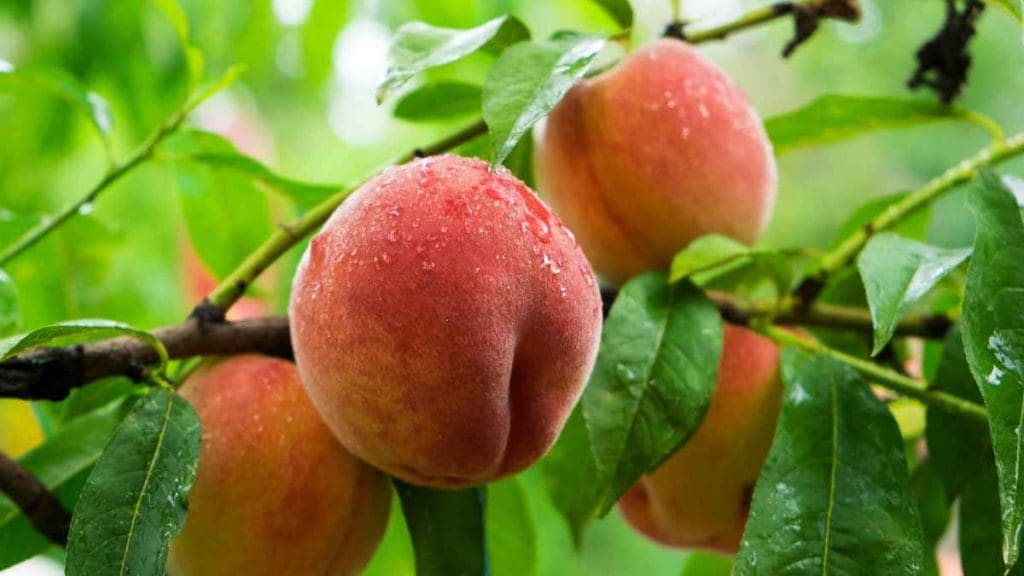
Ontario’s Niagara Peninsula produces approximately 80 percent of Canada’s peaches, with BC’s Okanagan Valley producing most of the remainder. A small volume of peaches is also grown in Nova Scotia, though winter hardiness is a persistent challenge there. For the full growing region overview, see What’s in Season? Peaches.
Are there peaches at farmers markets in Canada?
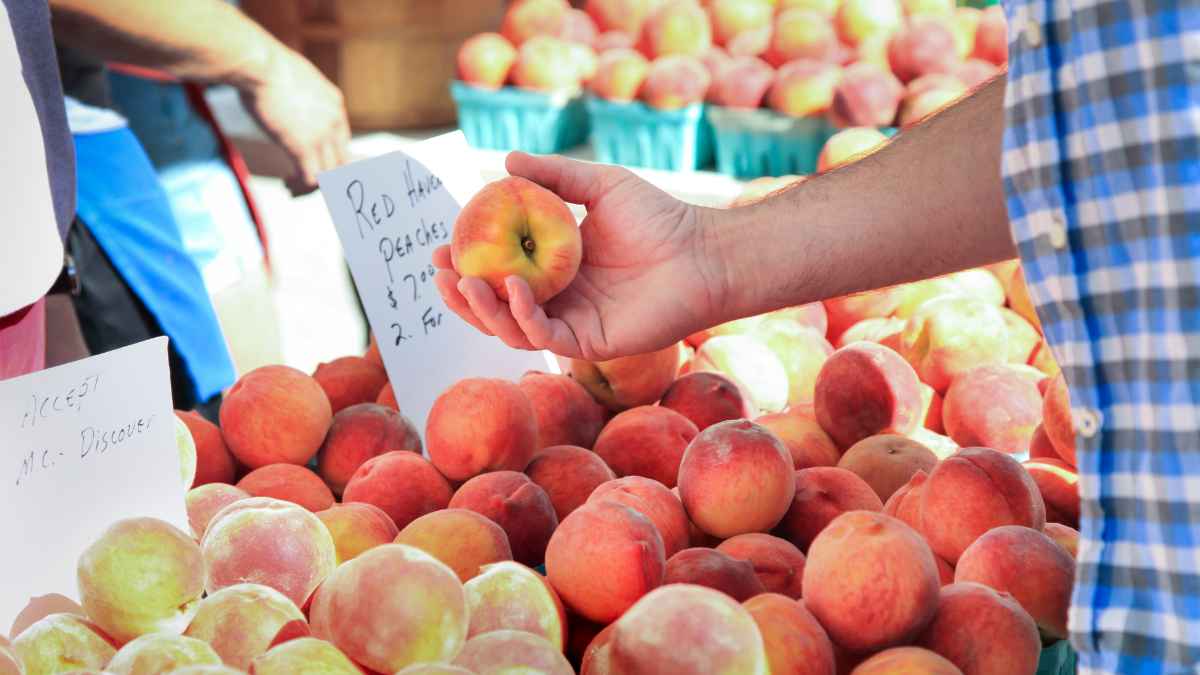
Yes, during peak season in July and August. Niagara-area farmers markets in Ontario and Okanagan markets in BC are particularly well supplied. Urban farmers markets in Toronto, Vancouver, Ottawa, and other major cities also receive fresh peaches from growers during the season. Prairie peach connoisseurs can often find fresh Canadian peaches from traveling fruit trucks. For value and freshness, farmers markets and direct farm-stand purchases during peak season are among the best options available.
Buying and Ripeness Questions
How do I know if a peach is ripe?
Three things to check, in order of reliability:
Background skin colour: The area of the skin not covered by the red blush should be creamy yellow to golden, not green. Green skin means the peach was picked underripe and will not develop proper flavour at home.
Fragrance: Smell near the stem. A ripe peach has a clear, sweet peachy scent. No fragrance almost always means not yet ripe.
Give at the stem: Gently press near the stem end. A peach ready to eat today gives very slightly. Do not squeeze the sides, which bruise easily.
A blush (the red or pink colour) indicates variety, not ripeness. A deeply blushed peach is not necessarily riper than a lightly blushed one.
Why does my peach have no flavour even though it looks ripe?
The most common cause is cold storage before ripening. A peach refrigerated before it was fully ripe does not develop its full sugar, flavour, or aromatic compounds even if it subsequently softens. This is why peaches bought cold at the grocery store, in an already-soft state, sometimes disappoint: they have already been chilled during transport and in the display case.
The best flavour comes from peaches that have ripened at room temperature from a firm starting point. Buying firm, fragrant peaches from a farm stand or at the grocery store and ripening them on your counter for one to three days typically produces better eating quality than buying soft peaches that have been cold-stored.
What does “clingstone” versus “freestone” mean?
These terms describe how the flesh relates to the pit.
Clingstone: The flesh clings firmly to the pit and cannot be removed cleanly. Sweet, juicy, and intensely flavoured; primarily used in commercial canning and processing. Comes in early in the season.
Freestone: The flesh separates from the pit cleanly with a twist. The easiest type to use at home for slicing, baking, grilling, and freezing. Available mid-August through September.
Semi-freestone: A mid-season type with flesh that partially clings; manageable for home use with some effort. Available from mid-July through August.
For a full guide to all three types and named variety profiles, see Canadian Peach Varieties and How to Choose.
How do I ripen a firm peach at home?
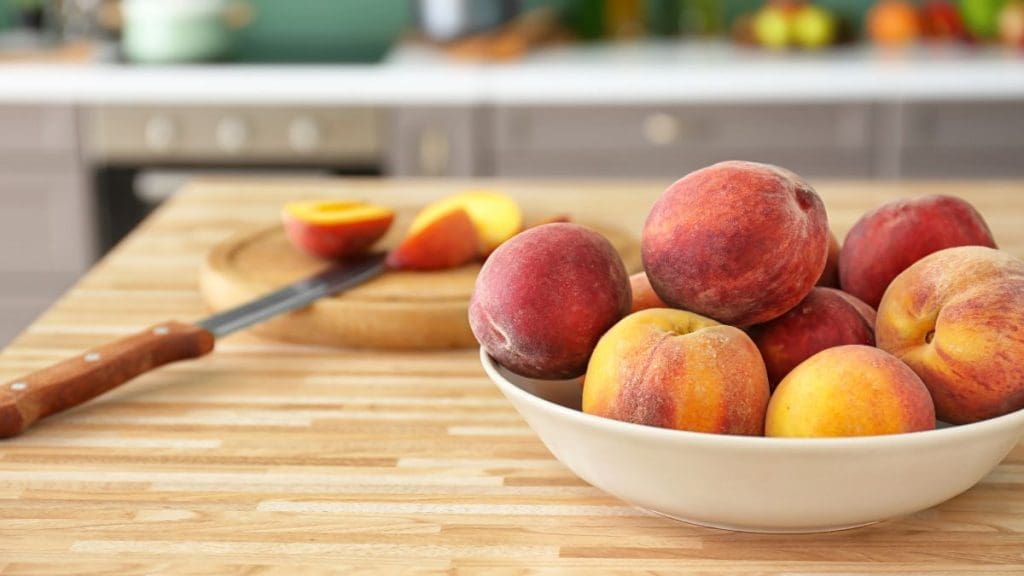
Leave it on the counter at room temperature, out of direct sunlight. A firm, fragrant peach typically ripens within one to three days. To speed the process, place the peach in a paper bag (not plastic) loosely closed: the bag traps the ethylene gas the peach naturally produces, which accelerates ripening. Check daily.
Do not refrigerate an unripe peach. Cold temperatures halt the ripening process and prevent the peach from developing full flavour and texture.
Storage Questions
How long do fresh peaches last?
Firm, unripe peaches: one to three days on the counter until ripe. Ripe peaches: three to five days in the refrigerator, stored in a single layer in the crisper drawer. Very soft or bruised peaches should be used immediately or redirected to smoothies, compote, or baking.
Take cold-stored peaches out of the refrigerator at least 30 minutes before eating; cold dulls the flavour significantly. For the full storage guide, see How to Store Peaches.
Can you freeze peaches?
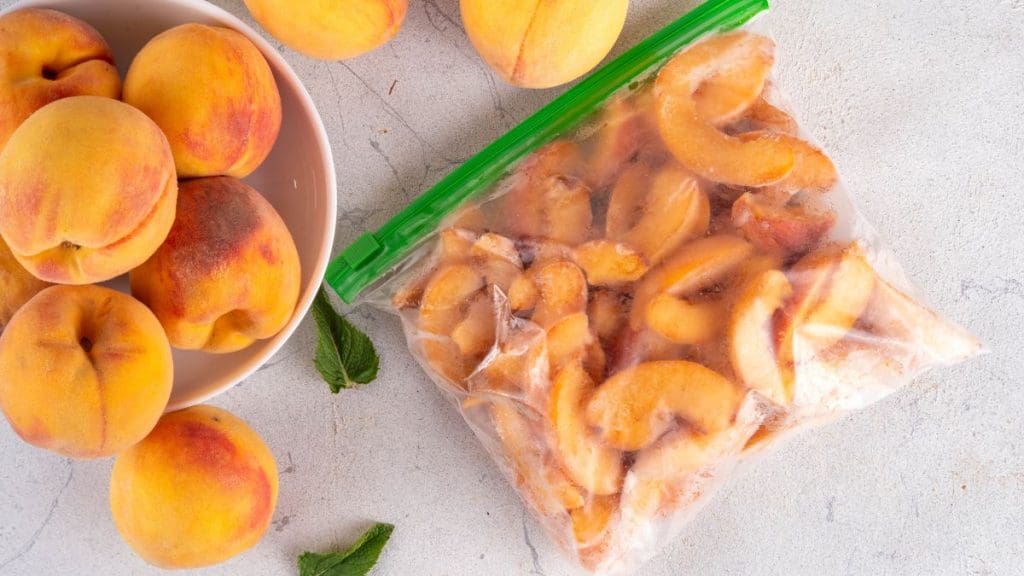
Yes, and they freeze very well. The basic method: peel, slice, toss with lemon juice to prevent browning, freeze flat on a baking sheet, then transfer to freezer bags. Keeps for up to six months. Freestone peaches are the easiest to freeze because the flesh separates cleanly from the pit for easy slicing. Frozen peaches are excellent in smoothies, baking, compotes, and cooked sauces. For the full step-by-step method, see How to Store Peaches.
Nutrition Questions
Are canned peaches as nutritious as fresh?
Peaches canned in juice or light syrup retain most of their nutritional value, including vitamins A, C, and E, fibre, and potassium. The primary difference is that canning in heavy syrup adds significant sugar per serving. For most nutritional purposes, canned peaches in juice or light syrup are a sound year-round alternative to fresh and an economical option when Canadian fresh peaches are out of season.
Fresh peaches at peak ripeness have a flavour advantage that no canned product can replicate, but nutritionally the gap between fresh and canned in juice is small. There is no significant nutritional difference between fresh and frozen peaches. For nutrient data, see Health Canada’s nutrient database and Canada’s Food Guide on fruit intake.
Are white peaches different nutritionally from yellow peaches?
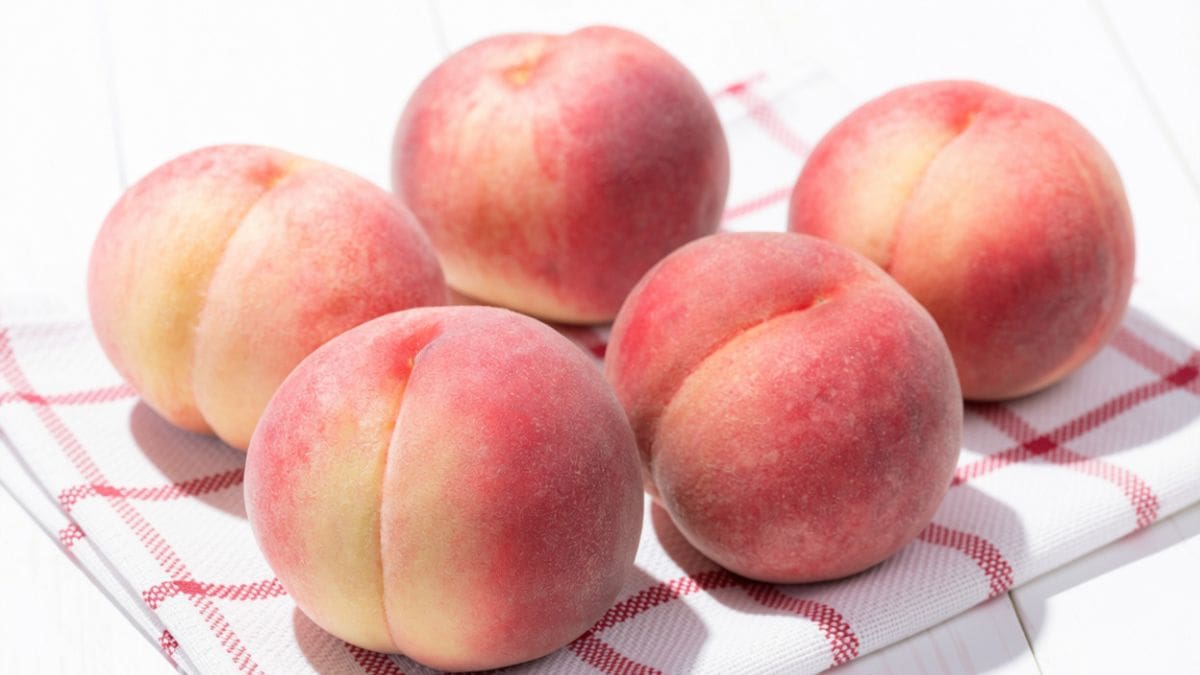
White-fleshed peaches have a similar nutritional profile to yellow-fleshed peaches, with the main difference being lower beta-carotene content: the pigment responsible for the yellow-orange colour in yellow peaches and a precursor to vitamin A. For most nutritional purposes, the two types are broadly comparable. White peaches are worth trying for their distinctive flavour (lower acidity, honey-like character) when you encounter them at a farm stand, rather than for any meaningful nutritional distinction.
Use and Cooking Questions
What is the best way to peel a peach?
The blanch-and-peel method works well: score a shallow X in the bottom of the peach, lower it into boiling water for 10 to 30 seconds until the skin starts to peel back, then transfer immediately to an ice water bath. The skin should slip off easily. For firm, slightly under-ripe peaches, a sharp vegetable peeler may work more cleanly than blanching, which works better on ripe fruit.
Note that peeling is not always necessary: in muffins and compotes, the skin softens during cooking and is not noticeable. In galettes and crisps, some cooks peel and some do not. It’s best to remove the peel for a creamy consistency in smoothies. For fresh eating and freezing, peeling is a matter of preference.
What can I do with a peach that is too soft to eat fresh?
A very ripe, soft peach is still excellent in smoothies (peel and freeze immediately if not using today), quick peach compote (simmer with a little sugar and lemon juice), refrigerator jam, or muffins. A peach that is mushy all over or smells off should be discarded. For more ideas, see Easy Ways to Use Peaches.
Check Out These Related Articles







 Canadian Peach Varieties and How to Choose
