
Peaches have exactly one non-negotiable storage rule: do not refrigerate them until they are ripe. Everything else is secondary to that. A firm, under-ripe peach put in the refrigerator will stay firm and under-ripe indefinitely, developing none of the fragrance, juice, or sweetness that makes a ripe Canadian peach worth waiting for.
This guide covers the full storage arc: how to ripen peaches on the counter, when to move them to the fridge, how to get the most flavour out of cold-stored peaches, and how to freeze them for year-round use. For a full overview of Canadian peach season, see What’s in Season? Peaches.




The One Rule: Counter Before Fridge
Peaches ripen from the inside out. The process is driven by ethylene gas, which the fruit produces naturally as it matures. Cold temperatures significantly slow ethylene production, which means refrigerating an unripe peach stops the ripening process before the interior has reached its full sugar, flavour, and texture potential. The result is a peach that never quite gets there: firm, bland, sometimes mealy.
Buy firm, fragrant peaches and let them ripen on the counter for one to three days before refrigerating.
Ripening Peaches at Room Temperature
What you need: A counter, room temperature, and patience.
Standard counter ripening: Place peaches stem-side down on a clean kitchen towel or in a bowl, out of direct sunlight.. Keep them in a single layer so they do not bruise each other. Room temperature should be around 18–22°C; warmer rooms ripen peaches faster.
Paper bag method to speed ripening: A ripe peach produces ethylene gas as it matures. Placing peaches in a paper bag (not plastic) traps this ethylene and speeds up the process. A peach that would take three days on the counter may be ready in one to two days in a paper bag. Check daily.
Do not use plastic bags for ripening. Plastic traps moisture as well as ethylene, which creates a humid environment and can cause the peach to break down on the outside before the interior is ready.
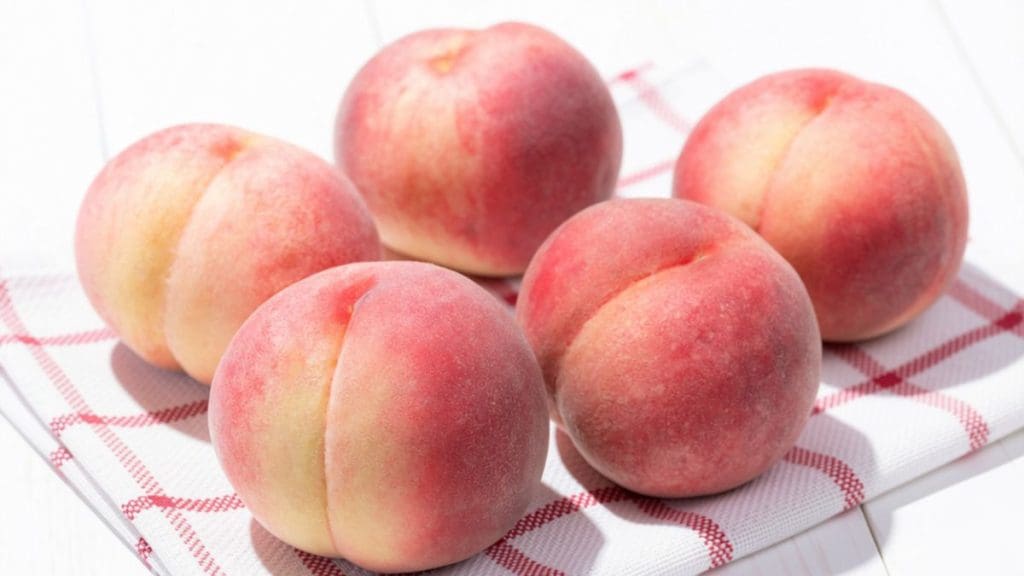
Signs a peach is ripe:
- The background skin colour has turned from green to golden yellow or creamy; the blush (red or pink colour) indicates variety, not ripeness.
- It has a distinct, sweet fragrance when you smell near the stem end.
- It gives very slightly to gentle pressure applied near the stem; do not squeeze the sides, which bruise easily.
A peach that smells like a peach and gives slightly at the stem is ready to eat today. A peach with no fragrance is not yet ripe. A peach that is soft all over or has soft spots has passed its peak.
Refrigerating Ripe Peaches
Once ripe, peaches need to go into the refrigerator to slow further ripening and prevent overripeness. They will keep for three to five days under proper refrigerator storage.
How to store ripe peaches in the fridge:
- Place them in a single layer in the crisper drawer; do not stack, as the weight of one peach on another bruises the bottom fruit and accelerates decay.
- Do not store peaches in an airtight bag; some airflow is fine.
- Keep them away from the back wall of the refrigerator, where temperatures near the freezing point can cause cellular damage to the flesh.
- Keep them away from very strong-smelling foods; ripe peaches will absorb odours.
Before eating cold-stored peaches: Take peaches out of the refrigerator at least 30 minutes before eating. Cold significantly dulls the flavour and the aromatic compounds that make a ripe peach exceptional. A peach eaten cold from the refrigerator is a fraction of what it would be at room temperature. This is the single most effective way to improve the eating quality of refrigerator-stored peaches.
What To Do With Very Ripe or Soft Peaches
A peach that has gone very soft is not ruined. It is simply at the end of its fresh-eating window and best redirected to a cooked or blended preparation, where its very ripe flavour is an asset rather than a problem.
Good uses for very soft peaches:
- Smoothies (peel and freeze immediately if you cannot use them today)
- Peach compote: cook down soft peaches with a little sugar, lemon juice, and a pinch of salt; excellent over yogurt, pancakes, or ice cream
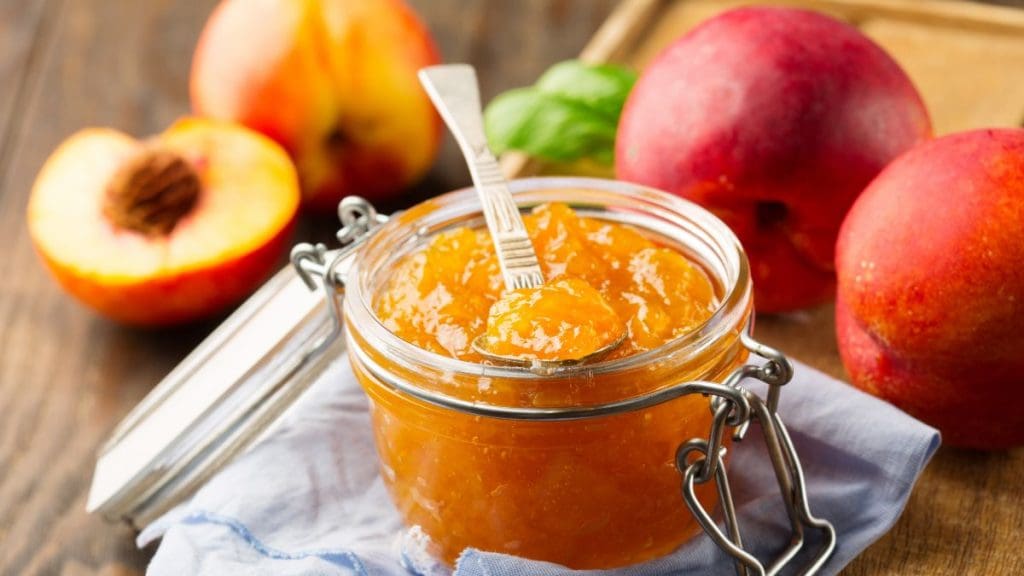
- Quick jam: a small batch does not require canning; refrigerator peach jam lasts two to three weeks
- Baking: very ripe peaches make excellent muffins and quick breads where their sweetness and softness help
A peach with mould on the skin or an off smell should be discarded.
Freezing Peaches: Step-by-Step
Freezing is the best way to preserve a large purchase of peak-season peaches for use through October, November, and into the winter months. Frozen peaches retain most of their nutritional value and are excellent in smoothies, baked goods, compotes, and cooked sauces.
Freeze freestone peaches for the best results. The flesh separates cleanly from the pit, which makes slicing and pitting much easier. For more on peach types, see Canadian Peach Varieties and How to Choose.
Step-by-step freezing method:
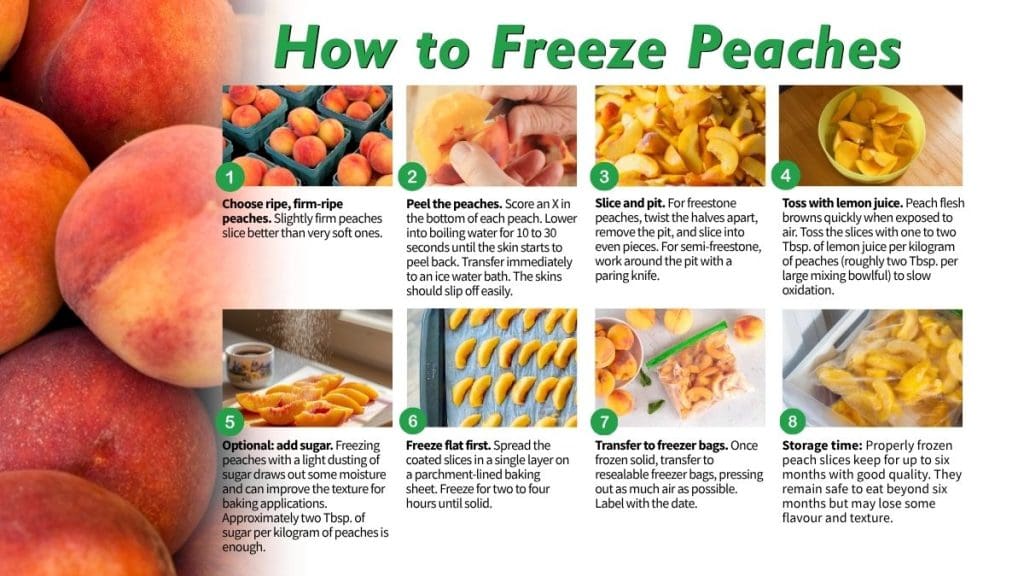
- Choose ripe, firm-ripe peaches. Slightly firm peaches slice better than very soft ones. Very soft peaches can be puréed before freezing if preferred.
- Peel the peaches. Score an X in the bottom of each peach. Lower into boiling water for 10 to 30 seconds until the skin starts to peel back. Transfer immediately to an ice water bath. The skins should slip off easily. Alternatively, peel with a sharp vegetable peeler on slightly under-ripe peaches where the skin comes away more cleanly.
- Slice and pit. For freestone peaches, twist the halves apart, remove the pit, and slice into even pieces. For semi-freestone, work around the pit with a paring knife.
- Toss with lemon juice. Peach flesh browns quickly when exposed to air. Toss the slices with one to two tablespoons of lemon juice per kilogram of peaches (roughly two tablespoons per large mixing bowlful) to slow oxidation. You can also use ascorbic acid powder, available at bulk food stores.
- Optional: add sugar. Freezing peaches with a light dusting of sugar draws out some moisture and can improve the texture for baking applications. Approximately two tablespoons of sugar per kilogram of peaches is enough. Many people prefer to freeze without added sugar to keep the application options open.
- Freeze flat first. Spread the coated slices in a single layer on a parchment-lined baking sheet. Freeze for two to four hours until solid.
- Transfer to freezer bags. Once frozen solid, transfer to resealable freezer bags, pressing out as much air as possible. Label with the date.
Storage time: Properly frozen peach slices keep for up to six months with good quality. They remain safe to eat beyond six months but may lose some flavour and texture.
Using Frozen Peaches
Frozen peach slices do not need to be thawed before adding to a smoothie or a compote. For baking (a crisp, muffins, a galette), thaw in the refrigerator overnight and drain excess liquid before using. Using frozen peaches straight from frozen in a crisp or pie works but may produce more liquid in the filling.
For more ideas on what to make, see Easy Ways to Use Peaches.
What About Canned Peaches?
Commercially canned peaches are a practical year-round option and retain most of their nutritional value when canned in juice or light syrup. Peaches canned in heavy syrup have significantly more added sugar per serving.
Canning peaches at home is a longer-season preservation project that works well during peak August supply. For home canning, always follow a tested recipe and current processing guidelines from Health Canada or a Canadian canning resource such as Bernardin.ca. Use freestone or semi-freestone peaches for home canning; clingstones, while the commercial canning standard, require more effort to pit at home scale.
Here is some inspiration for different types of peach preserves:
- Light Peach Freezer Spread – No Sugar Added
- Peach Butter
- Classic Peach Preserves
- Peach Freezer Jam
- Peach Nectar
- Ginger Bourbon Peaches
For budget and value questions around fresh vs. canned peaches, see Seasonal Peaches and Your Grocery Budget in Canada.
Check Out These Related Articles






 Seasonal Peaches and Your Grocery Budget in Canada
