
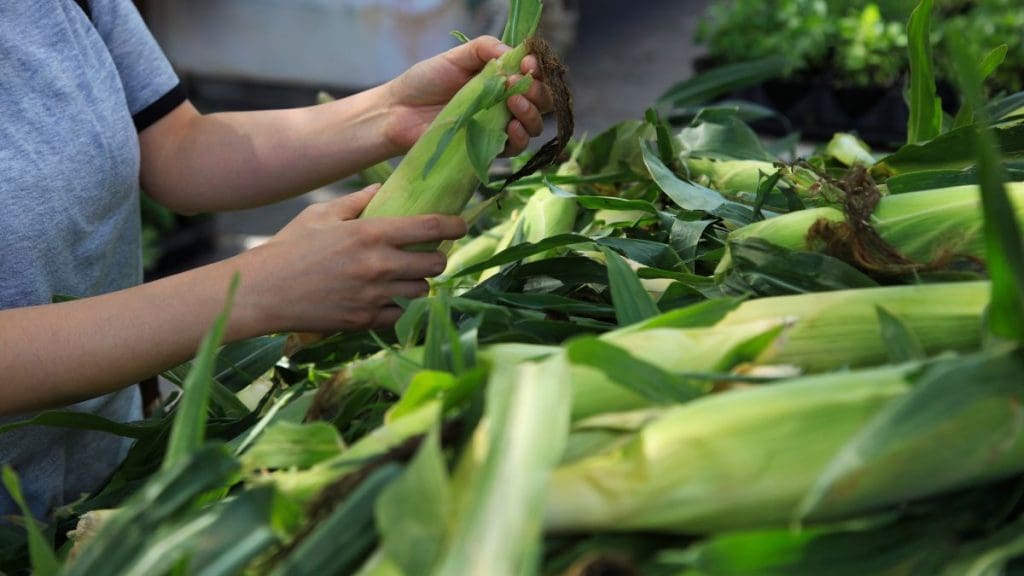
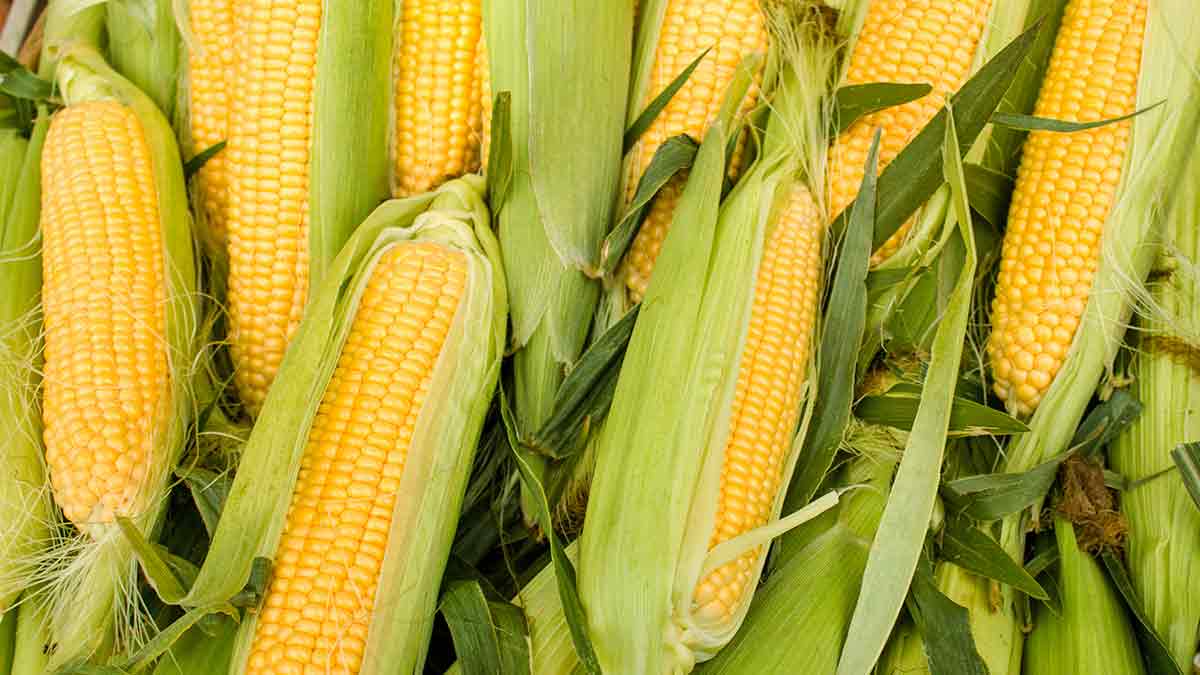
Walk up to a sweet corn bin at a roadside stand in August and you’ll usually see two decisions to make: yellow or bicolour, and maybe whether this particular stand is selling locally grown. You won’t see a sign reading “Peaches and Cream Sh2 Sugar-Enhanced” because that’s not how Canadians shop for corn. Unlike apples, where variety names like Honeycrisp or Cortland are part of how shoppers navigate the bin, sweet corn is shopped by colour, freshness, and source. The variety name is more the farmer’s concern, not yours.
That said, understanding the major sweetness types, and what each means for flavour, texture, and shelf life, makes you a significantly better buyer. And understanding the difference between fresh-market and processing corn helps explain why the cob you pick up at a farm stand tastes fundamentally different from what you’ll find in a grocery store in March.
This guide is organized around what actually matters at the point of purchase: the three main sweetness types, the three kernel colour options, and a decision helper for matching corn to how you plan to use it.
How to Read This Guide
Canadian-grown sweet corn does not typically arrive at retail with a variety name on the label. What you can often learn is the kernel colour (yellow, white, or bicolour), the source (the farm name or region), and how recently it was harvested.
What you cannot always tell from looking at the cob is the sweetness type. The su/se/sh2 designations describe how the corn is engineered at the genetic level to retain its sugars after harvest. This matters because it directly affects how quickly the corn goes from peak to starchy, and therefore how soon you need to eat it.
The practical takeaway: corn from a farm stand that was harvested that morning is almost certainly at its best regardless of type. Corn that has been in a grocery store bin for a few days is best if it came from a supersweet (sh2) variety, because it held its sugars better in transit. When in doubt, ask the farmer.
The Three Main Sweetness Types of Canadian Sweet Corn
Normal Sugary (su): Classic Corn Flavour, Eat It Today
Normal sugary corn, often abbreviated su, is the original sweet corn type. It has the flavour profile that many long-time corn lovers associate with “real” corn: a rich, slightly creamy, deeply corn-forward taste with a slightly chewy texture.
The catch is that su corn converts its sugars to starch relatively quickly after harvest. In peak summer heat, the transformation is noticeable within hours of picking. Refrigeration slows it significantly, but even refrigerated su corn is best eaten within one to two days.
Su corn is the type you’re most likely to encounter at a farm stand or from a grower who harvests daily. When it’s fresh, it is outstanding. It is rarely what you’ll find in a major grocery store chain, because it doesn’t survive a long cold chain without flavour loss.
Common yellow su varieties grown in Canada include traditional field-day-stand favourites. Bicolour su varieties are also widely grown in Ontario and Quebec.
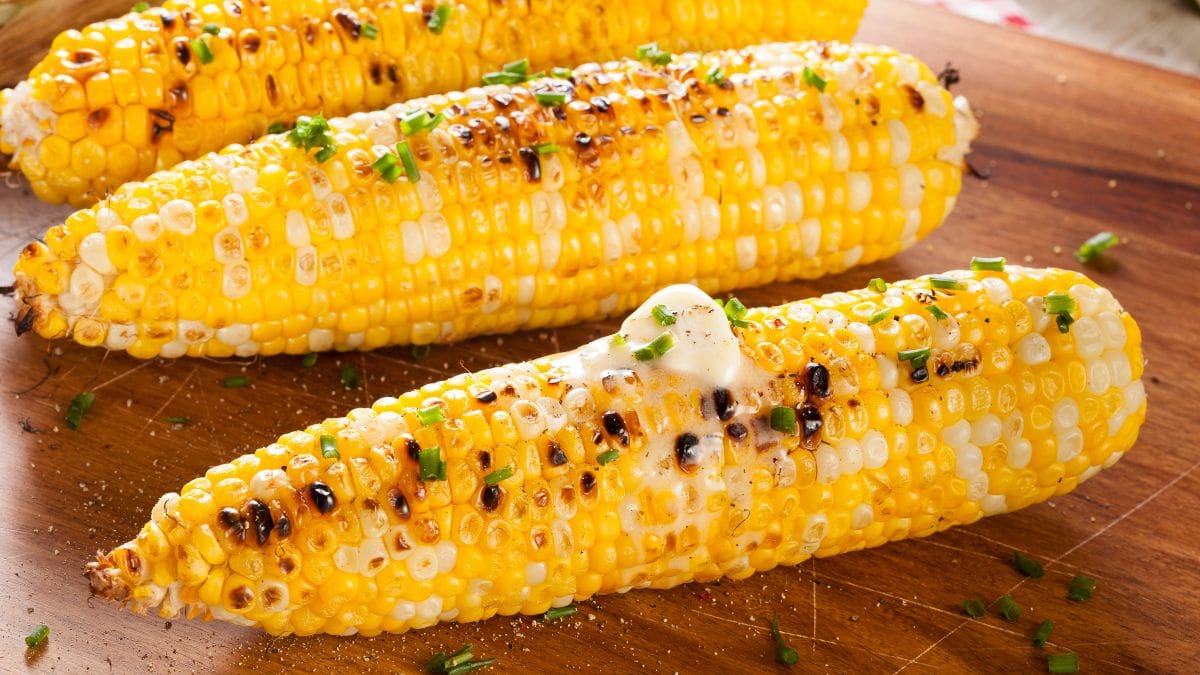
Best for: eating on the cob the day of purchase, corn chowder when you want maximum corn flavour, grilling same-day.
Best for: eating on the cob the day of purchase, corn chowder when you want maximum corn flavour, grilling same-day.
Sugar-Enhanced (se and se+): More Tender, Holds a Little Longer
Sugar-enhanced corn bridges the gap between the classic su flavour profile and the extended shelf life of supersweet. Se and se+ varieties have a more tender pericarp (the skin of each kernel), which gives them a noticeably softer bite than su corn. The sugar-to-starch conversion is slower, so se corn holds its sweetness for two to three days in the refrigerator without losing ground dramatically.
Se and se+ varieties are often described as having a creamier, slightly more pronounced sweetness than su corn, which some people prefer. They are widely grown in Canada for both farm-stand and grocery store markets.
If you see corn at a farmers market that’s labelled “picked this morning” and it’s a bicolour variety, there’s a good chance it’s se or se+. These are the varieties growers tend to favour when there’s any gap between harvest and sale.
Best for: same-day and next-day eating, grilling, corn salads, cut-off-the-cob uses like dips and salsas.
Best for: same-day and next-day eating, grilling, corn salads, cut-off-the-cob uses like dips and salsas.
Supersweet (sh2): Sweetest Shelf Life, Ideal for the Supply Chain
Supersweet corn, designated sh2 (for “shrunken 2,” a reference to the recessive gene mutation that produces it), contains roughly twice the sugar of normal sugary corn and converts those sugars to starch far more slowly than either su or se types. A well-handled supersweet cob can hold acceptable sweetness for four to five days in the refrigerator.
This extended shelf life is why supersweet is the dominant type in most major grocery store supply chains. The corn can be harvested, packed, transported, and sold over a longer window without becoming unpleasantly starchy. The trade-off is that many cooks find supersweet corn’s flavour profile less complex than su or se varieties at their peak: it’s very sweet, but the deeper corn flavour is less prominent.
Supersweet varieties also have a slightly tougher pericarp (which constitutes the edible tissues) than se corn, which can be noticeable when eating fresh.
When you’re buying corn at a grocery store well into the season and can’t verify origin or harvest date, supersweet varieties are the safer choice.
Best for: situations where you can’t cook the corn immediately, buying in advance, frozen kernel applications, corn salsa, mixed-grain dishes.
Kernel Colour: Yellow, White, and Bicolour
Yellow Corn
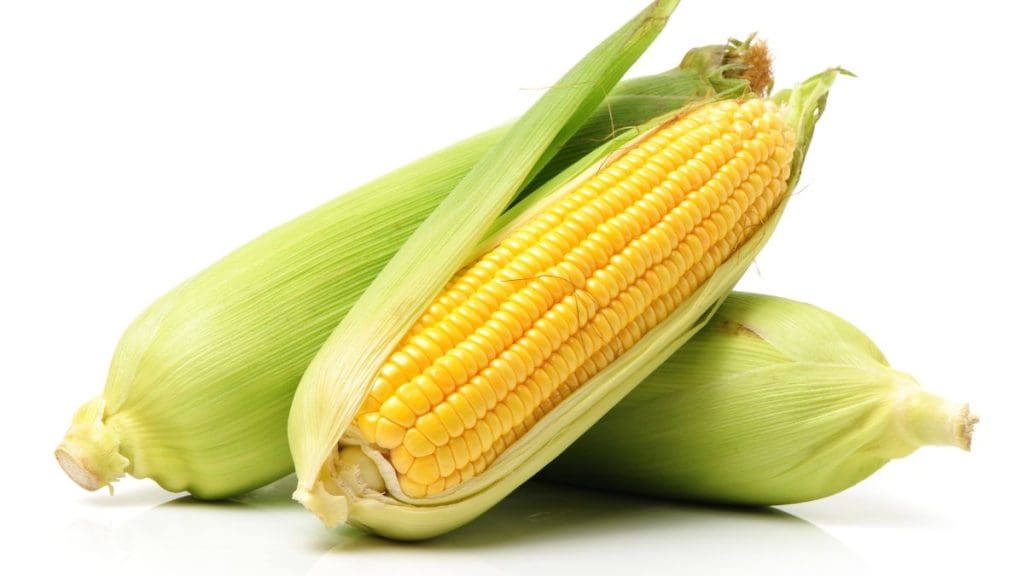
Yellow kernel corn is the most familiar in much of Canada. The yellow colour comes from beta-carotene, which contributes a small amount to the nutritional profile alongside the corn’s other nutrients. Flavour differences between yellow and other kernel colours in the same sweetness type are subtle and largely a matter of personal preference.
White Corn
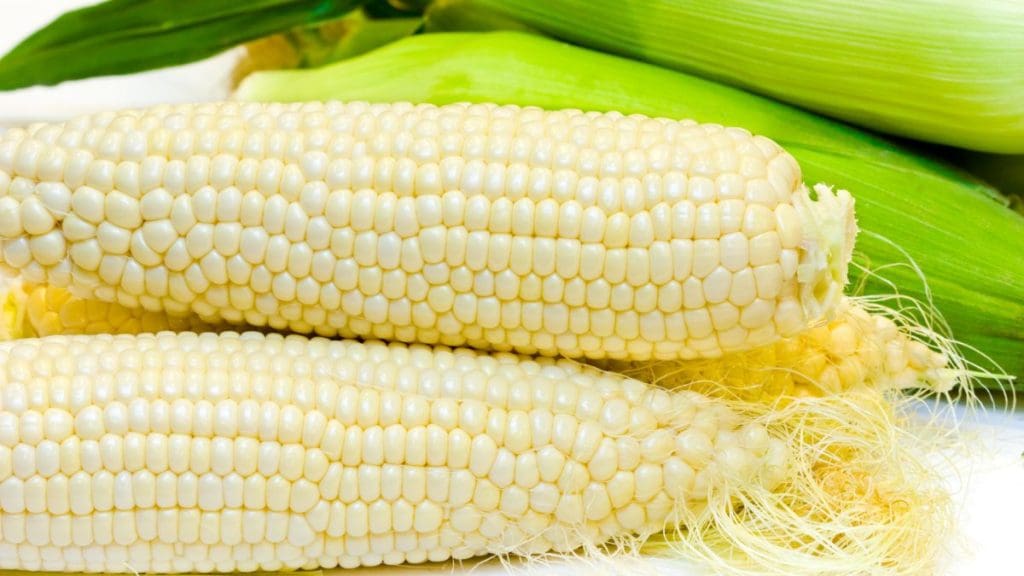
White kernel corn has a slightly sweeter, milder flavour profile that many people find more delicate than yellow corn. It’s grown across Ontario and Quebec and shows up regularly at farm stands. White su corn at peak ripeness is a particular favourite for many farm-stand regulars.
Bicolour
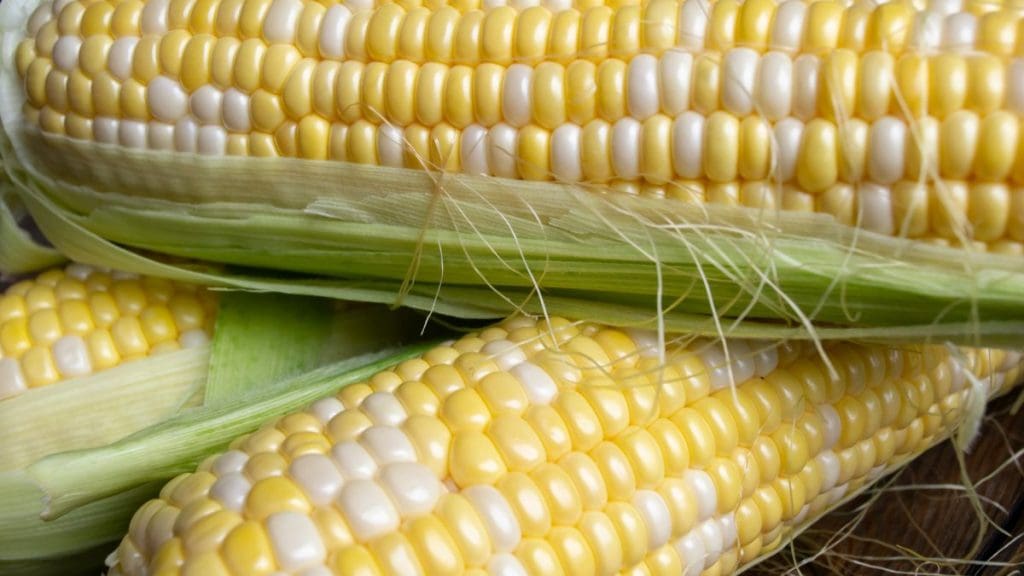
Bicolour corn (yellow and white kernels on the same cob) is extremely popular in Canada, particularly in Ontario and Quebec. The name “Peaches and Cream” is associated with bicolour corn broadly; technically it’s a trademarked variety name that has become something of a generic descriptor for the style in the same way “Kleenex” gets used for tissue. Bicolour corn is available in all three sweetness types.
There is no meaningful flavour difference between yellow, white, and bicolour corn within the same sweetness type; the differences between su, se, and sh2 types are far more significant to the eating experience.
The Two Main Production Methods
Field-Grown Sweet Corn
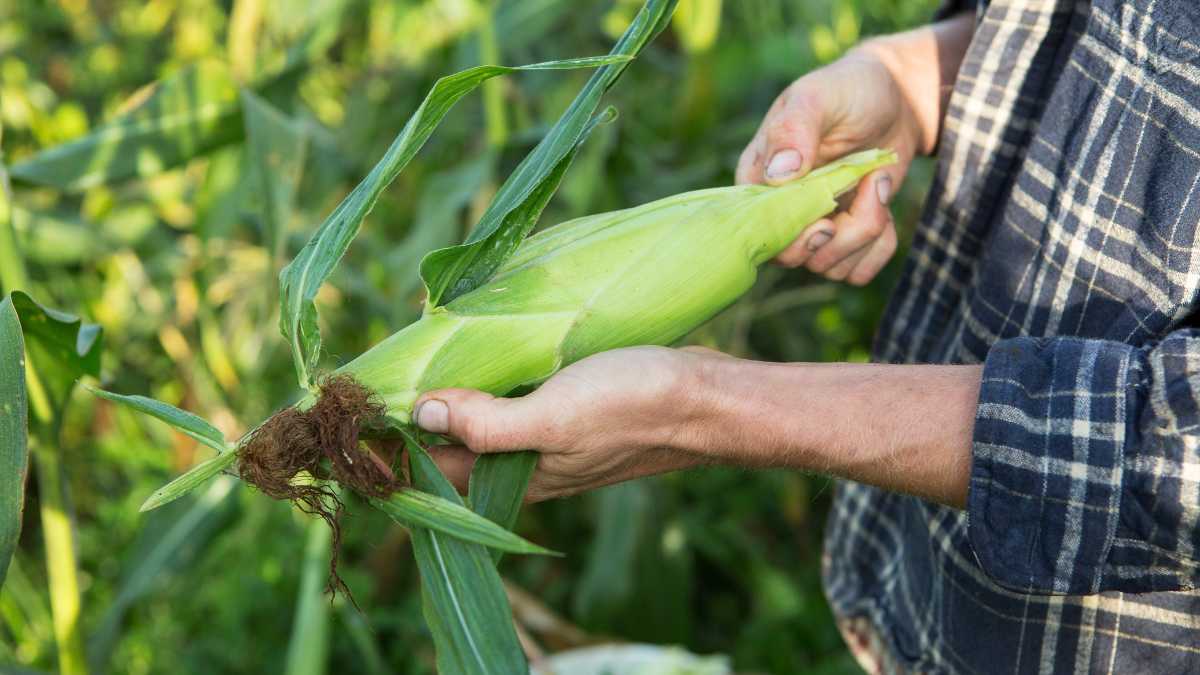
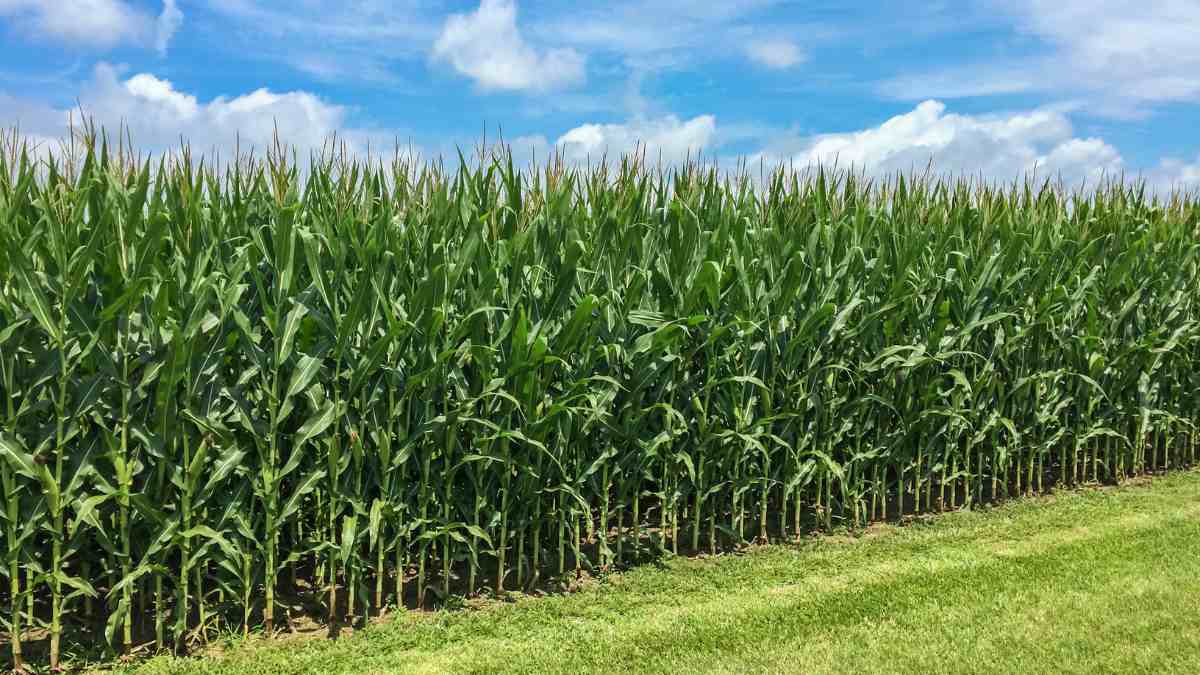
The overwhelming majority of Canadian sweet corn is grown in open fields. Field-grown sweet corn (whereas “field corn” without the “sweet” refers to the kind of corn grown mainly as animal feed, cornmeal and corn syrup) is a seasonal crop, available from late July through October. The field season is finite, which is part of what makes local sweet corn feel like an event worth looking forward to.
Field-grown sweet corn for the fresh market is typically harvested by hand or with careful machinery to prevent bruising, then cooled quickly to slow the sugar-to-starch conversion and any post-harvest quality loss. The best field-grown fresh-market sweet corn arrives at the stand the same day it was harvested.
Field-grown sweet corn for processing (frozen, canned) is harvested mechanically. The corn goes directly from the field to processing facilities, where it is stripped, sorted, and either blanched and frozen or canned within hours.
Processing (Frozen and Canned)
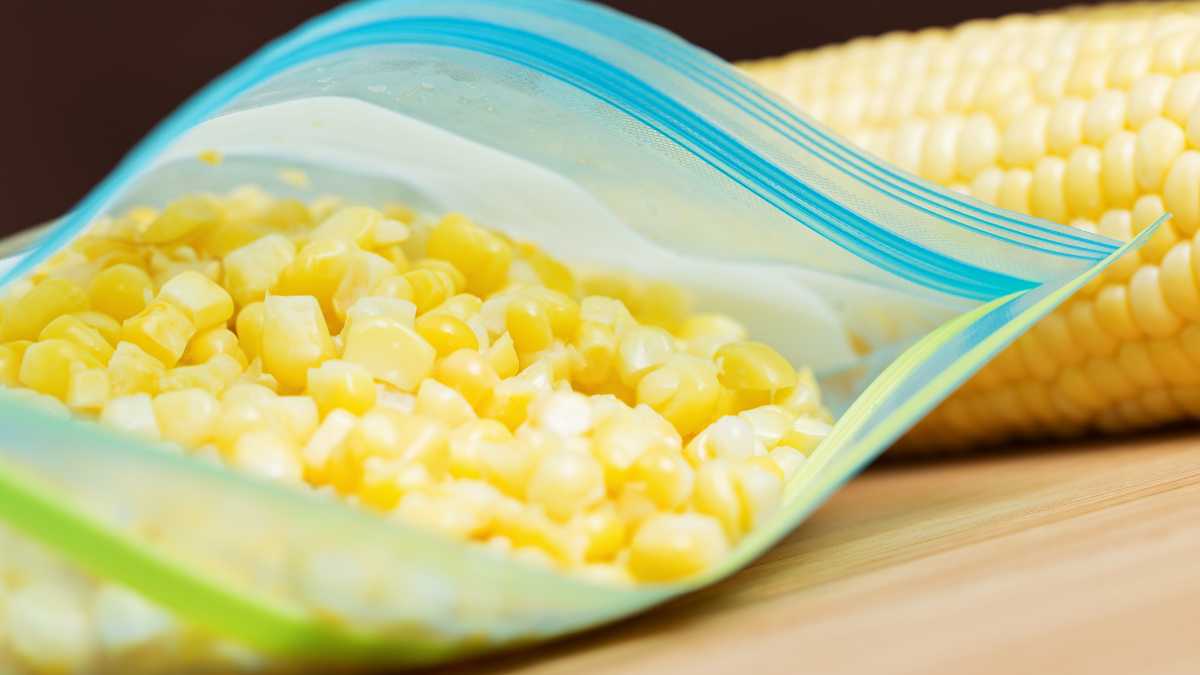
Frozen and canned Canadian sweet corn is not a lesser product. The processing window happens at peak maturity, and the speed of the cold-chain from field to freezer means frozen corn retains most of its nutritional value and a significant amount of its flavour. Sometimes flash-frozen corn will preserve more nutrients than fresh corn that has been transported to stores and farm stands. Frozen Canadian corn is a practical and reliable ingredient for soups, chowders, salsas, casseroles, and most cooked applications throughout the year.
If you want to extend the local season yourself, blanching and freezing fresh corn at home during the August and September peak is one of the most rewarding summer kitchen projects. See How to Store Sweet Corn to Cut Food Waste for step-by-step freezing instructions.
How to Choose Sweet Corn by Use
| Use | Best Type | Notes |
|---|---|---|
| Eating on the cob, just picked | su or se | Peak flavour within hours of harvest; farm stand is ideal |
| Grilling same day | se or se+ | More tender and holds up well to heat |
| Corn salad or dip, making ahead | se or sh2 | Better hold; cut kernels stay firmer |
| Soup or chowder | Any type, including frozen | Flavour melds well; frozen works excellently |
| Buying in advance (2+ days) | sh2 | Holds sweetness longer in the fridge |
| Freezing at home | se or sh2 | Both hold up to blanching and freezing |
| Baking (cornbread, fritters) | Any type; frozen or canned fine | Sweetness type less noticeable in baked applications |
Where to Find Canadian Sweet Corn
During peak season (August through September), local sweet corn is widely available through:
- Roadside farm stands: often the closest to harvest you will get. Many Ontario and Quebec stands receive new corn daily during the season.
- Farmers markets: ask vendors when the corn was picked and which farm it came from.
- U-pick operations: available through some farms during the height of the season. Picking your own means it goes from stalk to pot with minimal delay.
- Farm-direct retailers and on-farm stores: increasingly common in Ontario’s corn belt region and Quebec’s major growing areas.
- Grocery stores: look for “Product of Canada” on the packaging during the summer-fall window. This doesn’t tell you how long the corn has been in transit, but it confirms Canadian origin.
For Ontario farm-direct sourcing options, Ontario Farm Fresh maintains a directory of farm stands and farm-direct retailers across the province. For the full picture of what else is in season alongside sweet corn, see the What’s in Season hub.
Additional Articles to Explore




 Frequently Asked Questions About Canadian Sweet Corn
