
Ask a peach grower at a Niagara farm stand what variety you are eating and you may get an answer like Harrow Diamond, Reliance, or Cresthaven. Ask the same question at most grocery stores and you will get a shrug, because variety labelling at retail is rare. What you will find, sometimes, is the type: freestone or clingstone.
Understanding those three categories: clingstone, semi-freestone, and freestone: is the most useful peach knowledge a Canadian shopper can carry into peak season. It tells you when a peach will be available, how easy it is to use at home, and what it is best suited for. The named variety world adds richness to that picture, particularly for anyone who visits farm stands, picks their own, or wants to understand why one peach tastes different from another in the same week of August.
This guide covers the three main types, a note on white-fleshed peaches, and a comparison of Canada’s two main peach-growing regions. For the full seasonal picture, see What’s in Season? Peaches.




How to Read This Guide
This article is organized around the three main type categories (clingstone, semi-freestone, freestone), followed by a section on white-fleshed peaches as a specialty category, a comparison of Ontario and BC production, and a use-based decision guide. Named varieties are mentioned within each type’s section for context at the farm stand level, not as the primary organizing principle for most shoppers.
The Three Main Types of Canadian Peaches
Clingstone Peaches
Clingstone peaches are named for the way the flesh clings firmly to the stone (pit) and cannot be cleanly removed. They are the first peaches of the Canadian season, appearing in mid-July in Ontario and BC, and they have a distinctive character that explains why they are primarily used in commercial processing rather than home kitchens.
Clingstones tend to be very juicy and very sweet, with a soft, almost melting texture at peak ripeness. The flavour is often more intensely peachy than freestone types. These qualities make them ideal for canning, where the soft flesh holds up to processing better than firmer types, and for jams and preserves, where their high juice content and sweetness work in the final product’s favour.
For home cooks, clingstones can be challenging: the flesh simply will not come off the stone in neat pieces, which makes slicing and pitting frustrating. They are excellent eaten fresh out of hand, where the inability to pit them cleanly does not matter. For any preparation that requires neat slices: baking, freezing in portions, adding to a salad: semi-freestone or freestone types are more practical.
In Ontario, early clingstone selections from the Vineland and Harrow breeding programs appear in mid-July. These varieties are not always labelled by name at grocery stores, but a grower at a farm stand can usually tell you what they have.
Flavour: Very sweet, intensely peachy, high juice content.
Texture: Soft, juicy, melting at peak ripeness.
Season in Canada: Mid-July; first type of the season.
Best for: Eating fresh out of hand, commercial canning and processing, jam and preserves, smoothies (where pitting neatly does not matter).
Semi-Freestone Peaches
Semi-freestone peaches are where the clingstone-to-freestone spectrum meets in the middle. The flesh partially clings to the pit and partially pulls away, meaning you can remove it with some effort but not as cleanly as a true freestone. They are available from mid-July through August: roughly the second half of the first wave of the season.
Semi-freestones are the type most likely to be at the farm stand or grocery store in the first weeks of the season. They offer a balance: sweet enough to eat fresh, manageable enough to pit and slice for home canning or baking, and available earlier than the freestone types. If someone hands you a peak-of-summer peach in late July and it is exquisite, there is a reasonable chance it is a semi-freestone.
Common semi-freestone varieties grown in Ontario include Harrow Beauty, which is among the most widely planted in the province. It has a yellow-orange flesh, good sweetness, and a semi-freestone characteristic that makes it popular both for fresh markets and home canning.
Flavour: Sweet and aromatic; similar to clingstone in intensity, with more balanced acidity.
Texture: Juicy; flesh partially clings but can be removed with effort.
Season in Canada: Mid-July through August.
Best for: Fresh eating, home canning, baking (galettes, crisps), grilling; the workhorse peach of the Canadian season.
Freestone Peaches
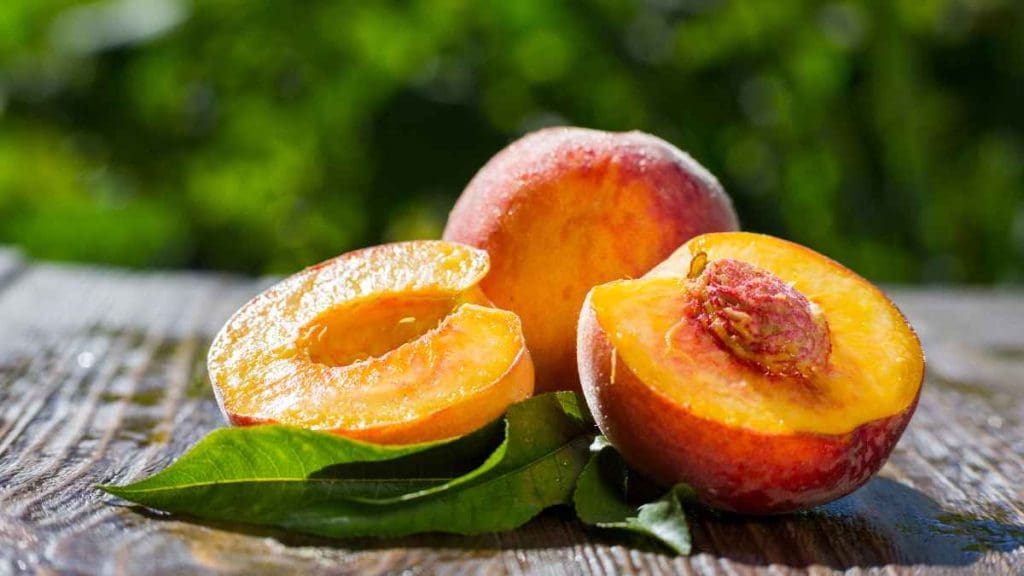
Freestone peaches are the home cook’s peach. The flesh separates from the stone cleanly with a twist, which makes them easy to halve, pit, and slice. They are available from mid-August through September: the back half of the Canadian season, and the window when Canadian peaches are most widely available at grocery stores.
Freestone peaches are slightly less juicy and soft than clingstones, but more complex in flavour: a balance of sweetness and acidity that rewards eating fresh, holds up to baking, and freezes particularly well. The clean separation from the stone means you can cut consistent slices, halves for grilling, or chunks for baking without wrestling with the pit.
Several named varieties are commonly grown in Ontario’s Niagara region:
Redhaven: An early freestone, typically one of the first freestones to come in, in mid-August. Firm, good flavour, red-blushed skin over yellow background. A benchmark variety that has been planted widely in Ontario for decades.
Reliance: Notable for better cold hardiness than many other varieties, making it useful in marginal peach-growing areas. Good flavour, yellow flesh, freestone. Appears mid-to-late August.
Cresthaven: A late-season Ontario freestone, available through September. Firm flesh, good storage quality, excellent for canning and freezing as well as fresh eating.
In BC’s Okanagan Valley, well-established freestone varieties include:
Suncrest: A mid-season variety with excellent flavour and a reputation as one of the Okanagan’s best fresh-eating peaches.
Elegant Lady: A popular BC variety with attractive colour, good size, and reliable flavour.
Variety availability and names at any given farm stand vary by grower and year. The Vineland Research and Innovation Centre continues to release new varieties from its Ontario peach breeding program, some of which are entering commercial production in both Ontario and BC.
Flavour: Sweet with balanced acidity; more complex than clingstone; deepens with full ripeness.
Texture: Firm, clean; flesh separates from pit easily.
Season in Canada: Mid-August through September.
Best for: Fresh eating, slicing for fruit salads and cheese boards, baking (peach galette, crisp, muffins), grilling, freezing, home canning.
White-Fleshed Peaches
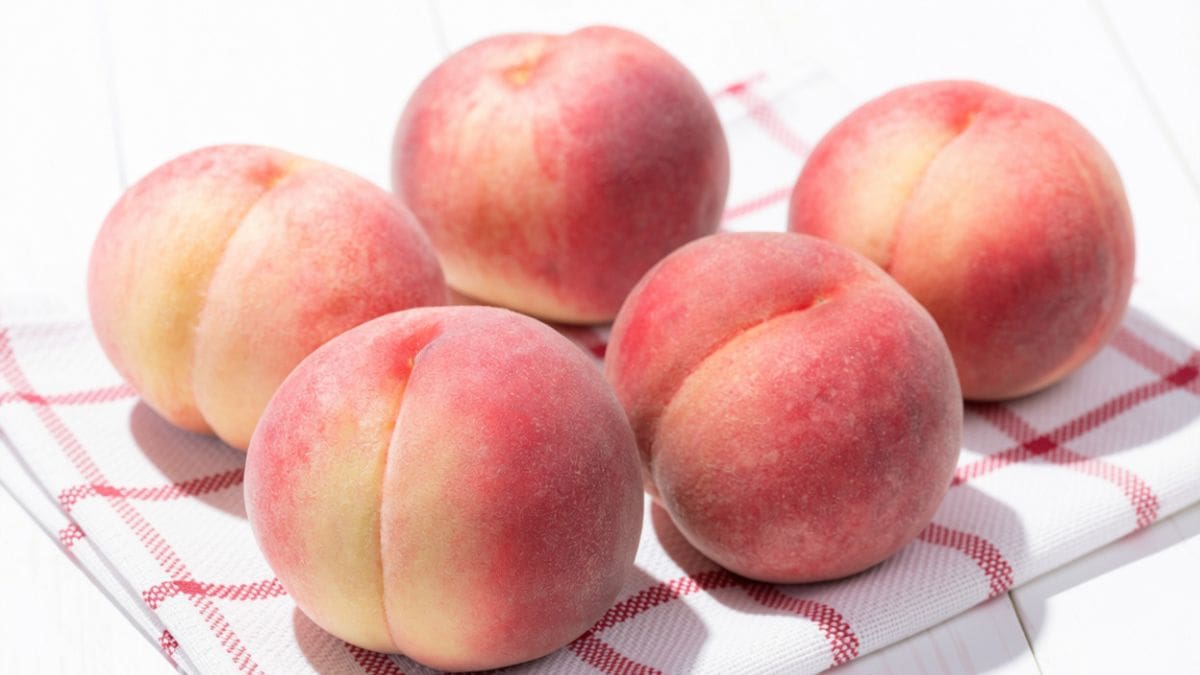
White-fleshed peaches are a distinct category from the yellow-fleshed types that dominate Canadian production. Their flesh is pale pink to cream in colour, their skin is pinkish-white or pale yellow with a red blush, and their flavour is markedly different: lower acidity, more delicate, and often described as honey-like or floral.
White peaches are not less ripe than yellow peaches; the colour and flavour difference is genetic. Some people find them more subtle and less complex than yellow-fleshed varieties; others prefer their sweetness and gentler acidity.
White-fleshed peaches are not widely grown commercially in Canada at scale, but they appear at specialty farm stands and at some farmers markets during peak season. They are worth seeking out if you encounter them. They are best eaten fresh where their delicate flavour is the point; cooking or canning tends to diminish the subtlety that makes them interesting.
Ontario Niagara vs. BC Okanagan: Two Canadian Growing Regions
Canada’s two main peach-growing regions produce fruit with subtle but real differences rooted in climate, variety selection, and growing conditions.
Ontario Niagara peaches grow in a humid, lake-moderated climate with warm summers and relatively mild (for Canada) winters. The region has a longer history of peach breeding and a wider diversity of varieties, from early-season selections in July through late freestones in September. Ontario peaches at farm stands in the Niagara region are among the freshest and most flavourful available anywhere in Canada when at their peak.
BC Okanagan peaches grow in a drier, semi-arid climate with intense summer sun and relatively cool nights. The drier conditions and temperature differential between day and night can concentrate sugars and flavour in stone fruit. Okanagan peaches may have slightly more concentrated sweetness and a different aromatic profile than Ontario peaches. The Okanagan is also home to the same diversity of stone fruit as Niagara: cherries, apricots, plums, and peaches all grow well there.
For most consumers, the regional difference is subtle and the more important questions are type (freestone vs. clingstone) and freshness (farm stand vs. cold-chain grocery).
How to Choose the Right Peach for What You Are Making
For eating fresh out of hand: Semi-freestone or freestone peaches, fully ripe. Clingstones also excellent fresh, but messier to eat.
For a simple fruit plate or cheese board: Freestone, sliced. The clean pit separation makes presentation easy.
For home canning: Semi-freestone or freestone are both manageable. Many Canadian home canners prefer freestone for the ease of pitting. Clingstones are used commercially but frustrating at home.
For jam and preserves: Clingstones (very sweet, high juice) or semi-freestones are traditional. Freestones also work well.
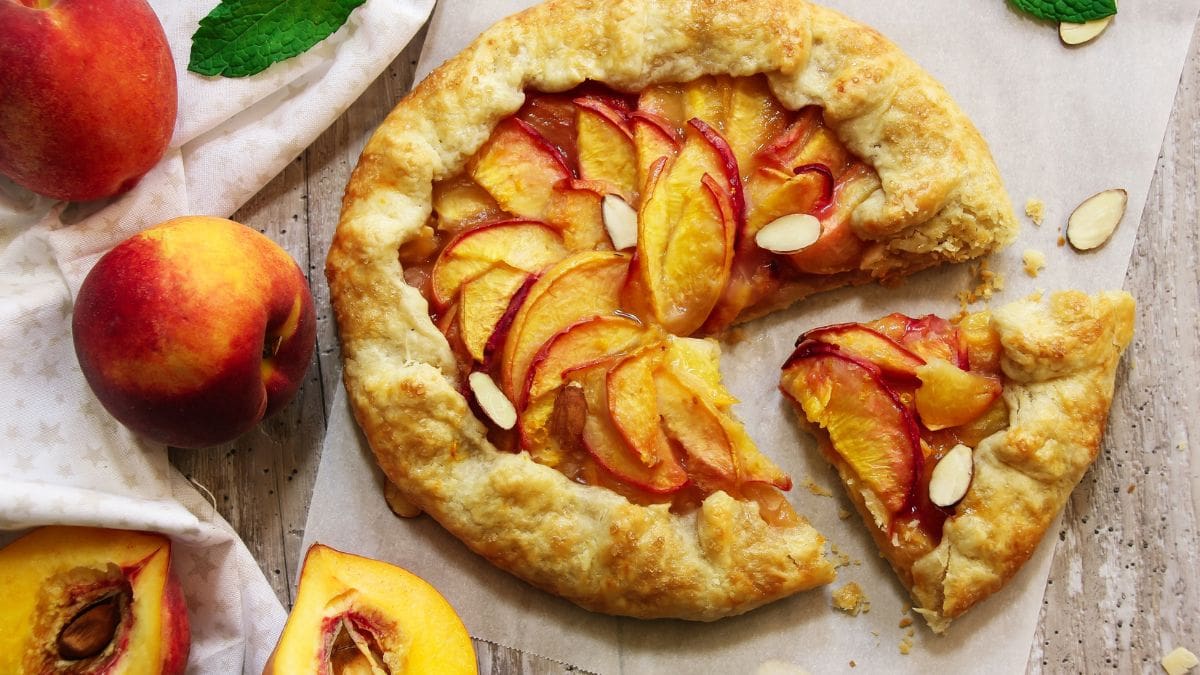
For baking (galette, crisp, muffins): Freestone is easiest. Slightly under-ripe freestone peaches hold their shape better in the oven than fully ripe ones.
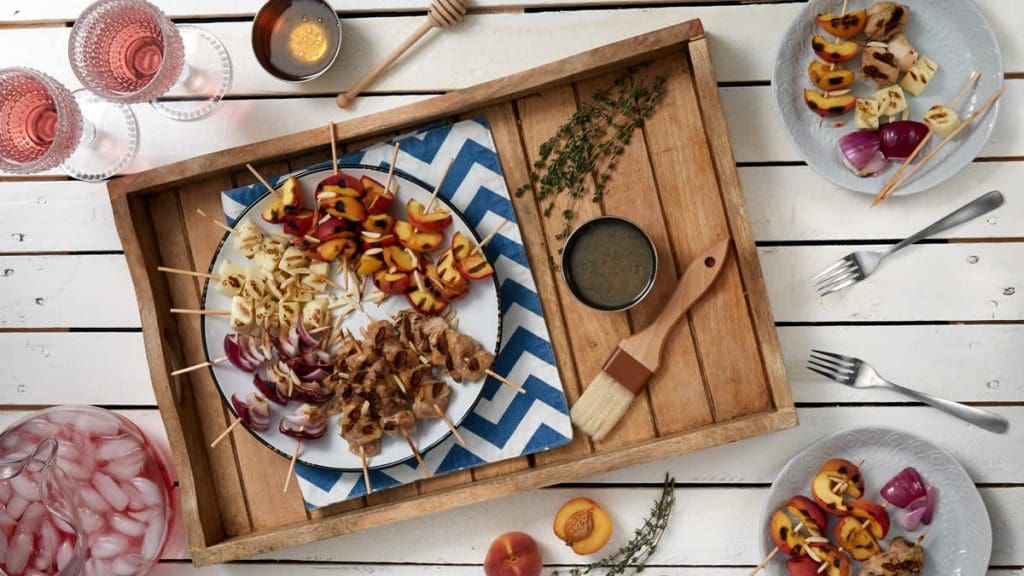
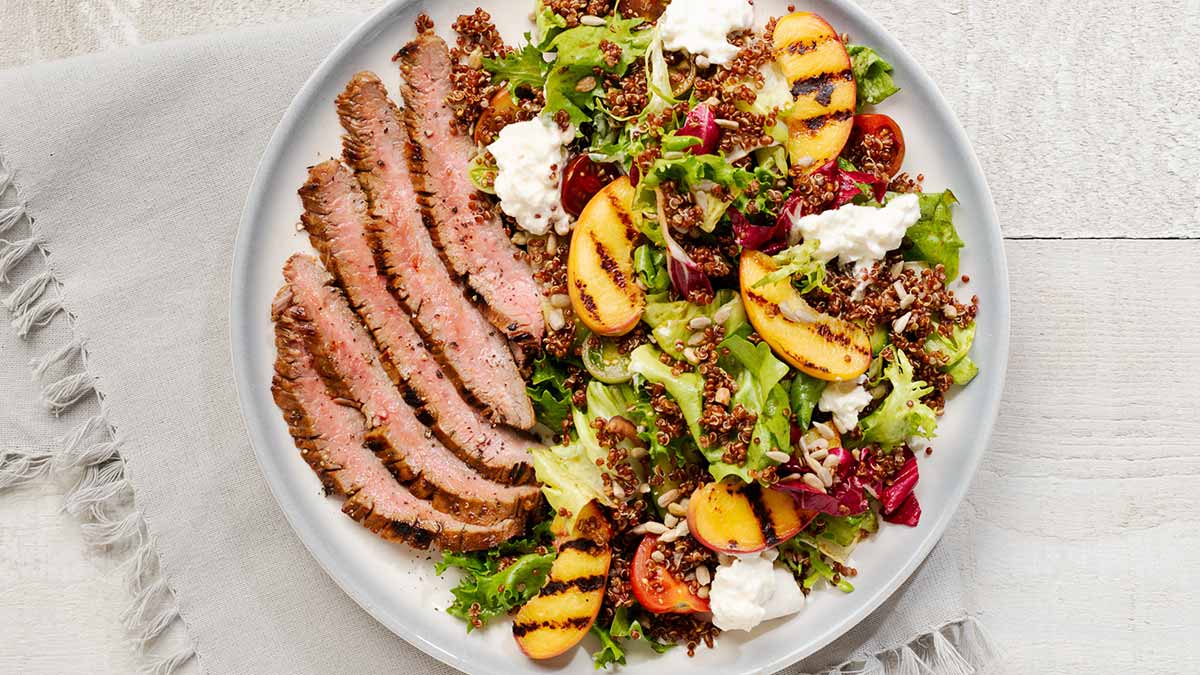
For grilling: Semi-freestone or freestone halves, slightly firm. A just-barely-ripe peach holds up better on the grill than a very soft one. See our Honey, Thyme Chicken, Halloumi Cheese and Peach Kabobs or these Brown Sugar Grilled Peaches for a sweet summer side dish.
For freezing: Freestone. The clean separation makes slicing and portioning before freezing much easier. For the full freezing method, see How to Store Peaches or try this Peach Freezer Jam.
For smoothies and drinks: Any type. Clingstones work well in smoothies where pitting neatly is not required; frozen freestone peach slices are the most practical year-round choice for any peach beverage. For a grown-up way to enjoy your peaches this summer try a homemade Peach Bellini, Easy White Sangria, or Frozen Peach Champagne Cocktail.
Check Out These Related Articles






 How to Store Peaches
