
Few summer moments are as Canadian as pulling into a roadside stand, picking up a dozen cobs, and rushing them home before the sugars have a chance to fade. Sweet corn is one of Canada’s most iconic summer vegetables, and for good reason: the season is short, the flavour at its peak is genuinely remarkable, and Canadian growers have been perfecting the crop for generations. Whether you’re planning your next barbecue or looking to stock your freezer for winter, here is everything you need to know about sweet corn in season in Canada, from when to find it and how to pick the best cob to how it’s grown and what to do with it.

At a Glance: When Is Sweet Corn in Season in Canada?
Canadian field-grown sweet corn typically arrives in late July and remains available through October. The earliest cobs, grown in the warmest parts of southern Ontario and southern Quebec, can appear at farm stands and farmers markets in the final weeks of July. Peak season across most of the country runs through August and September.
As with all field crops, exact timing depends on the growing season, regional weather patterns, and the varieties planted. A cool, wet summer may delay the harvest window; a warm one may bring it forward.
Sweet corn is not grown in Canadian greenhouses at commercial scale, so outside of the field season, most fresh corn in stores arrives from warmer-climate growing regions to the south. Frozen and canned Canadian-grown corn extends the local supply year-round.
- Fresh field season: late July through October
- Peak local availability: August and September
- Best places to find local corn: roadside stands, farmers markets, U-pick operations, farm-direct retailers
- Frozen and canned Canadian corn: available year-round
See the full What’s in Season hub for what else is available alongside sweet corn through the late summer harvest.






Where Is Sweet Corn Grown in Canada?
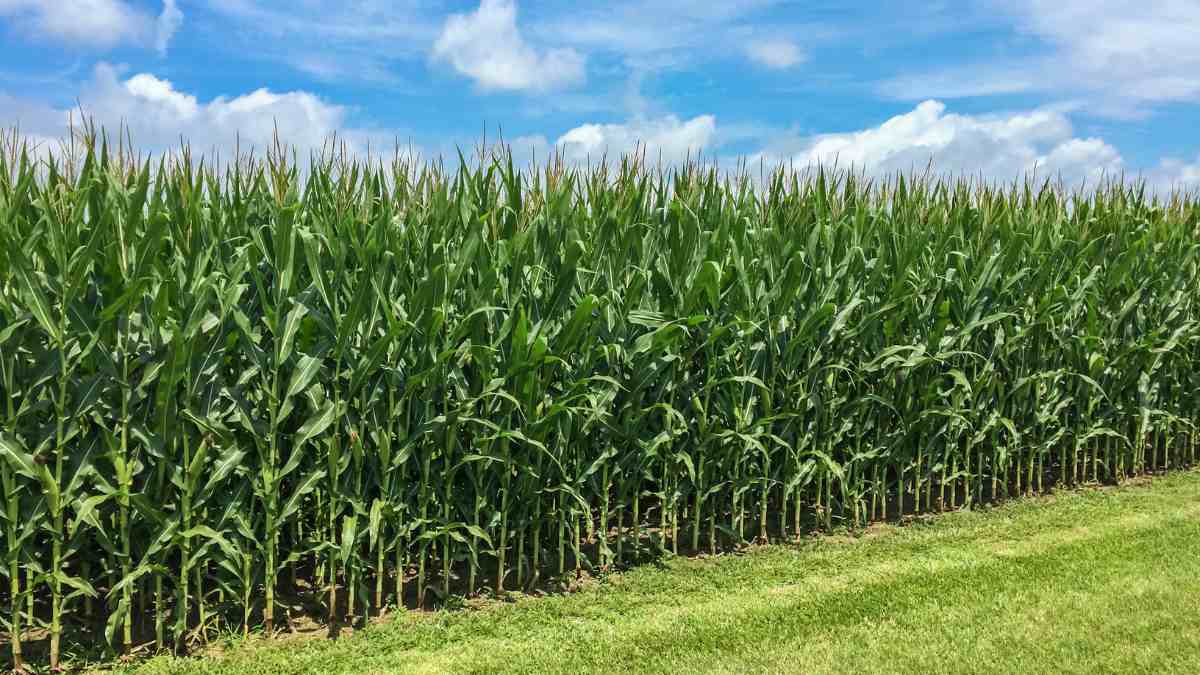
Sweet corn is grown in every Canadian province where the summer brings sufficient heat, but production is concentrated in Ontario and Quebec. Together, these two provinces account for the large majority of Canada’s fresh-market and processing sweet corn. Alberta also produces sweet corn, particularly for processing, and growers in British Columbia, Manitoba, and other provinces supply regional fresh markets.
Heat is the fundamental constraint on where and when sweet corn matures in Canada. Canadian growers and seed companies use a measurement called Corn Heat Units (CHU) to quantify the accumulated warmth a growing region delivers over the season. Each variety is rated for the minimum CHU needed to reach harvest, which allows growers to match seed selection to their location’s climate profile. This system is particularly well-developed in Canada and reflects the practical realities of growing a heat-loving crop in a northern climate.
The Ontario Processing Vegetable Growers coordinates Ontario’s processing sweet corn sector, with thousands of acres contracted annually across the province. Fresh-market production happens alongside and through networks of farm-direct retailers and farmers markets.
For more on the Canadian organizations that support local growers, see the Ontario Fruit and Vegetable Growers Association, Ontario Farm Fresh, Alberta Farm Fresh and Fruit and Vegetable Growers of Canada
Canadian Sweet Corn Types
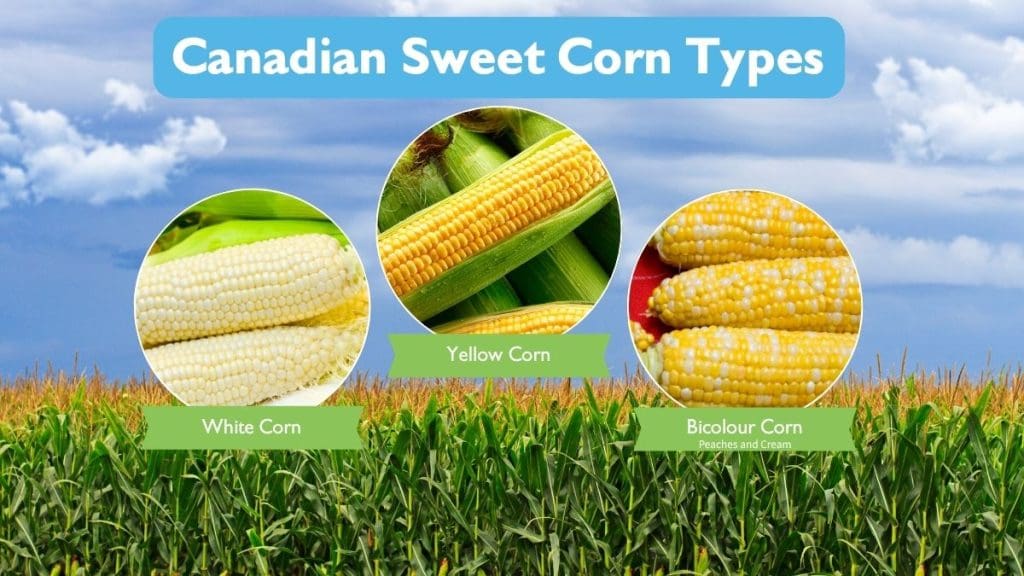
Canadian shoppers typically encounter sweet corn in three kernel colour options at the farm stand or grocery store: yellow, white, and bicolour (a mix of yellow and white kernels often associated with the name “Peaches and Cream”). What shoppers see less often is the underlying sweetness type, which has a significant effect on how long the corn holds its flavour after harvest.
The three main sweetness types grown in Canada are:
Normal sugary (su): The original sweet corn type, with a classic corn flavour that many find deeply satisfying at peak ripeness. The sugar-to-starch conversion happens relatively quickly after harvest, so su-type corn is best eaten the same day it’s picked. Farm stands are the ideal source.
Sugar-enhanced (se and se+): A sweeter and more tender version of the su type, with a slower sugar-to-starch conversion. A good middle ground between farm-stand freshness and shelf life. Available at many farm stands and well-stocked supermarkets.
Supersweet (sh2): The sweetest of the three types and the most resistant to starch conversion after harvest. The extended shelf life makes supersweet varieties the practical choice for grocery store supply chains, where cobs travel further and sit longer before purchase. Supersweet corn is often what you find in a standard grocery store bin.
None of these types is inherently better; the right choice depends on your situation. If you’re buying directly from a farm stand and cooking tonight, a su or se cob at peak ripeness can be extraordinary. If you’re buying a few days ahead, a supersweet variety holds better.
For a full comparison, see Canadian Sweet Corn Types: Taste, Texture and Best Uses.
How to Buy Sweet Corn
The best fresh sweet corn in Canada is local and very recent. With su and se varieties in particular, the sugar-to-starch conversion begins the moment the cob is harvested, so sourcing from a farm stand, farmers market, or farm-direct retailer during the August and September peak season gives you the best chance of finding corn at its flavour prime.
What to look for:
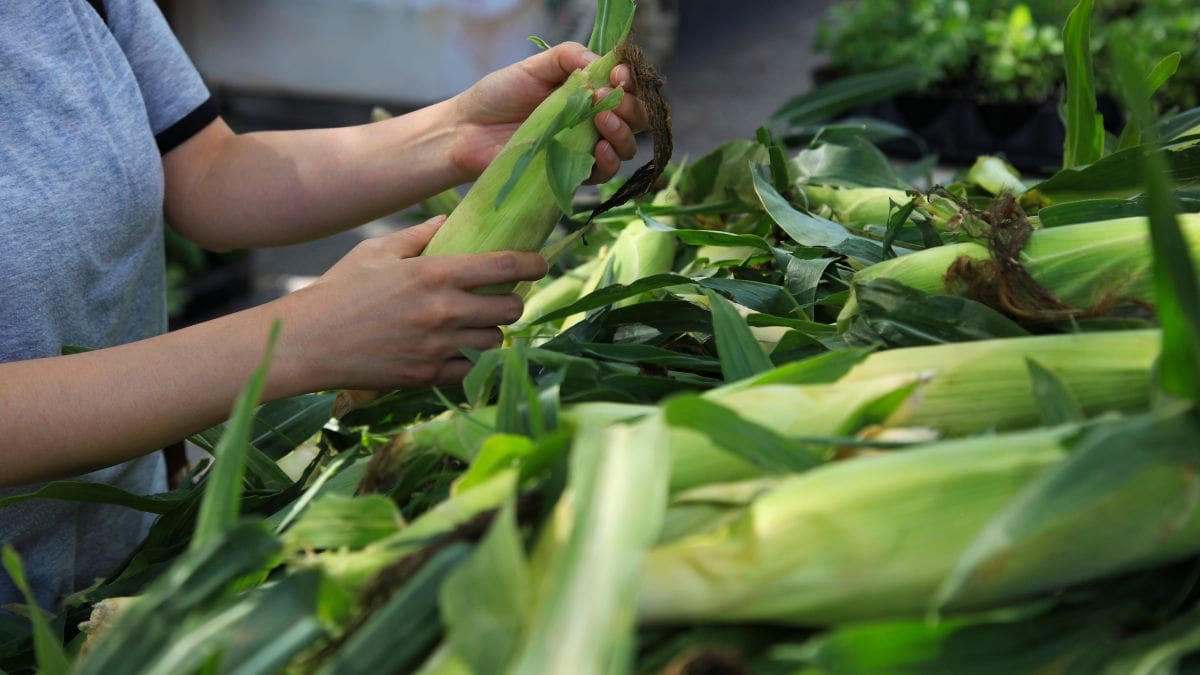
- Husks: bright green, tightly wrapped, and moist. Avoid dry, yellowing, or slimy husks.
- Silk: slightly moist and light brown at the tip. Dry, shrivelled silk suggests the cob is past its prime.
- Kernels: press gently through the husk; you should feel plump, firm kernels all the way to the tip. Hollow-feeling tips mean the cob was harvested too early or has begun to dry out.
- Smell: fresh corn has a light, clean, slightly sweet scent. Off-smells are a sign to put it back.
For packaged corn, look for “Product of Canada” on the label during summer and fall. Farm stands and market vendors can often tell you exactly which farm the corn came from and when it was picked.
Canned and frozen Canadian-grown corn is a reliable year-round option, particularly for cooked uses like soups, chowders, and salsas.
For more on comparing types and sourcing options, see Canadian Sweet Corn Types: Taste, Texture and Best Uses. For budget planning, see Seasonal Sweet Corn and Your Grocery Budget in Canada.
How to Store Sweet Corn
The golden rule with fresh sweet corn is simple: keep it cold and use it quickly.
Refrigerate corn as soon as you bring it home. Leave the husks on until just before cooking; the husk helps retain moisture. Su and se-type corn is best eaten within one to two days of purchase; supersweet varieties can hold two to three days in the refrigerator with less flavour loss.
Sweet corn freezes well. For a product that works beautifully in soups, chowders, succotash, and salsas all winter, blanch the cobs in boiling water for two to three minutes, then shock them in ice water before cutting the kernels off and freezing in bags. Raw frozen kernels also work, though blanching preserves colour and flavour better over longer storage.
For a full guide to refrigerating, freezing, and getting the most out of less-than-perfect corn, see How to Store Sweet Corn: Fridge, Freezer and Tips to Cut Food Waste.

Easy Ways to Use Sweet Corn
Sweet corn’s flavour peak in the Canadian summer invites simplicity: boiled, grilled, or eaten straight off the cob with butter and salt. But it is also one of the most versatile summer vegetables in the Canadian kitchen.
- Boiled on the cob: the classic. For peak-season corn that’s just been picked, three to five minutes in boiling water is all you need. Older corn may need a few minutes more.
- Grilled in the husk: pull back the husks, remove the silk, soak the cobs for 20 minutes, then grill over medium heat for 15 to 20 minutes. Finish with butter, lime, chili, or miso for a crowd-pleasing summer result.
- Corn dip: cut the kernels off the cob and turn them into a crowd-pleasing dip. Try Mexican Street Corn Dip for a party-ready option.
- Corn chowder: one of Canada’s great late-summer-into-fall dishes. Fresh, frozen, or canned corn all work.
- Corn in baking: cornbread, corn muffins, and corn fritters work well with both fresh-cut and frozen kernels.
- Frozen corn all winter: blanch and freeze surplus corn kernels in September or October for an ingredient that punches well above its weight in winter cooking.
For a full range of recipe ideas and techniques, see Easy Ways to Use Sweet Corn: Simple Canadian Recipes and Ideas for the Season.

Enjoy Your Vegetables: Corn
Corn on the cob, is a delicious summer treat. Get information and tips on cooking, storing and preventing food waste.
Sweet Corn Nutrition at a Glance
Sweet corn occupies an interesting position in the Canadian kitchen: botanically classified as a grain, but eaten as a vegetable. One medium cob contains approximately 85–100 calories, along with dietary fibre, folate, vitamin C, vitamin B6, niacin, thiamine, potassium, and magnesium. Values vary by variety, size, and preparation.
Sweet corn also contains lutein and zeaxanthin, two carotenoids associated with eye health. It provides complex carbohydrates alongside its natural sugars. Frozen and canned corn retain much of the nutritional value of fresh corn, making them practical choices outside the field season.
As with all foods, nutritional values are context-dependent; consulting Canada’s Food Guide for guidance on vegetable and fruit intake alongside other food groups gives the most complete picture.
How Sweet Corn Is Grown in Canada
Planting and the Growing Cycle
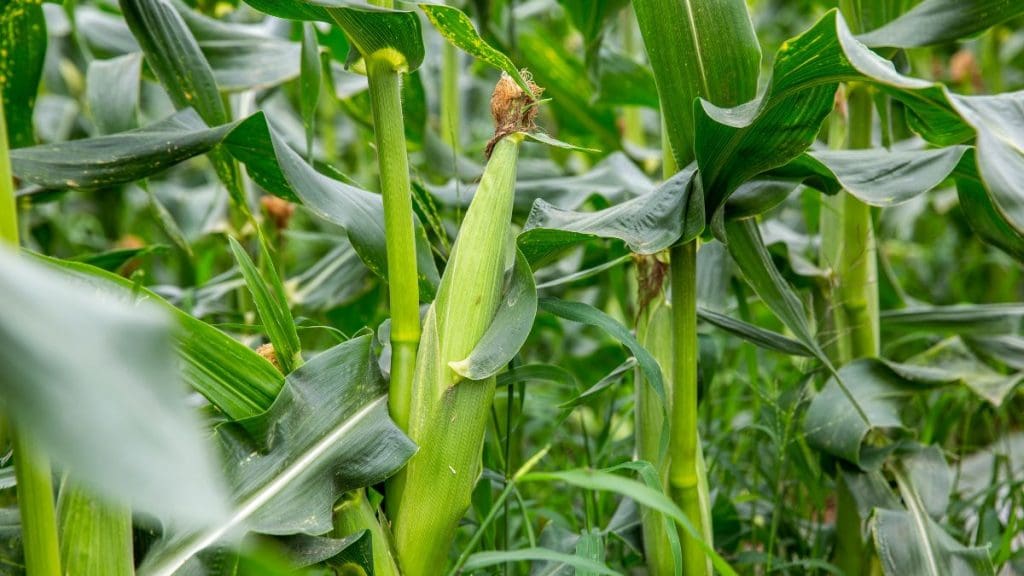
Sweet corn is planted after the last frost of spring, typically from May through early June across most of Canada’s sweet corn regions. Farmers plant successive rounds of seed over several weeks to spread the harvest window and ensure a steady supply rather than everything ripening at once.
Corn is wind-pollinated. The tassel at the top of each stalk is the male flower; the silk at the ear is the female receptor. Each strand of silk corresponds to one kernel on the cob. A good pollination season means full, even cobs; cool, wet weather during pollination can result in gaps in kernel coverage.
The Corn Heat Units (CHU) system, widely used by Canadian growers, tracks accumulated daily warmth to project when a variety will reach harvest. Growers in southern Ontario and Quebec can typically grow varieties rated at 2,400–3,200 CHU, while growers in shorter-season areas plant earlier-maturing varieties rated for fewer units.
Harvest
Fresh-market sweet corn is often harvested by hand to minimize bruising. Harvest crews move through the fields at peak kernel development, placing cobs onto conveyors that feed into field bins for transport. Speed matters: corn harvested in the morning makes it to the packing house, cool room, and farm stand the same day.
Processing sweet corn (destined for frozen or canned products) is harvested mechanically with purpose-built harvesters that strip the cobs and deliver them directly to processing facilities. The timeline from field to freezer is often measured in hours, which helps preserve the quality and nutritional value of the processed product.
Fresh Market and Processing
Roughly 25% of Canadian sweet corn is sold fresh; the rest moves through processing into frozen or canned products. Baby corn, the immature cob harvested before the kernels develop, is a separate product from the same plant, typically processed and canned for use in stir-fries and salads.
Frozen sweet corn is one of Canada’s most consumed processed vegetables, and Canadian processing facilities handle a significant share of the Ontario and Quebec crop each season.
A Note on Biotechnology
Over the past several decades, farmers have had access to insect-resistant corn varieties (often called Bt corn) developed through biotechnology, which have reduced the need for insecticide applications in affected regions. Health Canada evaluates the safety of biotech crop varieties before they enter the food supply and has determined that approved biotech crops, including varieties commonly referred to as genetically modified, are as safe and nutritious as their conventional counterparts.
For a deeper look at how biotechnology applies to pest management in Canadian crops, see Plants That Defend Themselves. For the story of organic corn production in Canada, see Growing and Harvesting Organic Corn.
FAQs About Sweet Corn in Season in Canada
When is sweet corn in season in Canada?
Field-grown Canadian sweet corn is typically available from late July through October, with peak supply at roadside stands and farmers markets in August and September. Timing varies by region and year. See Frequently Asked Questions About Canadian Sweet Corn for more.
How do I tell if sweet corn is Canadian-grown?
During summer and fall, look for “Product of Canada” on packaging or ask at farm stands and farmers markets, where vendors can usually tell you exactly where the corn was grown. See Canadian Sweet Corn Types: Taste, Texture and Best Uses for more on sourcing local corn.
What’s the difference between yellow, white, and bicolour corn?
Kernel colour is largely cosmetic and not a reliable indicator of sweetness or quality. Yellow corn has yellow kernels, white corn has white kernels, and bicolour (often associated with varieties called “Peaches and Cream”) combines both. All three come in multiple sweetness types. See Canadian Sweet Corn Types: Taste, Texture and Best Uses for a full breakdown.
How long does fresh corn last in the fridge?
Fresh su and se-type corn is best eaten within one to two days of purchase; supersweet varieties hold two to three days. Cold temperature slows the sugar-to-starch conversion but does not stop it. See How to Store Sweet Corn: Fridge, Freezer and Tips to Cut Food Waste for full storage guidance.
Can you freeze sweet corn?
Yes, and it’s one of the best ways to extend the Canadian corn season. Blanch cobs or kernels briefly, then freeze in sealed bags. Frozen corn keeps well for several months and works in soups, chowders, and most cooked applications. See How to Store Sweet Corn for step-by-step instructions.
Is sweet corn a vegetable or a grain?
Both, depending on context. Botanically, corn is a grain; nutritionally and culinarily, sweet corn eaten fresh on the cob is counted as a vegetable. Dried field corn processed into corn flour, cornmeal, or starch is counted as a grain. See Frequently Asked Questions About Canadian Sweet Corn for more.
What’s the difference between sweet corn and field corn?
Sweet corn is bred for high sugar content at the immature (milk) stage and eaten fresh, frozen, or canned. Field corn (also called dent corn) is a different variety bred to mature and dry down in the field; it’s used for animal feed, ethanol, corn flour, cornmeal, corn syrup, and many other processed products. The two crops are grown differently and are rarely interchangeable. See Frequently Asked Questions About Canadian Sweet Corn for more.



 What’s in Season? Cucumbers
