
Mustard seed might be a small ingredient in your kitchen, but Canada plays a big role in growing it. Canada is one of the world’s largest producers and exporters of mustard seed, and most of that crop is grown on family grain and oilseed farms in the Prairies, especially Saskatchewan. This article walks through what mustard is, where it is grown, how a farming year works from seeding to harvest and storage, and what it means when a product says it is made with Canadian mustard.
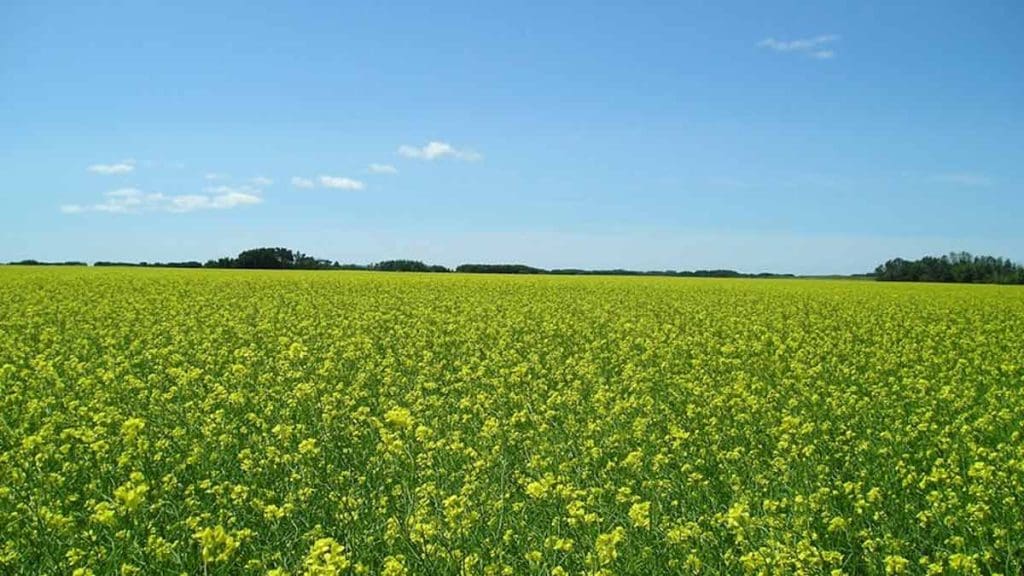
What is mustard, and where is it grown in Canada?
Mustard seed comes from small, hardy oilseed crops in the Brassica and Sinapis families—in the same family as cabbage, brussels sprouts and broccoli. Farmers grow different types, including yellow (often used in classic yellow mustard), brown, and oriental mustard used in Dijon‑style mustards, spice mixes, and mustard oil.
Commercial mustard production in Canada began in the 1930s in Alberta, and over time production shifted and expanded so that Saskatchewan now produces most of Canada’s mustard seed. In recent years, Statistics Canada has reported more than 200,000 hectares of mustard seed seeded in Canada, with Saskatchewan accounting for the majority and Alberta and Manitoba contributing smaller areas. Annual production has been around 170,000–190,000 tonnes in recent harvests, with year‑to‑year changes driven by seeding decisions and weather.
Mustard grown on the Prairies is exported to markets such as the United States, the European Union, Japan, and others, where it is used to make table mustards, spice blends, and other products. Some Canadian mustard seed is crushed to produce mustard oil and meal for food and industrial uses.
What this means for you
When you pick up a jar of mustard or a product that lists mustard seed as an ingredient, there is a good chance the seed was grown on a Canadian grain farm, particularly in Saskatchewan, even if the product was manufactured elsewhere.
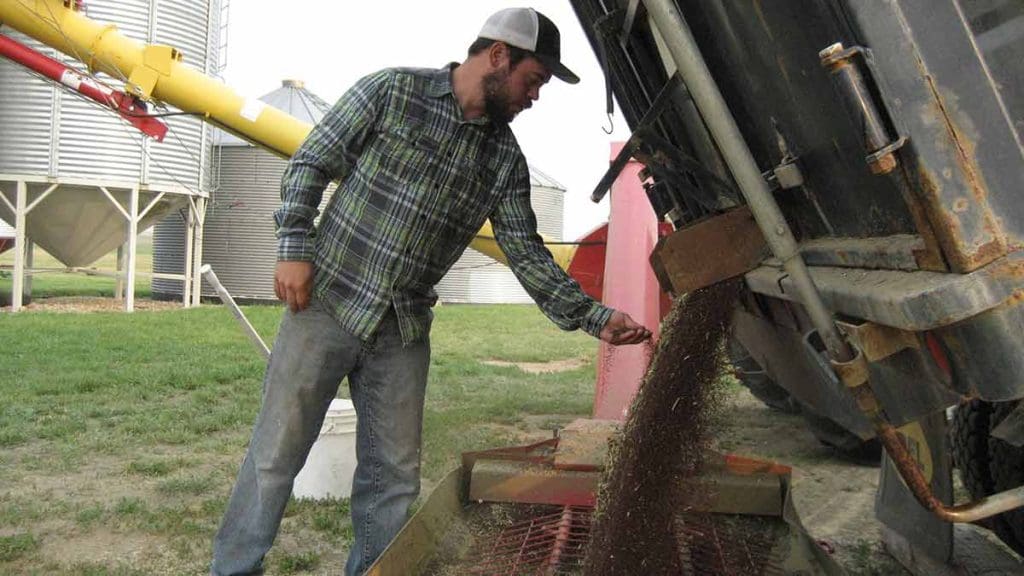
A year in the life of a Canadian mustard farm
Mustard is part of broader crop rotations on mixed grain and oilseed farms. Here is what a typical year looks like, using a Prairie farm as an example.
Late winter and early spring: Planning and field preparation
Months before seeding, farmers choose which fields will be planted to mustard, considering crop rotation, soil conditions, and market outlook. Mustard is not grown on the same field year after year. Rotating with cereals, pulses, or other oilseeds helps manage disease, weed pressure, and soil fertility.
In early spring, once snow is gone and conditions allow, farmers may do light field work such as harrowing (breaking apart the crop residue on the ground) or shallow tillage if needed, but many Prairie farms rely on minimum‑till or no till systems where most crop residue stays on the surface. Equipment is checked and prepared for seeding: air drills, seeders, and fertilizer systems are calibrated for mustard’s small seed size and target seeding rate.
Spring: Seeding mustard
Mustard is generally seeded in spring once soil temperatures have warmed enough for good germination but before hot summer weather. Seeding typically occurs from late April to late May, depending on the region and year. The small seeds are sown shallowly in firm, moist seedbeds, often using specialized openers to place seed and fertilizer in the correct bands.
Farmers choose varieties based on type (yellow, brown, oriental), disease resistance, yield potential, and market contracts.
Summer: Managing the crop and protecting soil
As the mustard crop emerges and grows, farmers monitor for weeds, insects, and diseases, while also tracking soil moisture and weather conditions. Mustard seedlings are relatively small and can face early competition from weeds, so early weed control is important.
Most Prairie grain farms use conservation tillage and stubble management to protect soil structure and reduce erosion. Leaving previous crop residues on the surface and limiting tillage helps:
- Reduce wind and water erosion.
- Improve water infiltration and retention.
- Support soil organic matter over time.
What this means for you
Mustard is usually one crop in a rotation that also includes cereals, pulses, and other oilseeds; soil health practices like reduced tillage, no-till and crop rotation help maintain the land that produces these seeds.

Why are herbicides and insecticides used, and how is their safety regulated?
Like other grain and oilseed crops, mustard can be affected by weeds, insects, and diseases. Farmers use an integrated approach to manage these pressures:
- Preventive practices
- Crop rotation to break disease cycles.
- Selecting adapted varieties.
- Managing residue to reduce certain disease risks.
- Monitoring and thresholds
- Scouting fields to track weed density and pest levels.
- Making treatment decisions based on thresholds and economic considerations.
- Pesticide use when needed
- Herbicides may be used to control weeds that compete for light, water, and nutrients, particularly in early growth stages.
- Fungicides or insecticides may be used where specific disease or insect pressures threaten yield and quality, following label directions and integrated pest management principles.
In Canada, all pesticides must be evaluated and registered by Health Canada’s Pesticides Regulatory Directorate before they can be sold or used. This evaluation includes assessments of health and environmental risks and sets conditions of use, such as application rates, timing, and buffer zones, to ensure that, when used as directed, they do not pose unacceptable risks. The Pesticide Regulatory Directorate establishes residue limits on food and monitors them so that products meet safety standards. This means that if mustard crops have been treated with pesticides, they must wait a certain amount of time before they go into the food system to ensure any remaining residue is miniscule.
What this means for you
When you see mustard or mustard oil used in foods, the crop behind those ingredients has been managed under Canadian pesticide regulations designed to protect human health and the environment, with additional on‑farm best practices used to minimize unnecessary sprays.
Late summer and fall: Harvesting and storing mustard
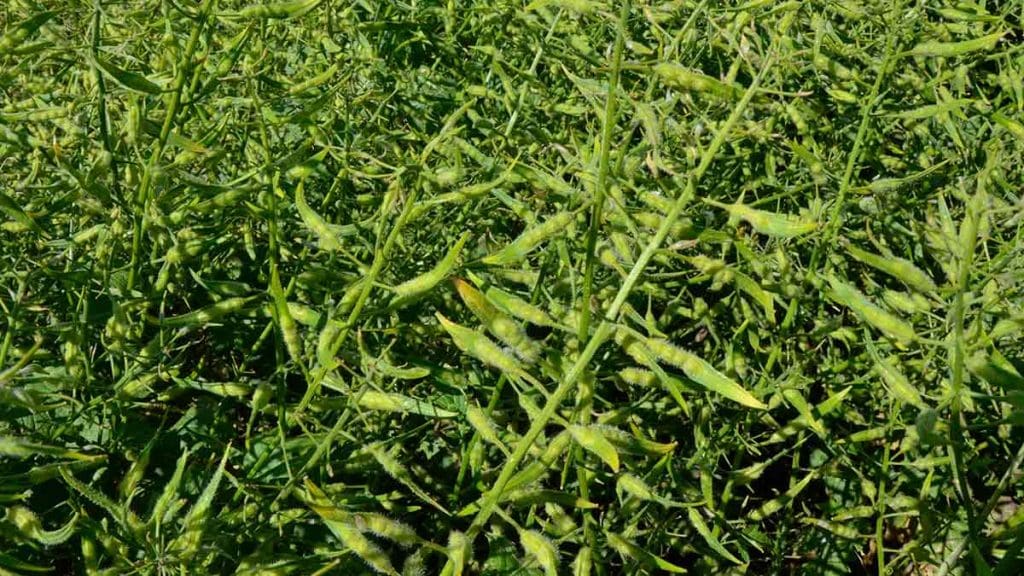
Mustard crops mature over the summer and are typically ready to harvest in late August through September on the Prairies, depending on region and weather. The plants change colour as they ripen, and pods dry down to the point where seeds are firm and at the right moisture for harvest.
Farmers often swath (windrow) mustard before combining, especially in earlier maturing systems to help even out maturity and reduce shattering (pods breaking open). In other cases, straight combining (harvesting standing crops directly) may be used, with careful timing to minimize losses.
Once harvested, mustard seed is dried if necessary and stored in clean grain bins, with aeration used to manage temperature and moisture and prevent spoilage. Storage conditions are monitored, since mustard quality can be affected by heating or high moisture.
What this means for you
Mustard seed is handled and stored much like other grain and oilseed crops, with farmers aiming to preserve quality from the field to the grain elevator so it can meet strict specifications for export and processing.
Learn about different crops in Canada


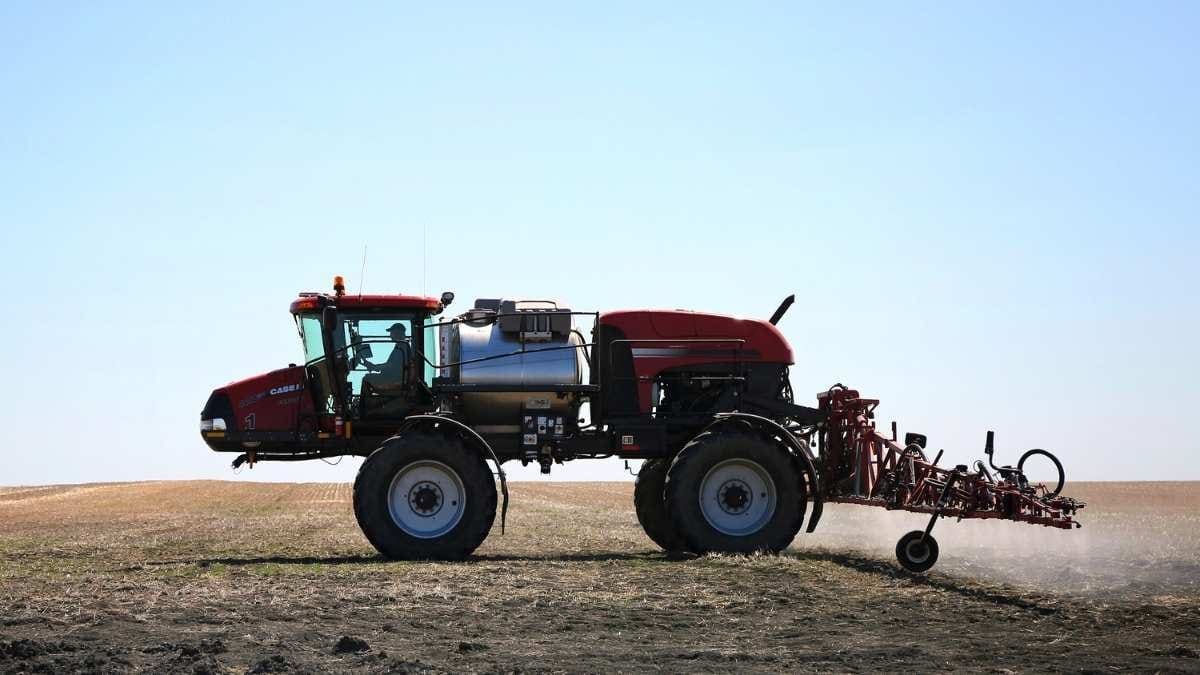


How do weather and climate affect mustard farming?
Mustard is relatively tolerant of dry conditions compared with some crops, which makes it a useful option on parts of the Prairies. However, yields and quality still depend heavily on weather:
- Drought and heat stress can lower yields and reduce seed size.
- Excess moisture can cause disease problems or harvest delays.
- Early or late frosts can affect flowering or ripening.
What this means for you
The amount of mustard seed Canada produces each year can change significantly with weather and climate conditions. This can influence prices and global availability, even when the ingredient is used in small amounts in individual products.
What does “made with Canadian mustard” mean?
When a product says it is made with Canadian mustard or Canadian mustard seed, it typically means the mustard seed was grown in Canada and then used as an ingredient in that product, either domestically or after export. Many Canadian mustard seeds are exported and processed abroad into mustards and other products, then sold internationally.
Origin claims on processed foods in Canada, such as “Product of Canada” or “Made in Canada,” follow specific guidance from the Canadian Food Inspection Agency. “Product of Canada” generally requires that all or virtually all ingredients and processing are Canadian, whereas “Made in Canada” can be used when the last substantial transformation occurs in Canada and must be qualified with “from domestic and imported ingredients.” For condiment mustard and other processed foods, this distinction determines how origin statements appear on the label.
More about Labels



What this means for you
If a jar of mustard or another product highlights Canadian mustard seed, it signals that the seed itself comes from Canadian farms working under Canadian agronomic and regulatory conditions, even if the product was blended or packaged elsewhere.
How mustard goes from Canadian fields to your food
- Prairie farmers seed mustard in rotation with other crops and manage it through the growing season using soil conservation and integrated pest management practices.
- Mustard is harvested, dried, and stored, then moved through grain elevators or direct contracts to processors or exporters.
- Seeds are cleaned and graded: some are crushed for oil and meal, while others are sold whole or milled for table mustard and seasoning.
- Domestic and international food processors use Canadian mustard in condiments, spice blends, marinades, and prepared foods, sometimes noting Canadian origin on the label.
What this means for you
Mustard in your kitchen may be a small spoonful on a sandwich or in a dressing, but behind it is a Canadian oilseed crop grown on Canadian farms, influenced by soil health practices, weather, and global demand.
Mustard Recipes to Try




Sign up for the monthly Great Food Grown Here newsletter and stay in touch!

 Creamy Mushroom Wild Rice Casserole
