
On Canadian farms, modern seeders, air drills and planters help farmers place seeds and fertilizer accurately in the soil — here is what they do and why it matters for your family’s food.
If you have ever seen a field of canola, wheat or barley and wondered how every plant seems lined up in neat rows, the answer is often the seeding equipment working out in the field.
On many Canadian grain and oilseed farms, farmers use modern seeders, air drills or planters to place seeds, and often fertilizer, at a consistent depth and spacing in a single pass across the field. Strong, even plant stands are a foundation for healthy crops and reliable harvests, and this is one of the earliest steps in the story of every loaf of bread or bottle of canola oil. Seeding equipment is a practical example of how precision farming supports both yield and careful use of seed, fertilizer and fuel.
In this article, we look at what these tools are, how they work on Canadian farms in spring, and how they connect to four things that matter at your table: food safety, efficiency, sustainability and farmer well‑being.


What are seeders, air drills and planters on Canadian farms?
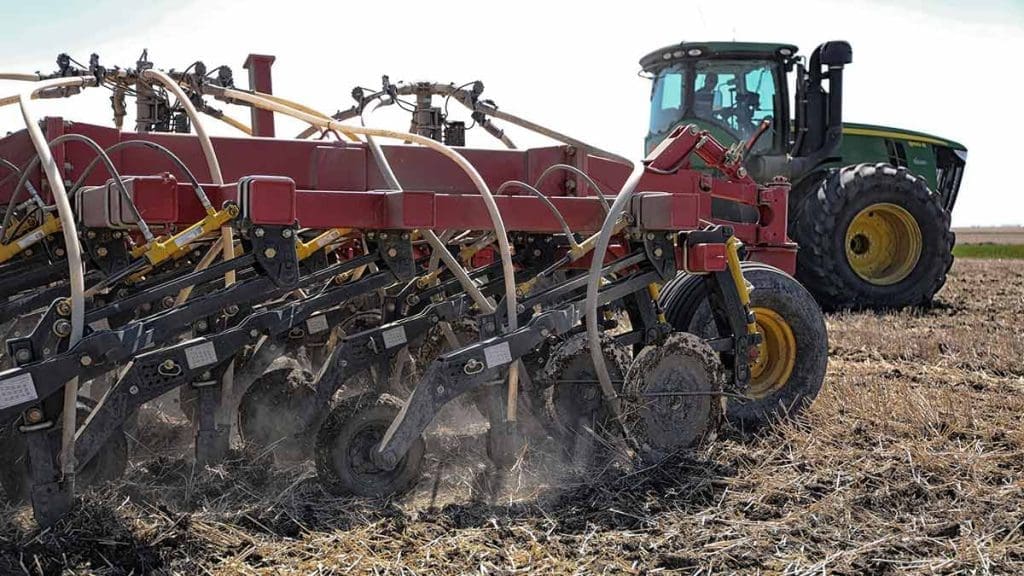
Seeders, air drills and planters are machines that place seeds into the soil at a set depth and spacing, often applying fertilizer at the same time. They are pulled behind a tractor and use openers to create a narrow furrow, metering systems to deliver a measured amount of seed (and fertilizer), and packers to close the furrow and press the soil around the seed.
In Canada, you will see this equipment on farms growing canola, wheat, barley, oats and pulses, particularly across the Prairies in late April and May when spring seeding is underway.
In practice, these tools let farmers seed large fields evenly and quickly, creating more uniform plant stands that support consistent crop development and easier management throughout the season.
How does seeding equipment affect food safety?
Does seeding equipment improve food quality?
Seeding equipment helps create a more uniform crop by placing seeds at a depth and spacing that supports strong, even growth. When plants are evenly established, farmers can manage weeds, diseases and nutrients more predictably, which supports crop health and quality as the plants grow. A well‑established crop is better able to compete with weeds and cope with weather stress, which reduces some pressures that can affect yield and quality later in the season. The uniform crop also allows a consistent harvest, thus less quality reductions during the fall. This ultimately leads to improved crops at a lower cost to the consumer.
Does seeding equipment replace inspections or safety rules?
No. Farmers still must follow Canadian regulations and product labels when they apply crop protection products, and harvested grains and oilseeds must meet safety and quality standards in the rest of the supply chain. Seeding equipment simply helps them start the season with a more uniform crop, which makes it easier to follow best practices for fertilizer and crop protection use throughout the year.
Can incorrect seeding cause problems for crops?
If seeds are placed too shallow, too deep, or in heavily overlapped rows, plants may emerge unevenly or be crowded, which can lead to weak patches, increased disease risk or lodging (when the crop falls over) in dense areas. This is why farmers pay attention to calibration, ground speed and maintenance on their seeders and air drills in the pre‑season.




How does seeding equipment support efficiency and affordability?
How does this equipment make farm work more efficient?
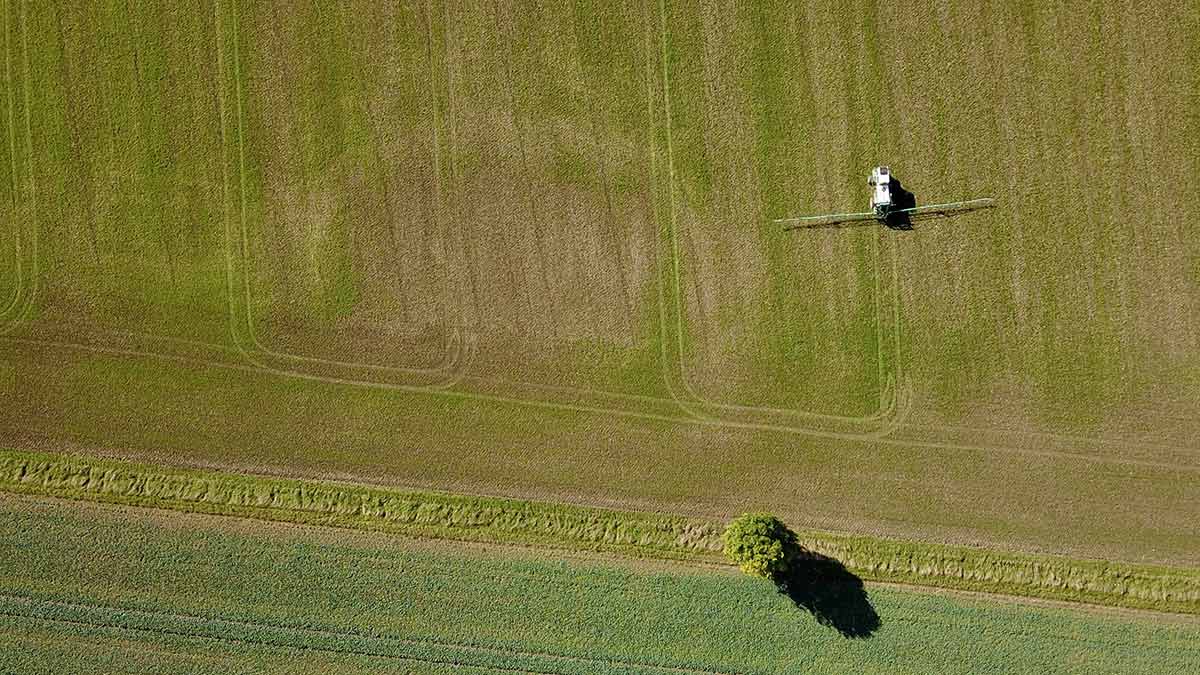
Modern seeders and air drills can seed large fields in a single pass, placing both seed and fertilizer at once, which reduces the number of trips across the field. Sizes of these machines vary from farmer to farm depending on farm size but can range in width from 36’ to 86’. This means that some larger farmers can plant up to 500 football fields of area each day! Features like sectional control can automatically shut off seed and fertilizer in sections that would otherwise overlap at headlands (the field edges) or around obstacles, which avoids double‑seeding and double‑fertilizing those areas. Prairie Agricultural Machinery Institute (PAMI) and manufacturer data indicate that sectional control can significantly reduce overlap, so that farmers use less seed, fertilizer, fuel and time.
What does seeding equipment have to do with food prices?
When farmers can seed efficiently with fewer passes and less wasted seed and fertilizer, they can manage part of their production costs more effectively. While many factors beyond the farm gate influence grocery prices, including processing, transportation and global markets, efficient seeding is one way farmers work to keep their side of the system cost‑aware and resilient.
Does this equipment mean fewer people are needed on the farm?
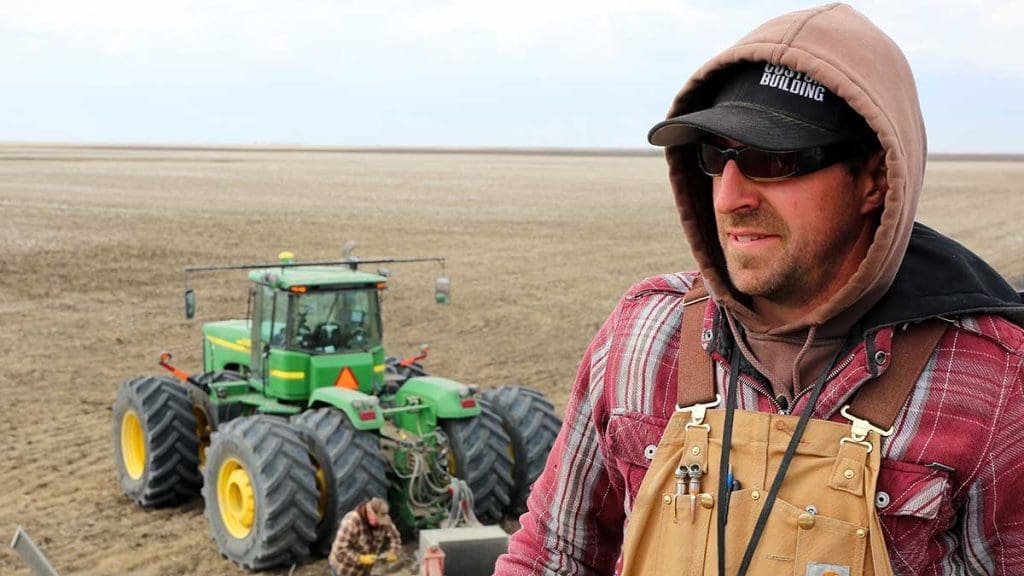
One farmer operating a modern air seeder on the prairies can plant the equivalent of 200 to 300 football fields in one day! Seeding equipment reduces some of the manual work of planting each row, but farmers and workers are still needed to plan, operate, monitor and maintain the equipment, as well as manage the crop throughout the season. In many cases, the technology shifts the work from repetitive tasks toward monitoring, decision‑making and problem‑solving, especially when combined with GPS guidance and sectional control.
How does seeding equipment support sustainability and the environment?
Does precise seeding help reduce waste or use fewer resources?
Yes. When seeds and fertilizer are placed accurately and overlap is reduced, farmers can avoid applying more product than needed in certain parts of the field. PAMI and equipment data show that reducing overlap with sectional control cuts seed and fertilizer use and can reduce nitrous oxide emissions linked to excess nitrogen in overlapped areas. It also means less fuel is burned on extra passes, contributing to lower emissions from field operations.
What does that mean for soil, water or nutrient use?
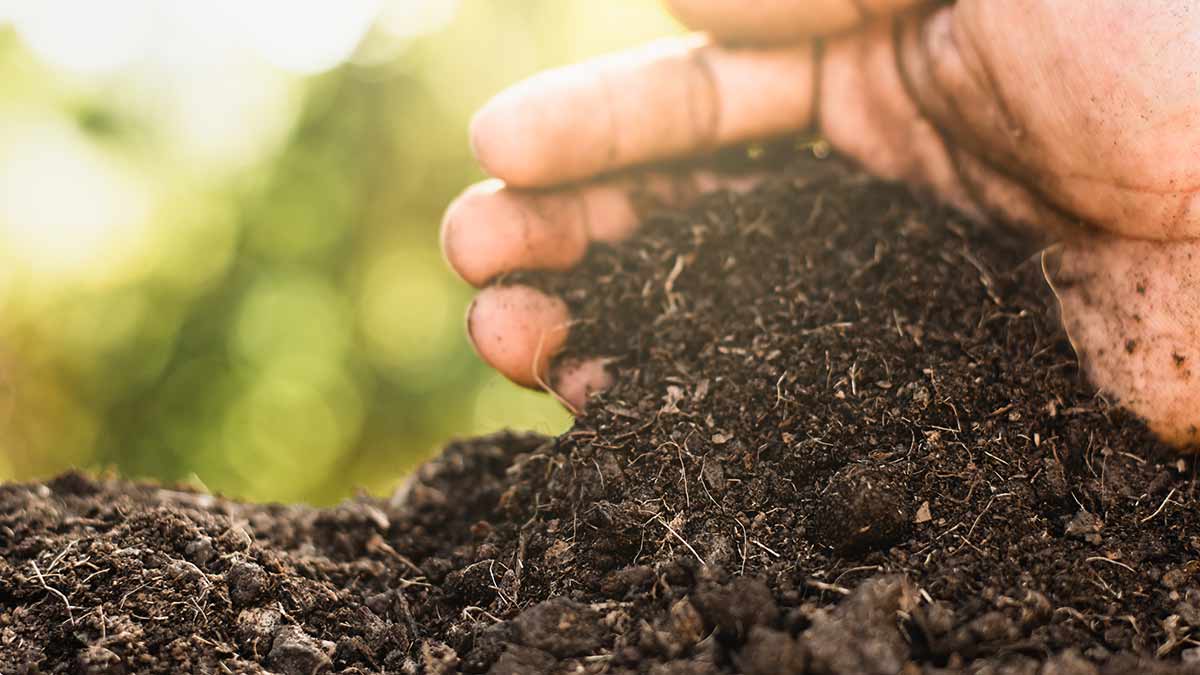
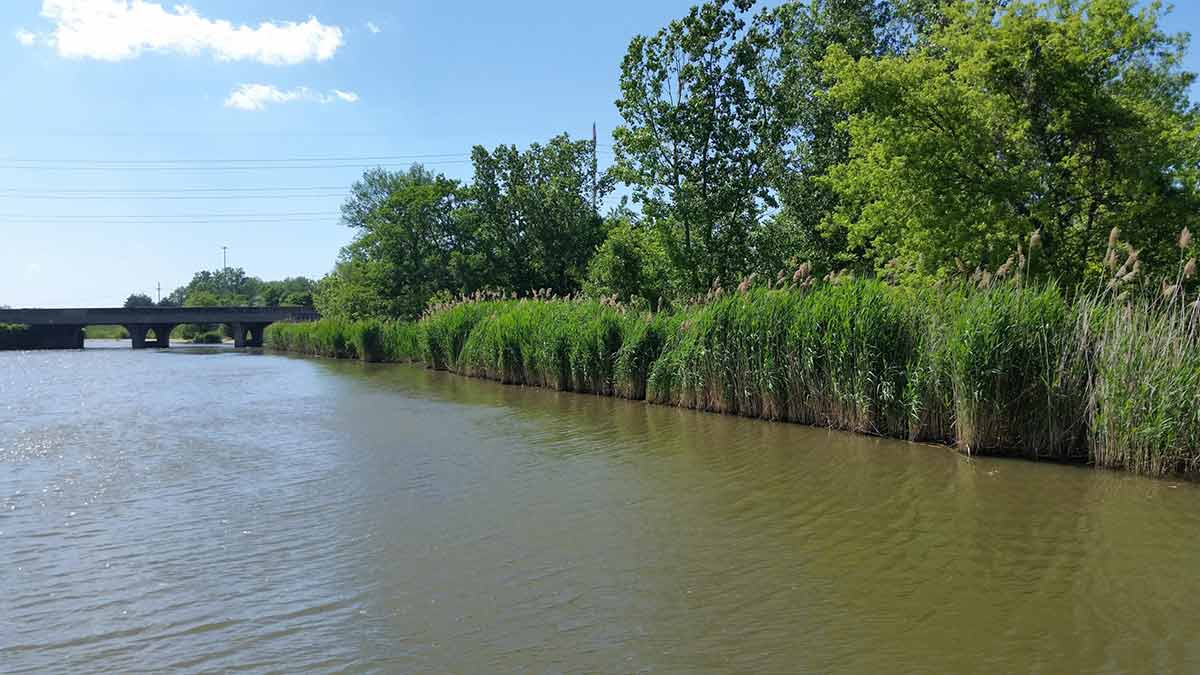
Better control of seeding and fertilizer placement can help protect soil structure by limiting unnecessary trips across the field and reducing disturbance in areas like wetlands or low productivity zones where extra seed and fertilizer would not be beneficial. It can also lower the chance that excess fertilizer ends up in places where it could be lost to the environment, supporting more responsible nutrient use over time.

What does seeding equipment mean for farmer health and well‑being?
How does this equipment change the day‑to‑day work for farmers in spring?
Seeding season often involves long days watching the weather and trying to cover a lot of ground in a short time. Modern seeders and air drills let farmers cover those acres more quickly and with more consistent results, which can reduce stress about falling behind and missing ideal seeding windows. Features like well‑designed cabs, clear monitors and, when combined with GPS guidance, reduced steering demands can help manage fatigue and let operators focus on making good decisions.
Why does that matter to me as a shopper?
When seeding goes smoothly and farmers are less exhausted and rushed, they are better able to focus on safety checks, equipment maintenance and monitoring the crop after it emerges. That supports a more stable and reliable start to the growing season, which feeds into the quality and consistency of the food that eventually reaches your grocery store.
Common questions Canadians ask about seeding equipment
Does using big seeding equipment mean these are factory farms?
Seeding equipment is used on farms of many sizes in Canada. It is a tool to place seeds efficiently and accurately, not a label for how industrial or family‑run a farm is. Many family farms use modern seeders and air drills to make the most of short Canadian spring seasons and to manage large areas with limited labour.
Is this technology only for very large farms?
There are many sizes and configurations of seeders and air drills. Farmers choose equipment that matches their field sizes, crops and budgets, and smaller farms can and do use precision seeding tools where it makes sense.
What happens if the equipment breaks down?
Farmers plan for maintenance and repairs, especially before the season starts, because downtime during seeding can be costly. If something does break, they can often repair it on‑farm or work with local dealers and technicians to get back in the field. They also know how to adjust and operate the equipment manually, and many keep backup plans for critical jobs.
What Canadian farmers and experts say about seeding equipment

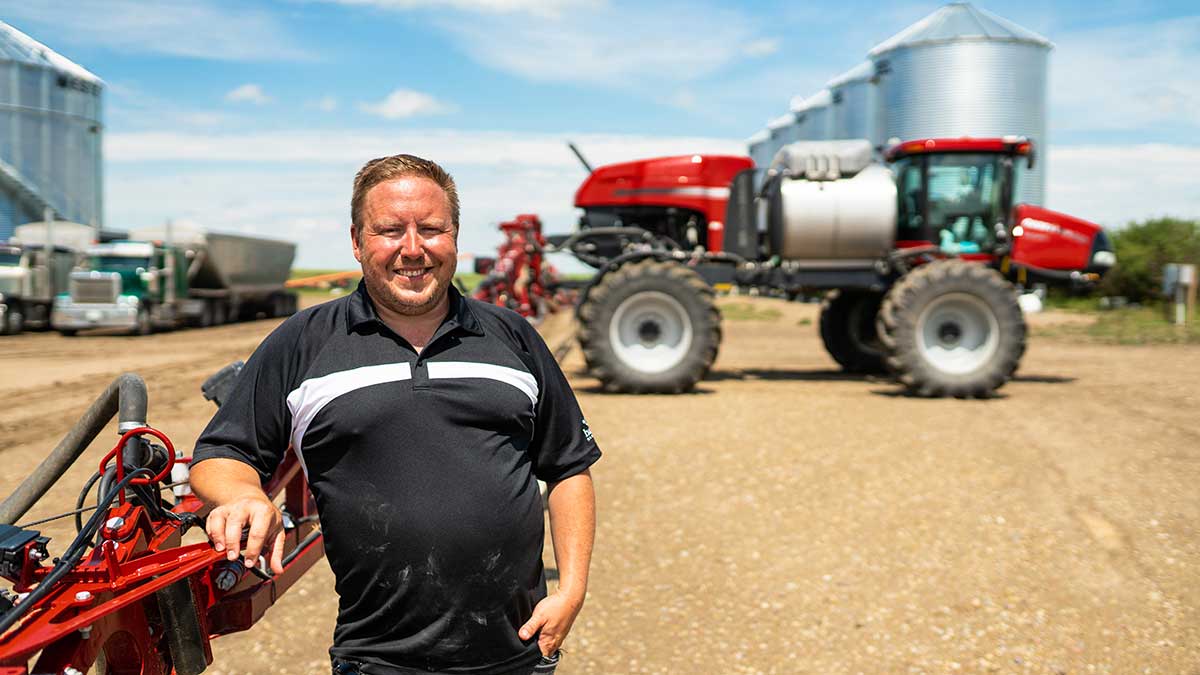
Trent Richards
Pea Farmer from the Prairies
How are Dry Peas Grown?
Dry peas—the kind that are used in split pea soup and pea protein —are part of the family of pulse crops that also include lentils, chickpeas and dried beans.
A recent study shows that crop production in Saskatchewan has the lowest carbon footprint of competitive jurisdictions in most crops. Saskatchewan has a record of maintaining healthy soils, sequestering carbon, and minimizing emissions by adopting innovative technology, implementing zero and minimum tillage, diversifying crop rotations, converting annual cropland to perennial cover, and investing in research.
Farm To Table Articles





What should I take away as a Canadian grocery shopper?
- Modern seeding equipment helps Canadian farmers start crops on the right foot, with even plant stands that support healthy, reliable harvests.
- By placing seed and fertilizer accurately and reducing overlap, seeders and air drills help manage fuel and input use, which supports efficiency and cost awareness on the farm side of the food system.
- These tools help farmers reduce waste and use land and nutrients carefully, alongside other sustainability practices like crop rotations and soil health management.
- By making seeding more efficient during a very busy time of year, this equipment can help reduce stress and fatigue for farmers, supporting the people who grow the crops behind many foods.
Understanding what happens on Canadian farms is one of the best ways to feel confident about the food you buy.

 What’s in Season? Asparagus