by Stephanie Gordon
In many places across the country, it’s too cold, too wet, or too dry to grow crops like fruits and vegetables. That’s why controlled environment agriculture – and more specifically modular farming or vertical farming – is gaining traction from province to province.
The term “vertical farming” comes from the fact that the plants are stacked on top of each other vertically to maximize growing space.
Modular (vertical) farms come in all shapes and sizes like how we have large vegetable operations, community farms, and small backyard gardens.
What is modular farming?
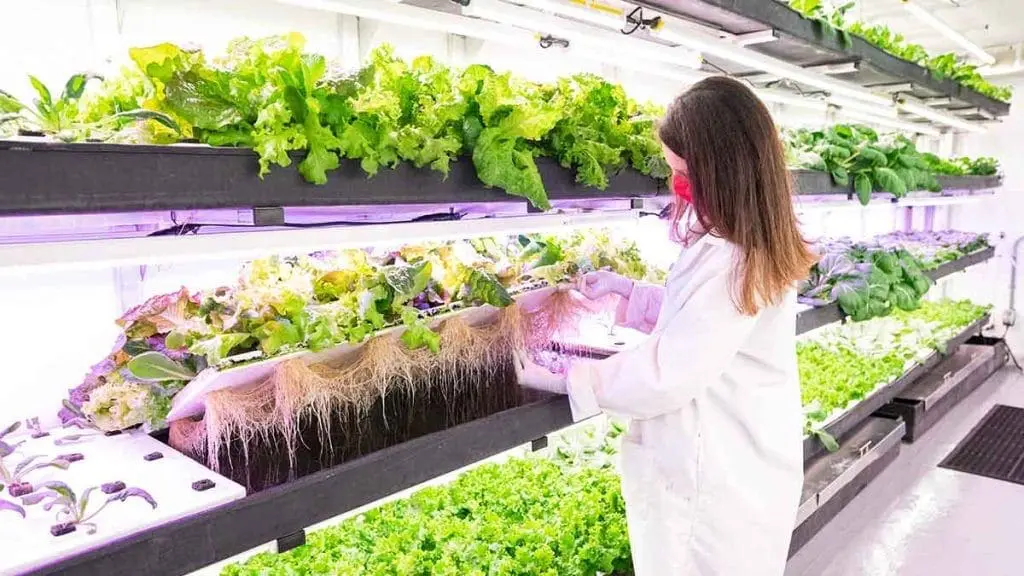
Modular farming is growing plants in modular structures, using indoor growing technology such as “smart farm” management systems to control the environment, hydroponics/aeroponics to vertically grow plants without soil, and LED lighting.
Self-sustaining and scalable
Within vertical farming, there are three main “sizes” of operations.
- Large warehouse vertical farms (like GoodLeaf Farms in Guelph) that supply large customers like grocery stores.
- Medium or community-sized farms (like Growcer’s modular farms) that allow communities to grow at a commercial scale without a warehouse-sized investment.
- Small, perfectly “kitchen-sized” farms (Like Plantaform’s smart indoor garden)
Modular farming is a medium-sized solution with the potential for more. It is a true “farm in a box” that can grow food regardless of location (as long as there is a way to connect to water and power). Modular farms scale with you because they are modular and you can add a “farm” as the demand for your product grows.
Within Canada, there are various companies that offer this medium-level entryway into vertical farming such as FarmAnywhere, ColdAcre, ZipGrow, and Growcer.
Think about what plants need to grow: water, nutrients, air (CO2), light, space, time, and the right temperature. Typically, companies use hydroponics (a way of growing plants in nutrient-rich water) with LED lights to provide the perfect environment for plants to thrive.
Benefits of Modular Farming
Many of the benefits of modular farming are consistent with the benefits of vertical farming: you use less land, water, and time to grow fresher produce AND you can grow year-round.
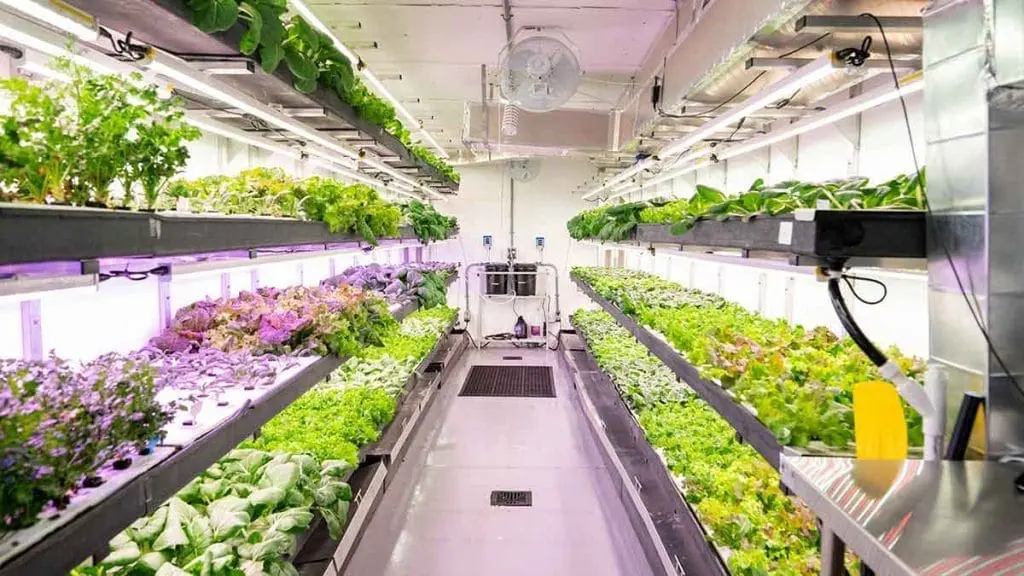
As a grower, it is easier to grow plants using modular farms because it is a controlled environment with less pest pressure. Most modular farms are “smart farms” where aspects like humidity, temperature, and E/C (fertilizer strength of your water) are controlled automatically meaning you only need to spend around 25 hours working in your modular farm every week. Most of your time as a farm operator is spent on seeding, transplanting, harvesting, and maintenance tasks like cleaning.
The size of modular farms – whether they are made using shipping containers or custom-built structures using upcycled materials – are usually around 40-feet in length. This makes modular farms space-efficient when compared to other methods of growing and opens more possibilities for farm-to-table or hyper local produce (because they can fit practically anywhere).
Across Canada, there are many communities and businesses using modular farming to grow fresh food and opportunities.
Scaling an Indigenous business
In the summer of 2023, Nipissing First Nation (NFN) launched a Farmplex (a combination of three Growcer farms plus an extra unit for storage) and branded it as the Mnogin Greenhouse. They grow a variety of fresh greens for the community of about 3,000 people and nearby restaurants in the North Bay region.
The business started as a way to increase food sovereignty in Northern Ontario, but Chief McLeod told Anishinabek News that this venture is a unique opportunity for NFN members to get involved and also have their location serve as a training hub for First Nations who want to get into this type of business.
From farm to produce aisle
Muskoka North Good Food Co-op is a grocery store in Huntsville, Ontario that purchased a modular farm to grow fresh produce year-round 50 metres away from the grocery store.
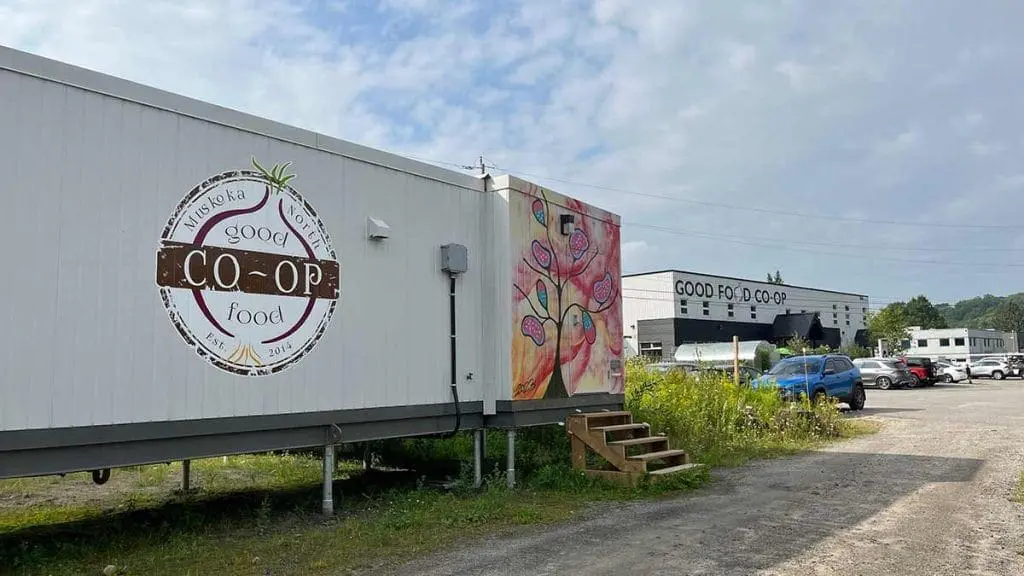
“It was just a really tangible solution to something that we felt was going to become a growing problem with food access,” Kelli Ebbs, general manager and one of the founding members of the co-op, says.
The farm is steps away from the retail store so no distribution costs are added to the bottom line. Ebbs explains this allows them to offer their store-grown greens at a more affordable price than what they were when they were bringing in produce from California and Southern Ontario.
Plus, customers compliment the store-grown produce’s shelf life saying that the produce can last 2 to 3 weeks in their fridges and still be delicious to eat.
“It’s really fulfilling seeing all the customers coming in and saying what they’re saying, seeing [our farm operator] and the other staff members thriving in their roles, seeing the bottom line picking up for us, and just knowing that we’re nourishing our community with this food,” Ebbs says.
Using a modular farm as a classroom
The Altario School saw their modular farm as a way to expand the curriculum and provide fresher produce for the small rural community that sits on the border of Alberta and Saskatchewan.
The greens are sold directly to a nearby seniors home and to around 50 community members through a biweekly subscription box.
The Altario School runs a unique agriculture education program where students can get hands-on experience raising chickens, sheep, cows, turkeys, and bees. The modular farm was a perfect fit for students who did not see themselves in the barn or working with animals.
The modular farm – and the diligence required by indoor agriculture – opens up doors for students who are interested in research-based opportunities in agriculture. One of the students who volunteered in Altario’s modular farm was accepted to study agronomy at the University of Saskatchewan.
“So I was like wow, this can be something very special for the community, food wise, and for the students, career pathway wise,” Kevin Van Lagen, the principal, notes.
In conclusion
Modular farms are an important addition to any food system by providing opportunities for fresher produce, local jobs, and education opportunities.

 Podcast: What’s with all the different types of eggs?