
Strawberries are one of the clearest examples of how seasonal eating can shape both your grocery budget and your food waste at home. The Canadian strawberry season is short and intense, with the freshest, most fragrant berries typically arriving in June and July, when local supply is highest. A few small habits during that window, and a plan for the rest of the year, can stretch your dollars and cut down on what ends up in the compost. This guide is about a few smart, doable changes, not perfection. For the broader picture of when strawberries are in season in Canada and which type to buy when, see Strawberries in Season in Canada.
When Are Strawberries Most Available in Canada?
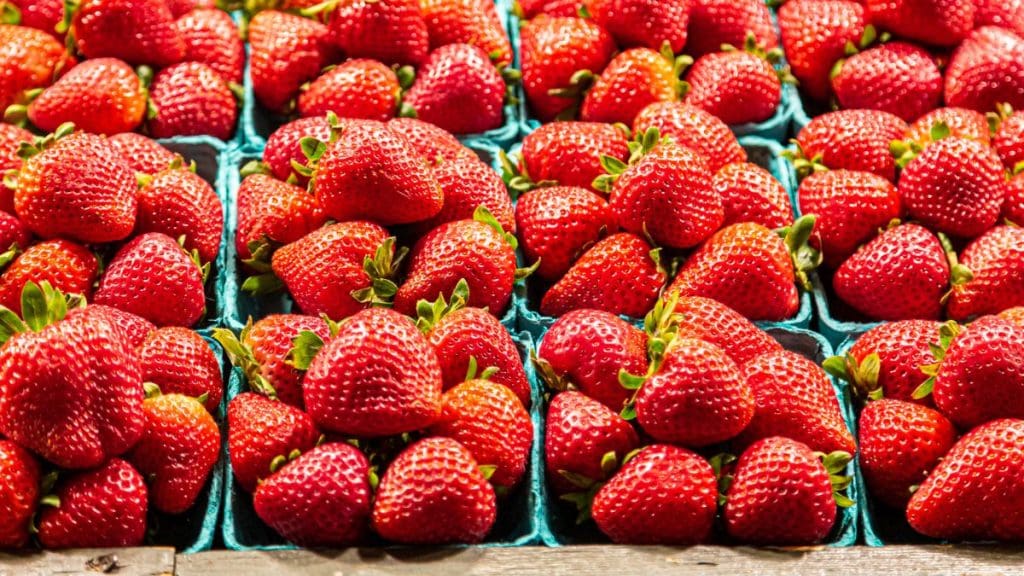
Knowing when strawberries are most available is the foundation of buying them well. According to Foodland Ontario, the Ontario Ministry of Agriculture, and grower associations across Canada, field-grown strawberries are typically in season from late May through October, with the peak in June and July. Day-neutral varieties stretch the field season into August, September, and October, and Canadian greenhouse strawberries are increasingly available year-round.
Timing and supply vary by province, weather, and year, so the exact window in your region may shift by a week or two from one season to the next. The “What’s in Season” hub at Canadian Food Focus has monthly guides you can check before each shop to see what is in peak Canadian season near you.




Are Seasonal Strawberries Really Cheaper?
Generally, yes, when supply is high, prices and promotions can be more favourable, but actual prices still vary by store, region, packaging format, and how the berries are grown. The clearest principle is that local supply tends to be at its highest during peak field season in June and July, and that is also when Canadian strawberries are most often featured in weekly flyers, loyalty app promotions, farmers’ market displays, and farm-stand pricing.
Outside the local field window, the strawberries on Canadian shelves are typically Canadian greenhouse-grown or imported from places like the United States and Mexico. These can carry higher unit costs due to longer supply chains, premium positioning, or both. In practice, this often means:
- At peak local season: Canadian strawberries are often the freshest and the most competitively priced option, particularly at farmers’ markets, farm stands, U-pick farms, and in flyer promotions at grocery stores.
- Outside peak local season: Canadian greenhouse strawberries may cost a little more than imported berries but offer fresher fruit and a shorter supply chain. Imported berries can still be a reasonable choice depending on price and quality.
How to Plan with Seasonal Strawberries to Save Money
Buying strawberries well is less about a single shopping trip and more about a few habits across the season. The four habits below cover most of what helps.
Plan Around What’s in Season
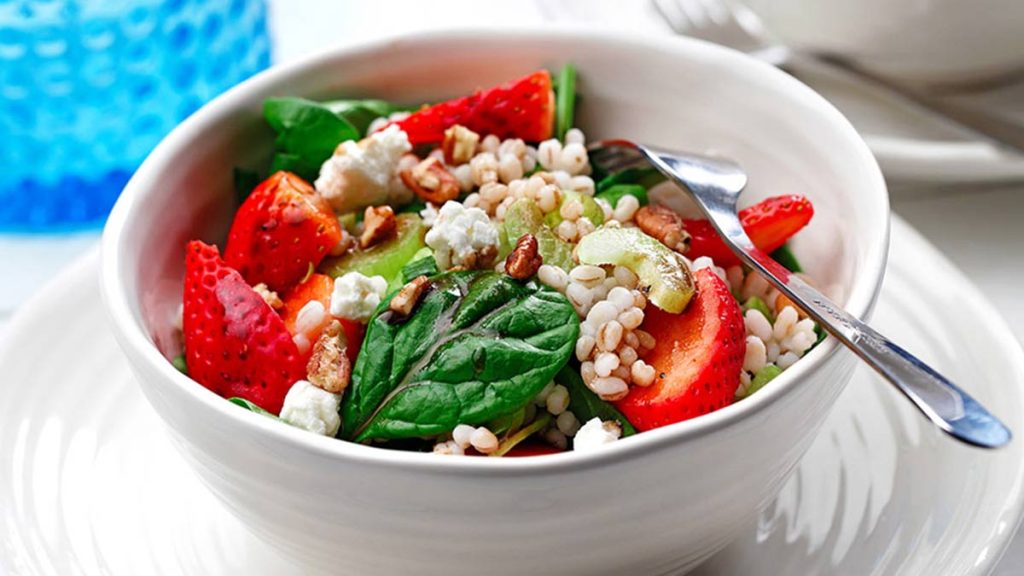
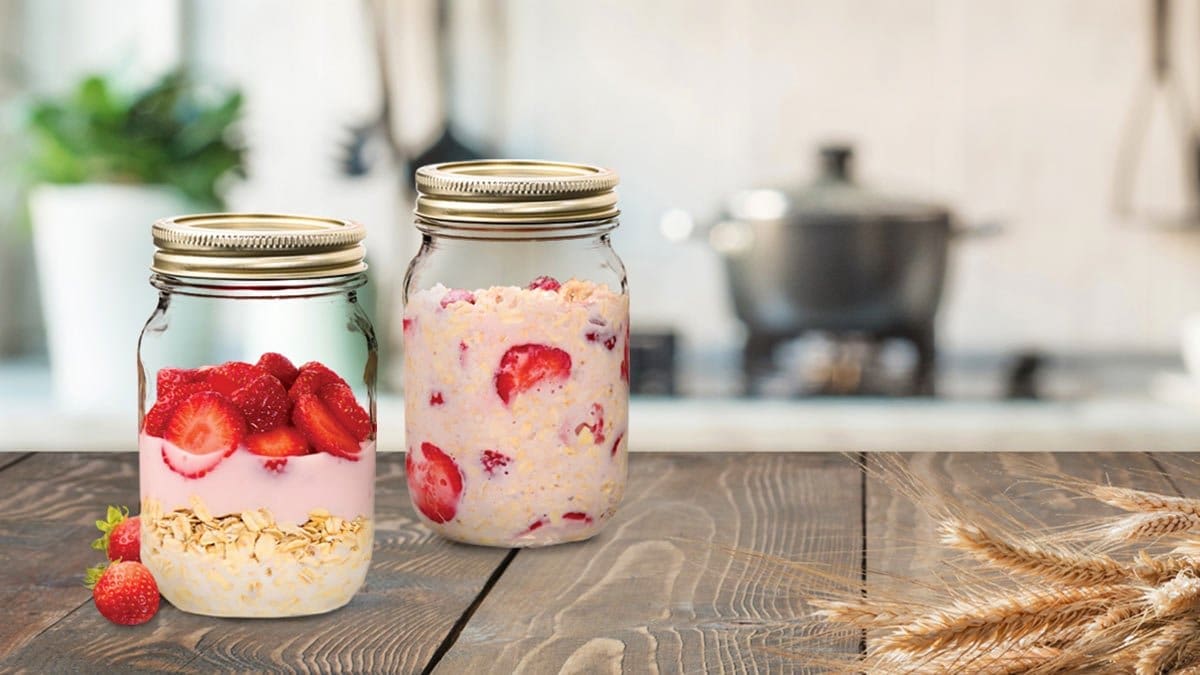
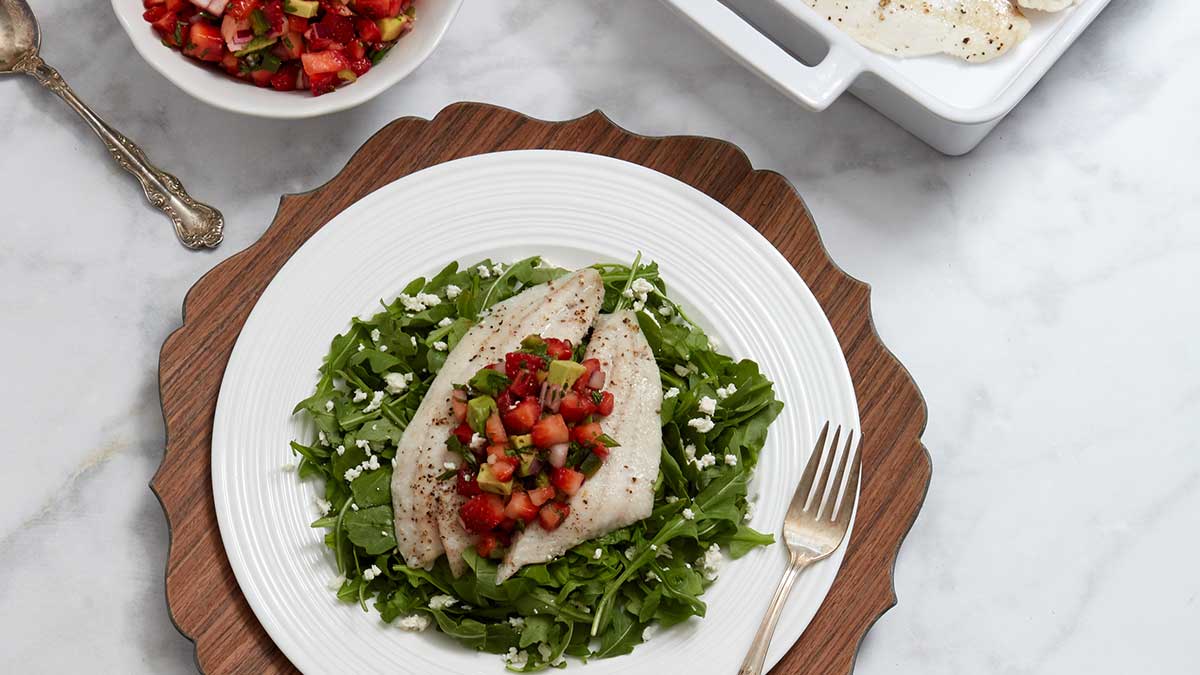
When local strawberries hit peak supply in June and July, build one or two strawberry uses into your weekly plan. That might be sliced berries on yogurt or oatmeal for breakfasts, a strawberry-spinach salad for dinner, or a Sunday batch of strawberry chia jam. Checking the What’s in Season hub before each shop is a simple way to anchor the meal plan in what is most available and likely best priced.
Use Strawberries Across Multiple Meals
A clamshell or a small flat of strawberries stretches further when it shows up in several different meals during the week instead of one. A single purchase can move through breakfast (yogurt parfait), lunch (salad), snack (with cheese or yogurt), and dessert (shortcake, baked into muffins, or simply with whipped cream). Easy Ways to Use Strawberries has more multi-meal ideas across snacking, salads, baking, and smoothies.
Right-Size How Much You Buy
Strawberries are highly perishable, so a bigger flat is only a better deal if you actually use or freeze all of it. Before buying, take a quick mental inventory: how many strawberry-using meals are realistically on the plan this week, and is anyone in the household likely to snack on them? A flat that becomes compost is more expensive per usable kilogram than a smaller clamshell that gets eaten in full.
If you have time and a plan, U-pick farms in the Fraser Valley, southern Ontario, Quebec, and Atlantic Canada often offer some of the strongest per-kilogram value during peak season because you are doing the picking. BC Farm Fresh and provincial grower associations such as Berry Growers of Ontario, the BC Strawberry Growers Association, and APFFQ and Les Fraîches du Québec are good starting points to find a U-pick farm near you.
Freeze the Surplus
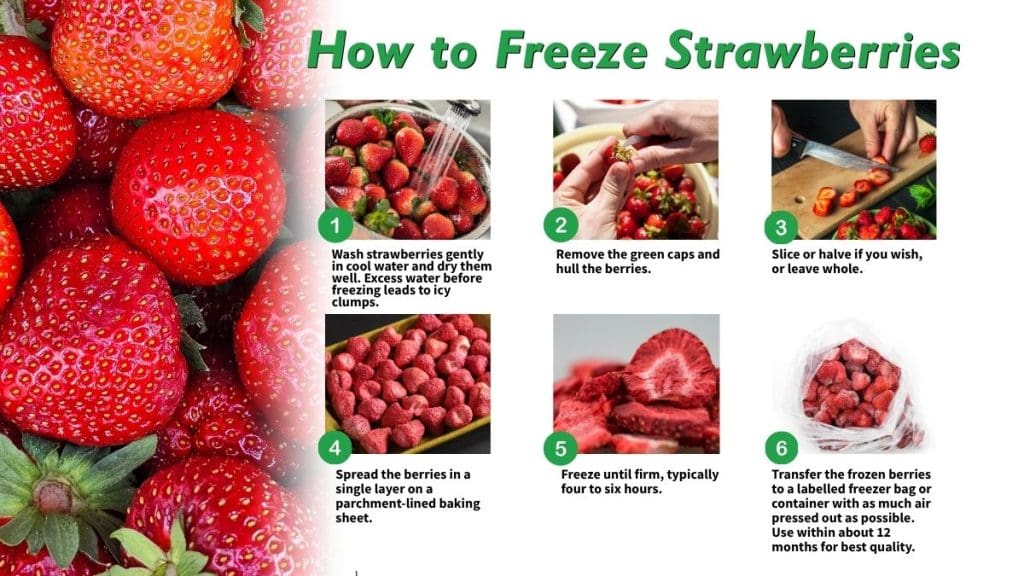
When you find Canadian strawberries at their best price and quality during peak season, buying a little extra to freeze is one of the most direct ways to stretch peak-season value across the rest of the year. Frozen strawberries are excellent in smoothies, baking, oatmeal, and sauces, and last for about 12 months when properly stored.
A quick guide: wash, dry, hull, freeze in a single layer on a tray, then transfer to a freezer bag with the air pressed out. For the full step-by-step plus tips for using “less-perfect” berries, see How to Store Strawberries to Cut Food Waste.
How Seasonal Strawberries Help Reduce Food Waste
Buying strawberries in season is also one of the most direct ways to waste less food at home. Berries that travel shorter distances and spend less time in transit usually arrive fresher and last longer in your fridge, which gives you more room to enjoy them before they soften.
The biggest reasons strawberries end up in the compost are bought-with-good-intentions but forgotten, washed too early, stored on the door of the fridge, or buried under a week of other groceries. The simple behaviours that cut strawberry waste are:
- Store unwashed in a ventilated container in the fridge crisper. Wash just before eating.
- Check the package daily and remove any berries with soft spots or mould before they spread.
- Use softer berries first in cooked or blended uses such as smoothies, sauces, baking, or compote.
- Freeze the surplus rather than letting it go soft.
For broader food-waste tips across your kitchen, see 6 Tips To Reduce Food Waste on Canadian Food Focus.
Quick Budget Checklist for Buying Strawberries
- Buy local during peak season. In most of Canada that is June and July for field-grown June-bearing strawberries, and through October for field-grown day-neutral varieties.
- Watch flyers and loyalty apps for promotions during peak local season.
- Compare unit prices between formats (clamshells, baskets, bulk flats) rather than headline prices.
- Buy only what you will realistically use or freeze in about a week. A bigger flat is only a better deal if you use it.
- Store unwashed in a ventilated container in the fridge crisper. Wash just before eating.
- Plan at least two simple uses for each purchase, such as a yogurt topping and a smoothie base.
- Freeze any surplus at peak season to enjoy Canadian strawberries through the rest of the year.
- Look for Canadian greenhouse strawberries outside the field-grown season instead of imported when the price is comparable.
Buying strawberries in season is not about hitting every tip perfectly. It is about a handful of small habits that, across a season, mean fewer berries in the compost, more enjoyment of one of Canada’s most loved seasonal fruits, and a grocery bill that works a little harder for your household.
Additional Articles to Explore





 Hearty Beef Stroganoff Soup