

Why yogurt is a fridge basic
Yogurt ends up in a lot of Canadian carts because it is easy, familiar, and flexible. It works for quick breakfasts, school lunches, snacks, and even simple desserts.
At the same time, it is normal to have questions:
- Which yogurt is actually “Canadian”?
- What type should I buy for my family?
- How long does it last in the fridge?

This guide explains what yogurt is, how to spot yogurt made with Canadian milk, what it offers nutritionally, and how to store and use it so it fits your routine and budget.
What yogurt is and how it is made
Yogurt is simply milk that has been heated, then fermented with “good” bacteria.
- Milk or cream is pasteurized (heated) to kill harmful bacteria, then homogenized so it stays smooth.
- Special starter cultures, such as Lactobacillus bulgaricus and Streptococcus thermophilus, are added.
- The milk is kept warm so these cultures can turn lactose (milk sugar) into lactic acid.
- The lactic acid thickens the milk and gives yogurt its tangy taste.
- Once the texture and flavour are right, the yogurt is cooled and then left plain or flavoured with fruit and other ingredients before it is packaged.
On Canadian shelves, you will see options like
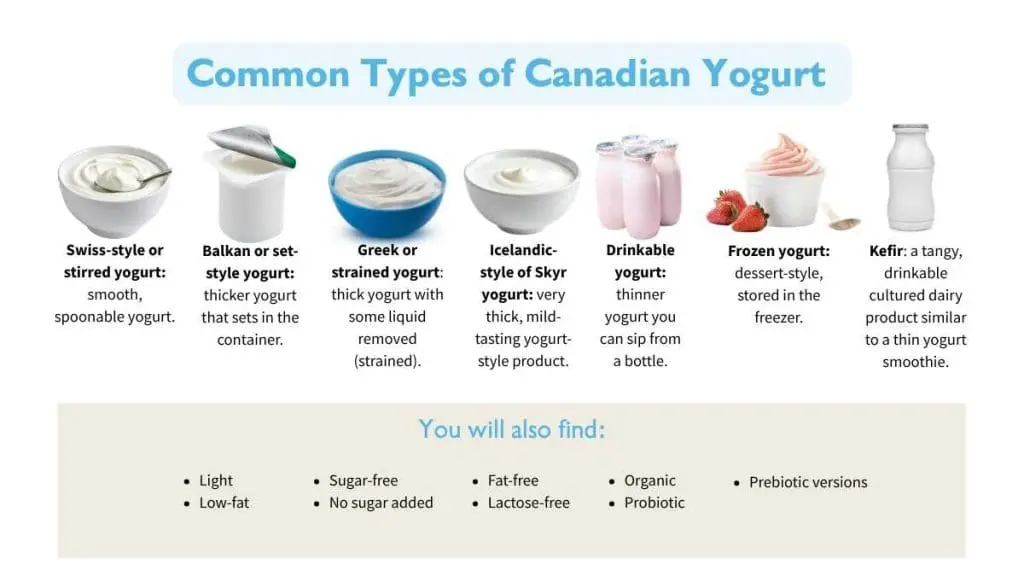
When you are standing in front of the dairy case, you will see:
- Swiss-style or stirred yogurt: smooth, spoonable yogurt.
- Balkan or set-style yogurt: thicker yogurt that sets in the container.
- Greek or strained yogurt: thick yogurt with some liquid removed (strained).
- Icelandic-style Skyr yogurt: very thick, mild-tasting yogurt-style product.
- Drinkable yogurt: a thinner yogurt you can sip from a bottle.
- Frozen yogurt: dessert-style, stored in the freezer.
- Kefir: a tangy, drinkable cultured dairy product similar to a thin yogurt smoothie.
- Plus: light, low-fat, fat-free, sugar-free, no sugar added, lactose-free, organic, probiotic, and prebiotic versions.
This range lets you match texture and format to what your family actually eats: spoonable bowls, lunch-box drinks, thick dips, or frozen treats.
How to know if your yogurt is made with Canadian milk

If you want to choose yogurt made with Canadian milk, the Blue Cow logo is the fastest clue.
- The Blue Cow logo from Dairy Farmers of Canada means the product is made with 100% Canadian milk and milk ingredients.
- Companies must meet program requirements and sign a licence agreement to use the logo.
The logo does not replace the rest of the label, but it does confirm that the milk is Canadian. If you do not see it, look for phrases such as “Product of Canada” or “Made in Canada” on the packaging as the Blue Cow logo is a voluntary.
What yogurt contributes nutritionally
Yogurt is more than just a convenient snack. It brings a bundle of nutrients, including:
- Calcium
- Vitamin D
- Vitamin A
- High-quality protein
- Zinc
- Phosphorus
- Vitamin B12
These nutrients support bone health and many everyday functions.
Some yogurts contain probiotic cultures beyond the standard starter bacteria. If you are interested in probiotics, look for “probiotic” on the label and check which strains are listed.
If you are lactose intolerant or sensitive, you may find you tolerate yogurt better than some other dairy foods because the cultures help break down lactose. Lactose-free yogurts are also available if you prefer to avoid lactose completely.
Different styles have different profiles:
- Greek and skyr-style yogurts are usually higher in protein.
- Drinkable yogurts are convenient, but sugar levels can vary, so the Nutrition Facts table is helpful.
Comparing labels lets you pick a yogurt that fits your goals for protein, fat, and sugar while still getting the benefits of milk products.

Making yogurt work with your budget
Yogurt can be a smart buy if you treat it as a versatile ingredient, not just a single snack.
Ideas that help manage cost per serving:
- Choose larger tubs when you know they will be eaten in time; they often cost less per 100 g.
- Buy plain yogurt and add your own fruit, spices, or a drizzle of honey at home.
- Use one tub in several ways: breakfast bowls, lunch snacks, dips, and sauces.
Analysis from Dairy Farmers of Canada has shown that in 2024, average yogurt prices in Canada were more than two dollars per kilogram lower than in the United States. While prices vary by store and brand, this suggests Canadian yogurt can be competitively priced in North America.
Using yogurt as a base for several meals reduces the need for separate packaged snacks and specialty condiments, which helps stretch your grocery budget.
How to store yogurt safely and reduce food waste
Good storage habits help you get through the tub before it spoils.
Before you buy:
- Check the best-before date.
- Pick a tub with a date that matches how soon you plan to use it.
- Avoid buying more than your household can reasonably finish.
At home:
- Refrigerate yogurt as soon as you get in the door.
- Store it on a cold inner shelf, not in the fridge door where temperature swings are bigger.
- Keep it away from strong-smelling foods if possible.
After opening:
- Aim to finish the tub within about three days.
- Do not eat yogurt after the best-before date.
- Use a clean spoon each time you serve.
- Do not put leftovers from a bowl back into the main container.
- Close the lid firmly after each use.
Freezing:
- Freezing yogurt changes the texture and taste, so it is not ideal for eating on its own.
- If you do freeze it, try to use it within about a month and use thawed yogurt in smoothies or baking, where texture matters less.
Planning how you will use yogurt in the three days after opening (for example, breakfast parfaits, a smoothie, and a dip) usually prevents waste more effectively than relying on the freezer.
Simple ways to cook and snack with Canadian yogurt


Cooking and meals:
- Use plain Greek or skyr-style yogurt instead of sour cream in dips and baked potato toppings.
- Whisk yogurt into dressings and sauces to add creaminess.
- Add yogurt to marinades for meat or poultry, following safe handling practices.
- Use yogurt in muffin, pancake, or quick bread recipes where it is already listed as an ingredient.

Desserts and treats:
- Serve yogurt with fruit and a drizzle of maple syrup.
- Make simple frozen yogurt pops at home by mixing yogurt with fruit puree and freezing in moulds.
- Keep drinkable yogurt handy for quick, portable snacks.
Seeing yogurt as an ingredient, not just a snack, helps you use what you buy, which supports both budget and waste reduction.
Quick answers to common yogurt questions
- How is yogurt made from milk?
Milk is heated, then specific live cultures are added. These cultures ferment the milk sugar into lactic acid, which thickens the milk and creates yogurt’s tangy taste. - How long does yogurt last after opening?
Once opened, try to eat yogurt within about three days and avoid eating it after the best-before date. - Can I freeze yogurt?
You can, but freezing affects texture and flavour. If you freeze yogurt, use it within about a month in smoothies or cooking. - What nutrients do I get from yogurt?
Yogurt provides calcium, vitamin D, vitamin A, protein, zinc, phosphorus, and vitamin B12, among other nutrients. - What does the Blue Cow logo guarantee?
The Blue Cow logo means the product is made with 100% Canadian milk and milk ingredients from Canadian farms that follow Canadian standards. - How can yogurt help reduce food waste?
Plan how you will use it, store it in a cold fridge shelf with the lid tight, use clean utensils, and finish it within three days of opening.
Explore More Articles






 What’s in Season? Eggplant