Canadian strawberry season brings a wave of practical questions every year, from when local berries hit the shelves to why a clamshell goes mouldy by Wednesday. This page pulls the most common ones into one quick-reference resource. Each answer is short and links to the longer article where you can read more. For the full overview of when strawberries are in season in Canada, where they are grown, and which type to buy when, see Strawberries in Season in Canada.
Seasonality Questions
When are strawberries in season in Canada?
Field-grown strawberries are in season from roughly late May or June through October in most of Canada, with the peak in June and July. Day-neutral varieties extend availability later into the season, and Canadian greenhouse production now provides Canadian-grown strawberries year-round. Timing varies by province, weather, and year.


Why is the local strawberry season so short?
The traditional June-bearing strawberry season is short because June-bearing varieties produce one concentrated harvest of roughly three weeks, usually in June or early July. Canadian day-neutral varieties and greenhouse production have extended the local season considerably in recent years. For a breakdown of each type and what that means for what is in stores when, see Canadian Strawberry Varieties: Taste, Texture and Best Uses.
Are Canadian strawberries available year-round?
Increasingly, yes. According to Statistics Canada, Canadian greenhouse strawberry production grew from about 2.6 million kilograms in 2020 to more than 7.5 million kilograms in 2024, supporting year-round availability of Canadian-grown berries. Field-grown Canadian strawberries are seasonal (late May through October), while greenhouse-grown Canadian strawberries fill in the rest of the year.
What month are strawberries cheapest in Canada?
Strawberries are most likely to be at their best price and quality during peak local season, generally June and July when local supply is highest. Watching weekly flyers, loyalty apps, U-pick farms, and farmers’ market pricing during that window helps. For more on planning around peak season, see Seasonal Strawberries and Your Grocery Budget in Canada.
Growing and Origin Questions
Where are most Canadian strawberries grown?
The largest producing provinces are Quebec, Ontario, British Columbia, and the Atlantic provinces. According to Statistics Canada, Quebec is the largest strawberry-producing province in Canada, accounting for more than half of marketed national production. The BC Strawberry Growers Association represents roughly 48 growers on about 600 acres in the Fraser Valley, and Berry Growers of Ontario and APFFQ and Les Fraîches du Québec represent growers in their provinces.
How do I tell if a strawberry is Canadian?
Look for “Product of Canada” labels, provincial origin logos such as Foodland Ontario, BC Strawberries, and Quebec strawberry markers from APFFQ and Les Fraîches du Québec, or signage at farmers’ markets and farm stands. During U-pick season, you are picking directly from the source. For more on identifying Canadian-grown berries, see Strawberries in Season in Canada.





What is the difference between June-bearing and day-neutral strawberries?
June-bearing varieties produce one big harvest in June or early July. Day-neutral varieties produce smaller, repeated harvests from late spring through the fall because they are not tied to daylength the way June-bearing varieties are. Both are grown commercially across Canada and serve different uses, with June-bearing often favoured for jam and freezing and day-neutral favoured for fresh eating throughout the summer. For more, see Canadian Strawberry Varieties: Taste, Texture and Best Uses.
Are greenhouse strawberries Canadian?
Many are. Canadian greenhouse strawberries are grown in Canada and have become much more widely available since 2020. They are typically labelled by the producer or retailer as Canadian-grown. For more on how greenhouse production fits into the Canadian strawberry season and when to choose greenhouse over imported, see Canadian Strawberry Varieties: Taste, Texture and Best Uses.

Buying and Storage Questions
How do I pick the best strawberries at the store?
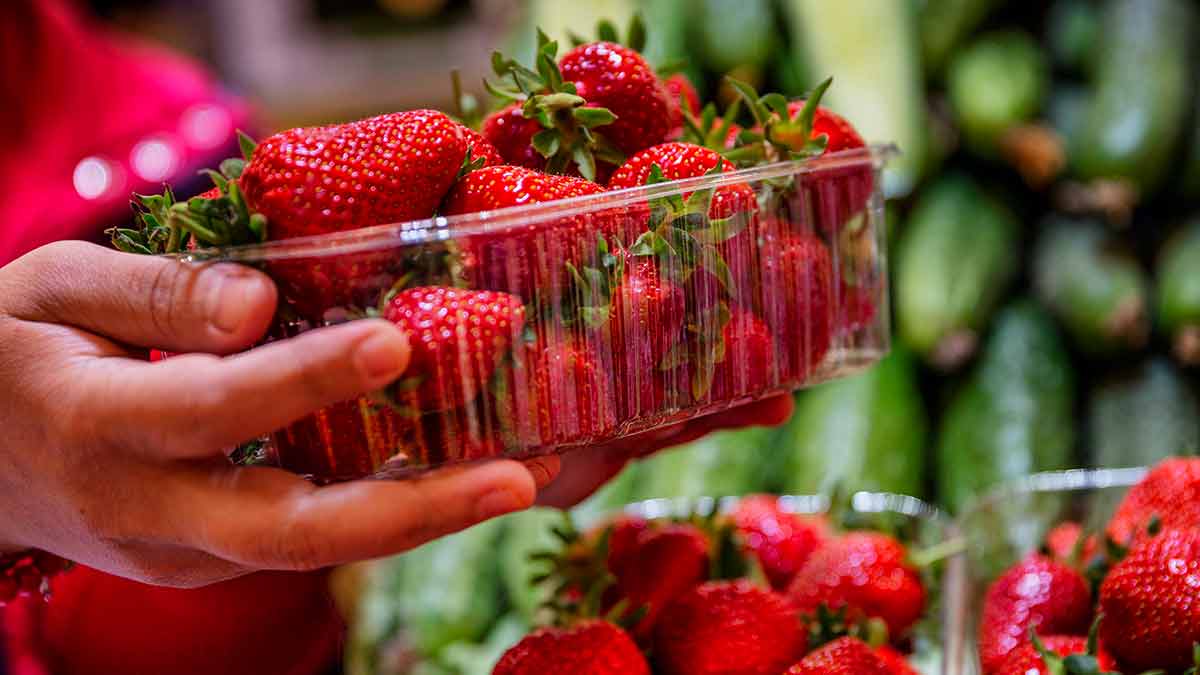
Look for bright or deep red colour across the whole berry, plump and firm fruit that feels weighty for its size, fresh-looking green caps, and a sweet, fragrant smell. Strawberries do not continue to ripen after picking, so colour, firmness, and smell at the store are what you take home. Avoid soft spots, leaking juice, mould, and berries still white or green at the tip.
How long do strawberries last in the fridge?
Properly stored, strawberries usually last two to three days in the fridge, sometimes up to about a week if they were very fresh at purchase. Day of purchase is often the best for flavour and texture. Store unwashed in a ventilated container in the fridge crisper and wash just before eating. For the full how-to, see How to Store Strawberries to Cut Food Waste.
Can I freeze strawberries?
Yes. Wash, dry, hull, and freeze strawberries in a single layer on a tray, then transfer to a labelled freezer bag with the air pressed out. According to Canada’s Food Guide, frozen fruit keeps for up to 12 months, and frozen strawberries are best used in smoothies, baking, or sauces rather than fresh. For step-by-step freezing guidance, see How to Store Strawberries to Cut Food Waste.
Why do my strawberries go mouldy so fast?
Strawberries are highly perishable, and mould can spread quickly from one berry to the rest of the package. Storing them unwashed in a ventilated container in the fridge and removing any soft or mouldy berries as soon as you spot them are the simplest ways to extend their fridge life. Washing too early or storing in a sealed container with no airflow are the two most common reasons strawberries spoil quickly at home.

Nutrition and Use Questions
Are strawberries good for you?
Strawberries are a notable source of vitamin C and provide dietary fibre, along with smaller amounts of potassium and other vitamins and minerals. According to Health Canada, vegetables and fruits are the best sources of vitamin C, and including a variety of them each day helps Canadians meet their nutrient needs. Canada’s Food Guide recommends filling half the plate with vegetables and fruits, and strawberries are a simple way to do that during their season.
Can I use slightly soft strawberries?
Yes, in most cases. A bruised or soft strawberry is not the same as a spoiled one. Berries with soft spots, slight bruising, or surface dents are usually still safe to use in smoothies, sauces, jams, baking, or roasted preparations. Discard berries with visible mould, a fermented or sour smell, or a slimy texture. For more on assessing and using less-perfect berries, see How to Store Strawberries to Cut Food Waste.
What can I do with strawberries before they go bad?
Smoothies, quick stovetop sauces, strawberry chia jam, muffins or scones, simple shortcake, or a tray of roasted strawberries all work well with berries that are slightly past their fresh-eating prime. Freezing the surplus is the simplest way to save berries for later. For dozens of ideas across snacking, salads, baking, smoothies, and sauces, see Easy Ways to Use Strawberries.
Additional Articles to Explore