
When you walk into a Canadian grocery store or farmers’ market in spring, you might notice that the rhubarb looks different from one week to the next. Sometimes stalks are deep red and slender, sometimes green and thick. That’s not a quality issue. It’s the difference between the two main types of Canadian rhubarb: hothouse and field. Understanding what sets them apart, and what each one is best for, takes the guesswork out of choosing and cooking with this uniquely Canadian spring crop.
Explore What’s in Season? Rhubarb for more resources on how to enjoy this spring Canadian staple.





How to Read This Guide
This guide covers the two main types of rhubarb available in Canada, hothouse and field, and walks through how each one tastes, how it behaves in cooking, and what it’s best used for. A few things to keep in mind:
- Availability varies by province, retailer, and year. The windows listed here are general guides, not guarantees.
- Colour indicates type and growing conditions, not ripeness. Green rhubarb is not under-ripe. It may simply be field-grown or a green-stalked variety.
- Both types are fully interchangeable in most recipes, though hothouse rhubarb may need slightly less sugar and shorter cooking time given its tenderness.
Hothouse Rhubarb (also known as Winter Rhubarb)
Hothouse rhubarb is one of Canada’s most overlooked seasonal treasures. Grown in heated, darkened barns, a technique that tricks roots into producing early, it delivers tender, jewel-toned stalks months before outdoor growing conditions are possible.
How It’s Grown
In late October or early November, farmers dig up older, nutrient-rich rhubarb roots from their outdoor fields and transplant them into dark, heated barns. Without sunlight, the plant cannot photosynthesize so it puts all its energy into producing long, smooth stalks instead. The result is rhubarb that looks and behaves very differently from its outdoor counterpart.
Available in Canada: Roughly January through to June
Primarily grown in: Ontario
Read more about how Ontario farmers produce rhubarb: You Should Be Eating Ontario Winter Rhubarb — Ontario Culinary
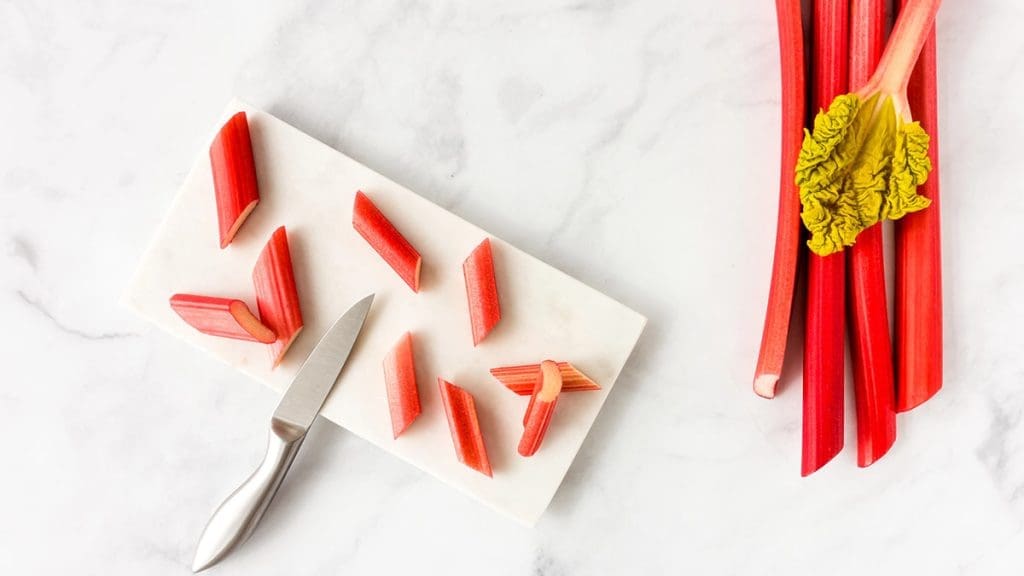
What It Looks Like
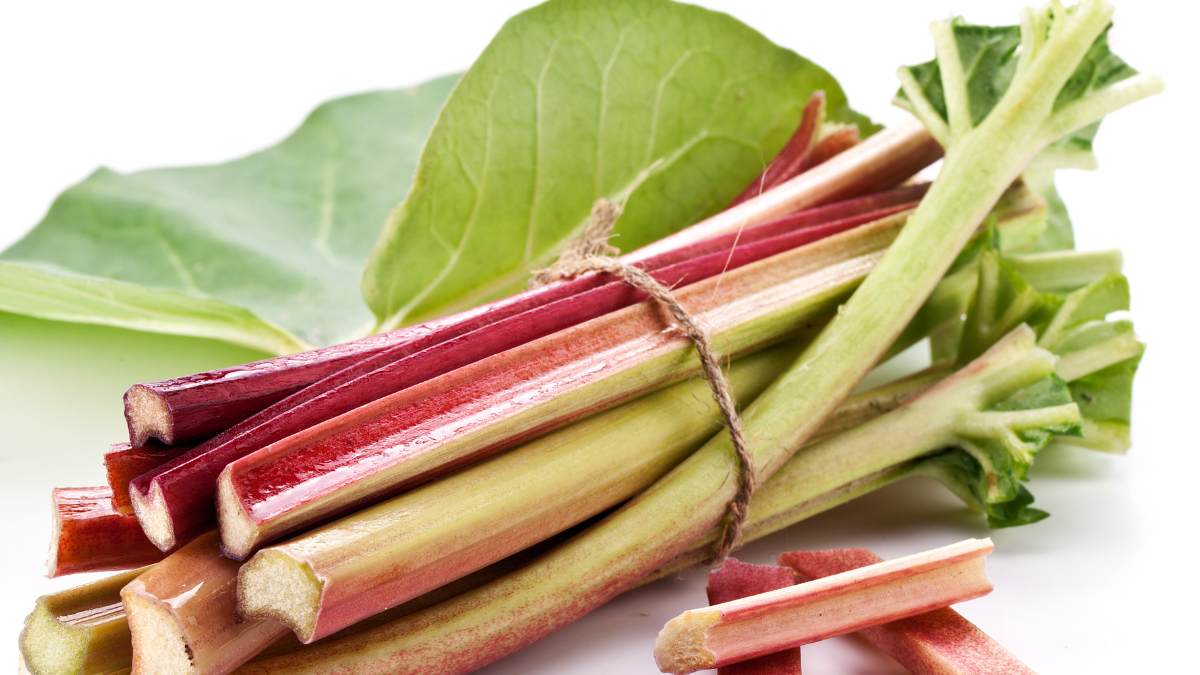
- Stalks: Slim, smooth, and vibrantly pink to deep red all the way through
- Leaves: Small, pale yellow-green leaves are a telltale sign it was grown without light
- Texture: Noticeably more tender and less fibrous than field rhubarb
How It Tastes
Hothouse rhubarb is sweeter and more delicate than field rhubarb. Because it grows without sunlight, it develops less oxalic acid which is the compound responsible for rhubarb’s signature sharp, mouth-puckering bite. The result is a more refined tartness with a soft, almost floral quality.
Best Uses for Hothouse Rhubarb
Its tenderness and milder flavour make hothouse rhubarb ideal for recipes where texture and colour shine:
- Compotes and sauces — cooks down quickly into a vibrant, rose-coloured sauce; perfect for spooning over yogurt, oatmeal, or pancakes
- Upside-down cakes and layered desserts — the vivid colour makes it visually stunning when caramelized
- Fresh pairings — thin slices eaten with a small dip of sugar, or folded raw into a spring salad for a pop of tartness
- Jams and preserves — sets beautifully and produces a brighter, more jewel-toned result than field rhubarb. Try this 10 minute Strawberry Freezer Jam.
- Mousse-style desserts — its tender texture blends and folds easily without becoming stringy
Reduce sugar slightly when substituting hothouse rhubarb for field rhubarb in a recipe, it needs less sweetener to balance its naturally gentler tartness.
Field Rhubarb
Field rhubarb is what most Canadians picture when they think of rhubarb. The thick, tart stalks that signal the arrival of spring at farmers’ markets and in backyard gardens from coast to coast.
How It’s Grown
Field rhubarb grows outdoors in direct sunlight. It’s a perennial crop that can be harvested year after year for 8 to 10 seasons, and it thrives in Canada’s cool climate. Varieties grown across Canada include Sutton, German Wine, Victoria, and Canada Red. Stalks are harvested when they reach approximately 30–40 cm in length, and a single plant can be picked multiple times throughout the season.
Available in Canada: Typically May through June, sometimes into July
Grown across: British Columbia, Ontario, Quebec, Nova Scotia, and prairie regions
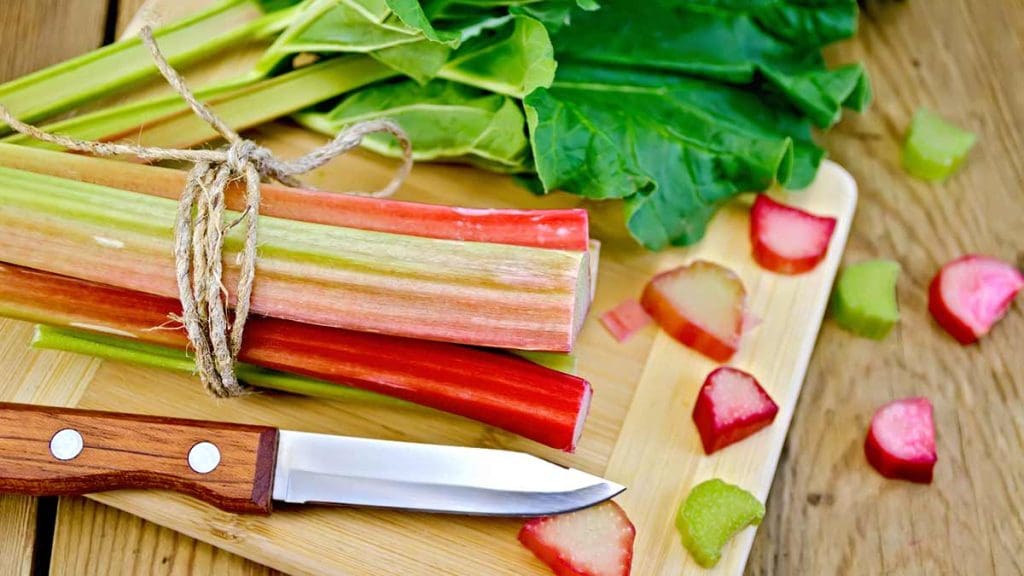
What It Looks Like
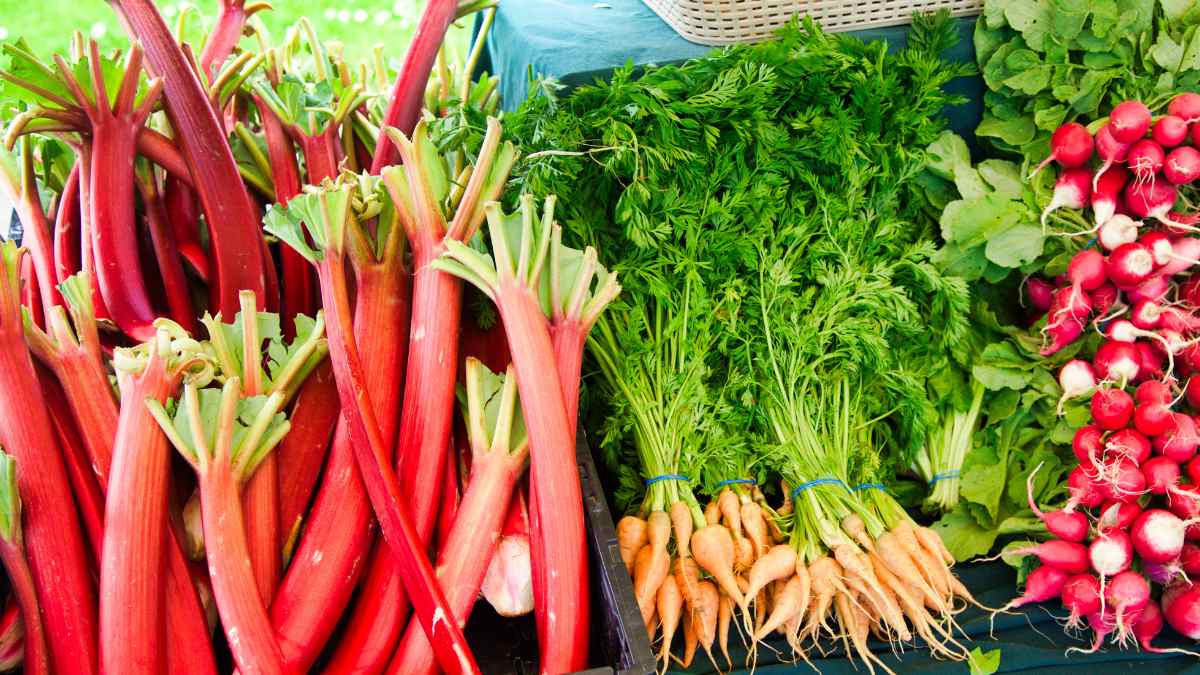
- Stalks: Thicker, more robust, and ranging from light green to deep red depending on variety
- Leaves: Large, broad, and dark green leaves that are always inedible; remove before storing or cooking
- Texture: Firmer and more fibrous than forced rhubarb, particularly in mature or wild-grown stalks
How It Tastes
Field rhubarb is bolder and more assertively tart than forced rhubarb. The full-sun growing process develops more oxalic acid, giving it that classic sharp, mouth-puckering punch that rhubarb is famous for. This isn’t a flaw, it’s what makes field rhubarb so effective in recipes where a strong flavour contrast is the whole point.
A common piece of folk wisdom: the redder the stalk, the sweeter the taste. While this is a useful general guide, colour in field rhubarb reflects variety and growing conditions more than sweetness, green-stalked varieties can still have excellent flavour.
Best Uses for Field Rhubarb
Its robust flavour and firmer texture make field rhubarb a great option for a variety of dishes:
- Pies and crumble pies — rhubarb holds its structure and delivers bold flavour through a full bake. Here’s a Rhubarb Custard Pie that will turn some heads.
- Crisps and crumbles — the tartness pairs perfectly with a buttery oat topping. Try this Rhubarb Strawberry Coconut Maple Crisp | Food Bloggers of Canada.
- Jams and canned preserves — high acidity makes it well-suited for preserving; Here’s a classic pairing with strawberry.
- Loaves and muffins — chunky pieces hold up well in batter and add welcome pockets of tartness. Try Rhubarb Apple Loaf — Unlock Food or Rhubarb Muffins — Spend With Pennies for an easy afternoon snack option.
- Savoury chutneys and glazes — rhubarb’s acidity works like tamarind or vinegar in a pork or chicken glaze; an underused application worth trying (Sweet and Savoury Rhubarb Ideas — Food Bloggers of Canada)
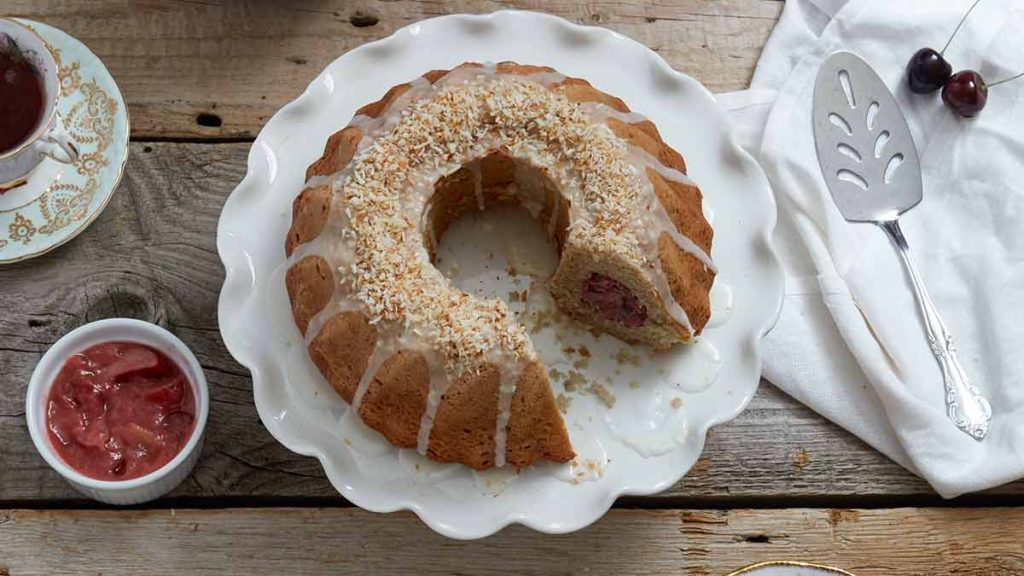
- Bundt cakes and celebration bakes — a showstopper combination when combined with cherries in this Cherry Rhubarb Bundt Cake.
Side-by-Side — Hothouse vs. Field Rhubarb at a Glance
| Hothouse Rhubarb | Field Rhubarb | |
|---|---|---|
| Availability | January – June | May – July |
| Stalk colour | Deep pink to red throughout | Light green to red (variety-dependent) |
| Texture | Tender, slim, less fibrous | Firm, thick, more fibrous |
| Flavour | Milder, sweeter, more delicate | Bold, tart, assertive |
| Sugar needed | Slightly less | Standard recipe amounts |
| Best for | Compotes, sauces, upside-down cakes, fresh use | Pies, crisps, jams, loaves, chutneys |
| Cooking time | Shorter — breaks down quickly | Standard — holds shape longer |
| Where it’s grown | Primarily Ontario | BC, ON, QC, NS, prairies |
How to Choose When You’re Not Sure
Not sure which type you’re looking at, or which to pick? Here’s a simple decision guide:
- If you want to make a sauce, compote, or something visually striking → choose hothouse rhubarb when it’s available (January–June). Its colour and tenderness are hard to beat.
- If you’re baking a pie, crisp, or crumble → field rhubarb is ideal. Its firmer texture holds up to heat and its bold tartness shines through a sweet topping.
- If you’re making jam or preserves → either works well, but field rhubarb’s higher acidity helps with setting.
- If you’re folding it into muffins or a loaf → either type works. Use what’s available and what’s freshest.
- If you’re trying rhubarb in a savoury dish for the first time → start with field rhubarb. Its assertive flavour is a better match for meat-based dishes, chutneys, and glazes.
- If you only have access to one type → they are interchangeable in virtually all cooked recipes. Adjust sugar slightly if using hothouse rhubarb.
For inspiration beyond the expected:
- 15 Fresh Rhubarb Recipes to Try This Spring — Food Bloggers of Canada
- Rhubarb Recipes That Aren’t Crumbles or Crisps — Food Bloggers of Canada
A Note on Rhubarb Varieties Within Each Type
Within the field-grown category, several named varieties are commonly grown in Canada, including Victoria, Canada Red, Sutton, and German Wine. These differ slightly in stalk colour and flavour intensity, but the distinction matters much more to growers than to home cooks. At the grocery store or market, you’ll rarely see variety names labelled. The more practical distinction to look for is whether it’s hothouse or field-grown, the information that actually tells you how it will taste and perform in the kitchen.
Check Out These Related Articles




 FAQs About Rhubarb in Season in Canada
