
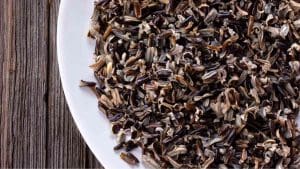
Wild rice is one of those ingredients many people want to use more often, but hesitate to buy because they are not quite sure how to cook it. It can seem unfamiliar, take longer than white rice, and come with mixed advice on water ratios, rinsing, soaking, and whether it should be chewy or fully soft.
The good news is that wild rice is not difficult to cook once you know what to look for. It is actually very forgiving, and unlike more delicate grains, it gives you a visible sign when it is ready: many of the grains split open as they cook. That makes it easier to judge doneness and easier to use with confidence in everyday meals.
What is wild rice
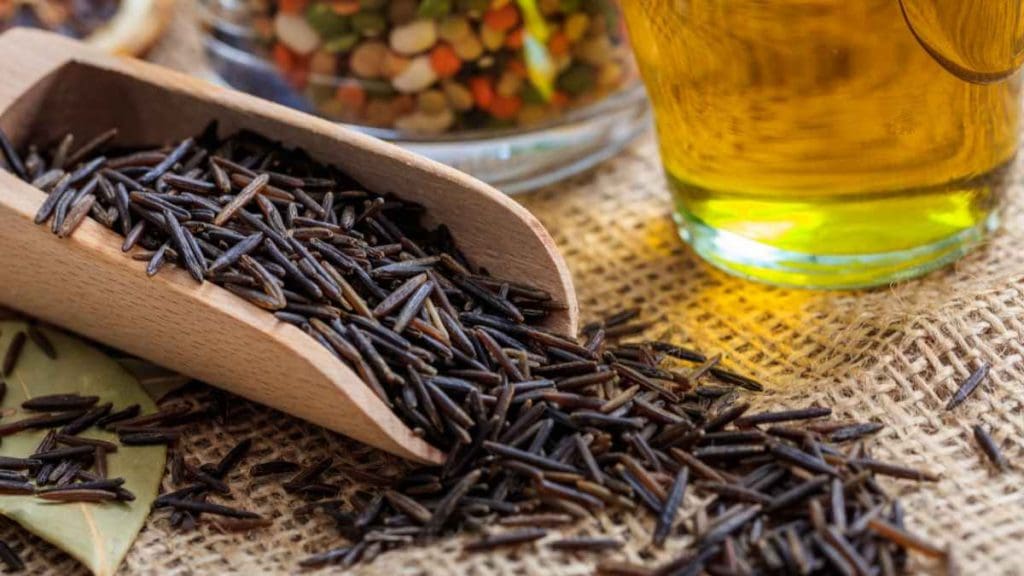
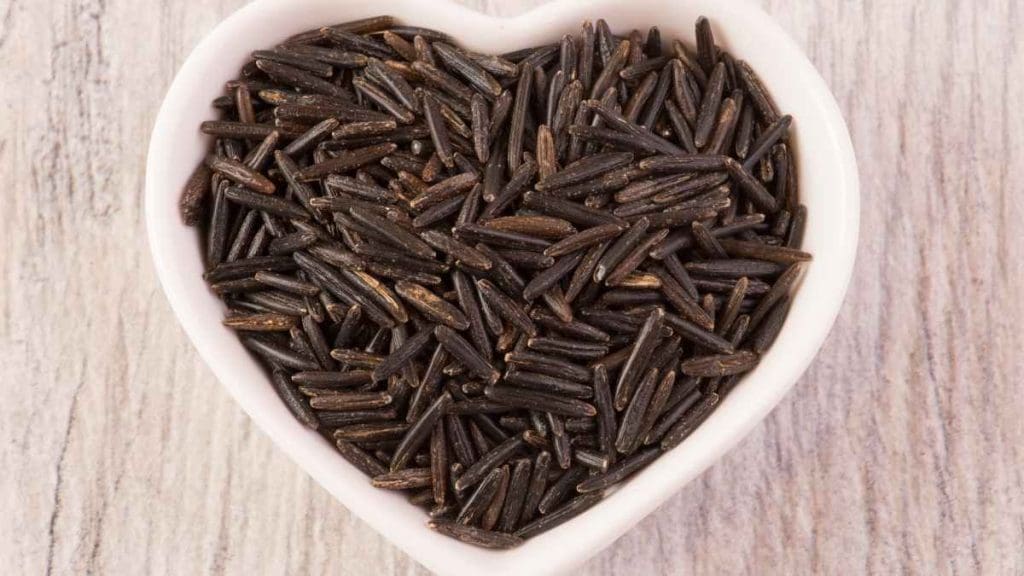
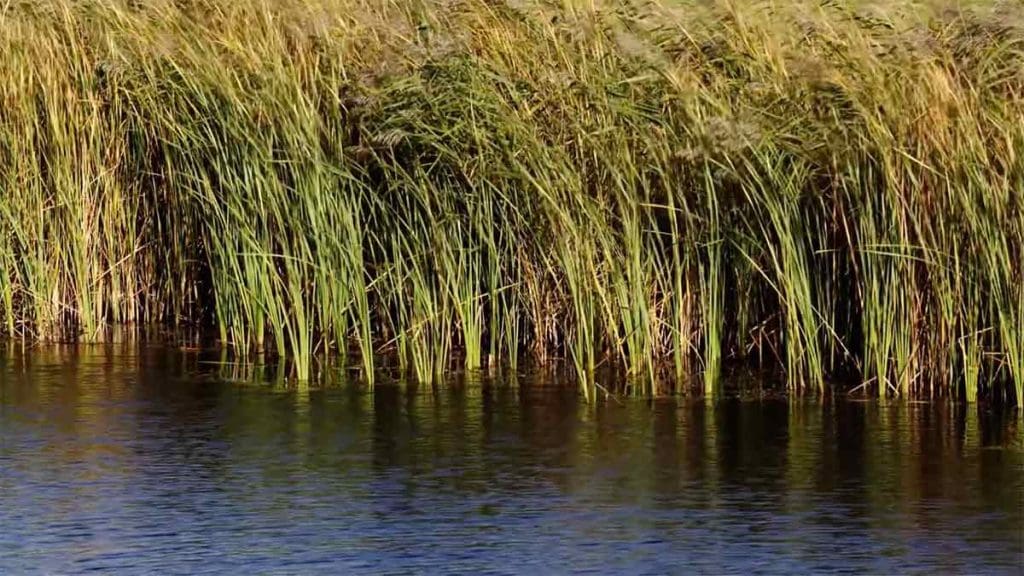
Wild rice is not actually from the same plant family as white or brown rice. Wild rice is not true rice; it is the seed of a semi-aquatic grass in the genus Zizania, native to North America and historically and culturally important to Indigenous people across Canada. Wild rice is one of only two commonly eaten grains native to North America and it has long been harvested in shallow lakes and waterways.
Wild rice has a nutty flavour, a pleasantly chewy bite, and a sturdy texture that makes it ideal for salads, soups, grain bowls, side dishes, and make-ahead meals.
Why people struggle with it
Most wild rice problems come down to expectations. People often treat it like white rice, then wonder why it still seems undercooked after 20 minutes. Wild rice usually needs more time, typically around 35 to 60 minutes, depending on the age of the grain, how it was cured, and the cooking method.
Not using enough water is a common cooking mistake. That is why many cooks now prefer a “cook it like pasta” method rather than relying on a strict absorption ratio. Both methods work, but the pasta-style method is especially helpful for beginners because it is harder to under-hydrate the grain.
The easiest way to cook wild rice
If you want one dependable method, start here.
- Rinse the wild rice well under cool or warm water. We recommend rinsing first to remove dust or excess starch from the outside of the grain.
- Bring a large pot of 4 to 5 cups of salted water or broth to a boil. Wild rice needs room to move and absorb liquid, so err on the side of more water rather than less.
- Add 1 cup uncooked wild rice and reduce to a steady simmer. Cook until the grains are tender and many but not all have burst open, usually about 35 to 50 minutes, though some batches take longer.
- Drain off any extra liquid.
- Let the rice rest for 5 to 10 minutes, then fluff with a fork.
This method gives you tender, separate grains and works especially well if you plan to use wild rice in salads, soups, bowls, or meal prep. Some methods call for less water but we find that this is a fool proof method that guarantees success.
How to tell when wild rice is done
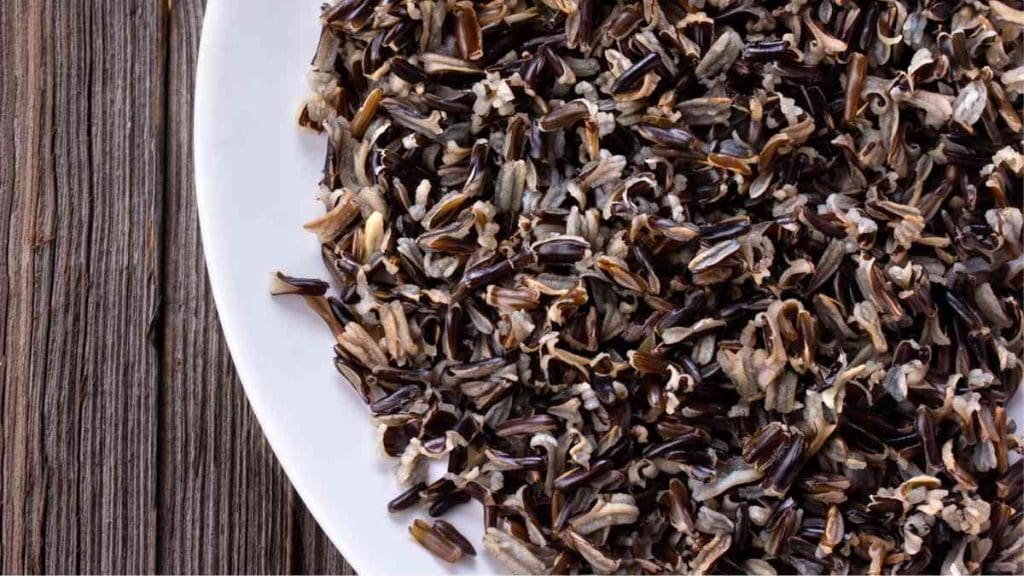
Wild rice should be tender but still pleasantly chewy. One of the clearest signs it is done is that many of the grains split open, exposing the lighter interior.
What you do not want is rice that is still hard in the centre or, at the other extreme, fully rolled back into tight curls and mushy. Taste matters most. If it is still too firm for your liking, keep cooking it a bit longer.
Should you soak wild rice before cooking?
Soaking is optional, not essential. Soaking wild rice in water for 30 minutes to 2 hours can reduce cooking time by about 50 percent, though the extra step of soaking and the soaking period itself offsets much of that time savings. If you do decide to soak the wild rice before cooking, drain and rinse to remove excess carbohydrates and then add new cooking liquid.
How to use wild rice in everyday cooking
Once you have cooked wild rice, it becomes one of the most useful grains to keep on hand. This is where wild rice shifts from “special ingredient” to “easy building block.”
Wild rice works well in:
- Grain salads with berries, apples, nuts, seeds, and vinaigrette.
- Side dishes with mushrooms, onions, fresh herbs, or roasted vegetables.
- Soups and chowders, where its texture holds up beautifully.
- Grain bowls with greens, squash, fish, chicken, or beans.
- Stuffed vegetables, casseroles, and lunch-prep mixes with other grains.
It also combines well with other grains when you want to soften the texture of your dish or get more from your grocery dollar. Because wild rice usually takes much longer to cook than white rice or quinoa, it is often easiest to cook it separately and stir the grains together afterward. That gives you better control over texture and helps avoid overcooking the faster grain.
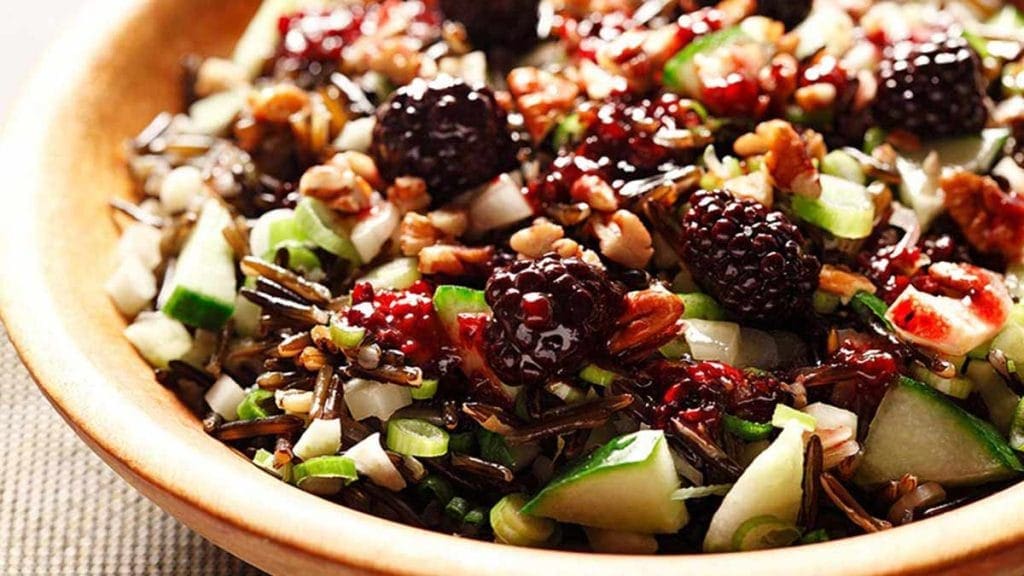
Crunchy Wild Rice Salad with Blackberry Dressing
Ready to impress your taste buds? Prepare your wild rice in advance, and savor this delightful salad warm or chilled.
Salads that stay satisfying
Wild rice pairs well with salads because it holds up under dressing and adds substance. Canadian Food Focus recipes such as Wild Rice Salad with Maple Vinaigrette and Crunchy Wild Rice Salad with Blackberry Dressing show how well wild rice pairs with fruit, greens, and seeds.
A simple formula for a wild rice salad is:
- Cooked wild rice
- A fruit element such as dried cranberries, apples, or berries
- Something crunchy, like sunflower seeds, pumpkin seeds, or nuts
- Greens or fresh herbs
- A vinaigrette with acid and a little sweetness (for example, vinegar or citrus plus maple syrup or honey)
This style of salad works as a side, a packed lunch, or a base for adding chicken, fish, beans, or roasted vegetables.
If you already make pasta or leafy salads, swapping in wild rice as the base is a low‑risk way to try it and get more whole grains into everyday meals.
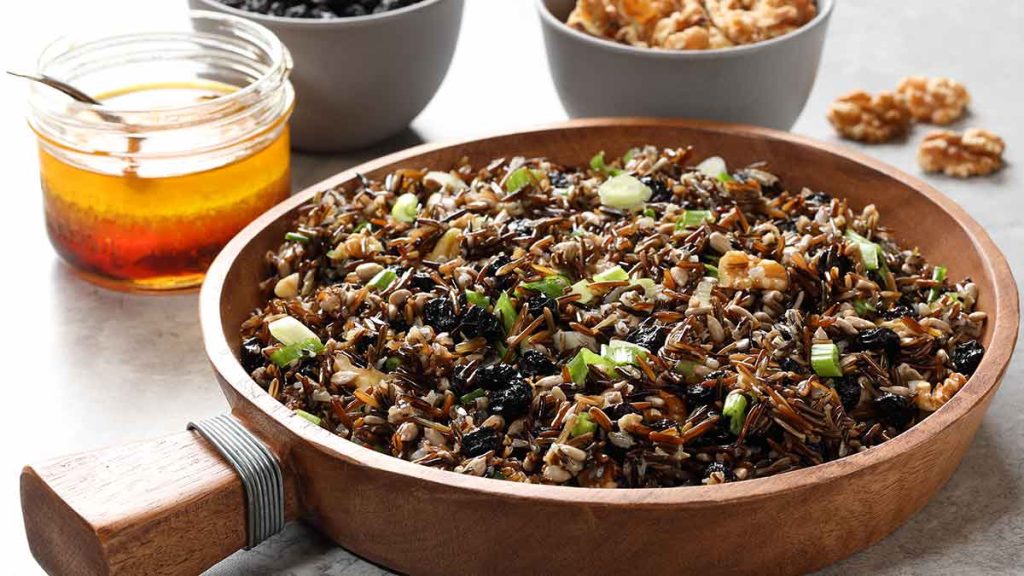
Wild Rice with Maple Vinaigrette
This Wild Rice Salad with Maple Vinaigrette is bursting with Fall flavours but is delicious enough to serve all year round.
Simple sides and pilafs
Wild rice makes a flavourful side dish, especially with ingredients like mushrooms, onions, garlic, and herbs. A pilaf with wild rice, sautéed mushrooms, and broth fits well into cool‑weather menus and holiday meals.
For a more budget‑friendly approach, you can mix wild rice with brown rice, barley, or other whole grains. You still get wild rice’s flavour and texture but stretch it further for family meals.

Wild Rice and Mushroom Pilaf
Elevate your side dish game with this delicious Wild Rice and Mushroom Pilaf! Enjoy the perfect harmony of earthy mushrooms and nutty wild rice in every delicious bite.
Comfort‑food uses
Wild rice adds interest to soups, casseroles, and stuffings because it keeps a pleasant chew and does not disappear into the background. It works well in:
- Creamy soups.
- Stuffed squash or peppers.
- Casseroles where you want distinct grains rather than a porridge‑like texture.
If your family already enjoys soups and casseroles, adding a handful of cooked wild rice is a simple way to test it without changing the whole meal.
Baking and crunchy toppings
Wild rice is not limited to savoury dishes. Recipes such as Cranberry, Sage, and Puffed Wild Rice Cookies developed by the Mâmawi Café, show how puffed wild rice can add crunch to baking and snacks. Puffed wild rice can also be sprinkled on soups, salads, or yogurt bowls for extra texture.
If you like adding seeds or granola for crunch, puffed wild rice can play a similar role.
Why people are paying more attention to wild rice
Wild rice fits several different criteria that consumers are looking for right now. It is naturally gluten-free, rich in texture and flavour, and works well in make-ahead meals that feel wholesome and versatile. Wild rice is slightly higher in protein than most other whole grains and is a good source of fibre, folate, magnesium, phosphorus, manganese, zinc, vitamin B6, and niacin.
Researchers have been looking closely at wild rice’s potential health benefits and the results are encouraging, though still limited. In one early study, University of Minnesota researchers reported in 1994 that wild rice was extremely high in antioxidant activity compared with many other grains. More recent work from the University of Manitoba in 2009 analyzed eleven samples of wild rice and found that their antioxidant activity was about 30 times higher than that of a white rice control, suggesting wild rice may offer significantly more antioxidant protection than refined rice. In the same year, a separate animal study from researchers in China reported that including wild rice in the diet helped lower cholesterol and other blood lipid measures. These studies point to promising health effects, but more research is needed before making strong health claims.
How to store cooked wild rice
Cooked wild rice is excellent for meal prep. Cooked, drained wild rice can be stored in the refrigerator for up to a week and frozen for up to six months. To maintain freshness and follow food safety rules, be sure to refrigerate wild rice within 2 hours of cooking it. Like other types of rice, wild rice can harbour Bacillus cereus, a bacterium whose spores are commonly found on uncooked grains. Cooking destroys the active bacteria but not the spores. If cooked wild rice is left at room temperature, those spores can germinate and multiply, producing toxins that can cause food poisoning.
That storage flexibility is one of its biggest advantages. Cook one batch, then use it throughout the week in salads, bowls, soups, or side dishes without having to start from scratch each time.
Wild rice may take a little longer to cook than other grains, but it gives a lot back in flavour, texture, nutrition, and versatility. After you cook with it once or twice, it becomes much easier to see why wild rice deserves a place in a regular kitchen routine.
Wild Rice FAQs
Wild rice tends to bring up the same set of questions again and again, especially for shoppers trying it for the first time. Here are some frequently asked questions to help you decide how to buy it, cook it, or try it again.
Is wild rice actually rice?
No. Wild rice is not the same species as white, brown, or jasmine rice. It is the seed of a semi-aquatic grass in the genus Zizania, native to North America. That is why it tastes different, cooks differently, and has a firmer, chewier texture. White, brown and jasmine rice are grown from domesticated varieties of Asian rice.
How long does wild rice take to cook?
Usually about 35 to 60 minutes, depending on the type, age, and cooking method. It’s best to test for doneness rather than to rely only on the clock.
How do I know when wild rice is done?
Wild rice is done when it is tender but still pleasantly chewy, and many of the grains have split open. That visible opening is one of the easiest signs that it is ready.
Do I need to rinse wild rice?
Yes, rinsing is a good idea. Rinse wild rice before cooking to remove dust, debris, or excess surface starch.
Should I soak wild rice before cooking?
You can, but you do not have to. Soaking may shorten the cooking time by 50 percent, but it is not necessary for good results. For most home cooks, rinsing and simmering is enough.
What is the best way to cook wild rice?
If you want one dependable method, start here.
- Rinse the wild rice well under cool or warm water. We recommend rinsing first to remove dust or excess starch from the outside of the grain.
- Bring a large pot of 4 to 5 cups salted water or broth to a boil. Wild rice needs room to move and absorb liquid, so err on the side of more water rather than less.
- Add 1 cup uncooked wild rice and reduce to a steady simmer. Cook until the grains are tender and many but not all have burst open, usually about 35 to 50 minutes, though some batches take longer.
- Drain off any extra liquid.
- Let the rice rest for 5 to 10 minutes, then fluff with a fork.
This method gives you tender, separate grains and works especially well if you plan to use wild rice in salads, soups, bowls, or meal prep. Some methods call for less water, but we find that this is a foolproof method that guarantees success.
Why is my wild rice still crunchy?
It probably needs more cooking time or more water. Wild rice takes longer than most grains, and one of the most common mistakes is treating it like white rice and stopping too early. If it is still hard in the centre, keep simmering and check again in a few minutes.
Can you overcook wild rice?
Yes. Wild rice can go from pleasantly chewy to overly soft if it cooks too long. Overcooked wild rice can split too far and curl tightly, the ideal texture is tender with some chew still left.
How much does wild rice expand when cooked?
Wild rice usually expands to about three to four times its original size. That means 1 cup uncooked wild rice will typically yield about 3 to 4 cups cooked.
How long can cooked wild rice sit out?
To maintain freshness and follow food safety rules, refrigerate wild rice within 2 hours of cooking it. Like other types of rice, wild rice can harbour Bacillus cereus, a bacterium whose spores are commonly found on uncooked grains. Cooking destroys the active bacteria but not the spores. If cooked wild rice is left at room temperature, those spores can germinate and multiply, producing toxins that can cause food poisoning.
How should I store cooked wild rice?
Cool cooked wild rice quickly and refrigerate it within two hours of cooking. Store it in a shallow container to speed cooling, and use refrigerated leftovers within 3 to 4 days. Reheat thoroughly until steaming hot throughout.
Is wild rice healthy?
Wild rice is widely recognized as a nutrient-dense whole grain. It is slightly higher in protein than most whole grains and provides fibre, folate, magnesium, phosphorus, manganese, zinc, vitamin B6, and niacin.
Researchers have been looking closely at wild rice’s potential health benefits and the results are encouraging—though still limited. In one early study, University of Minnesota researchers reported in 1994 that wild rice was extremely high in antioxidant activity compared with many other grains. More recent work from the University of Manitoba in 2009 analyzed eleven samples of wild rice and found that their antioxidant activity was about 30 times higher than that of a white rice control, suggesting wild rice may offer significantly more antioxidant protection than refined rice. In the same year, a separate animal study from researchers in China reported that including wild rice in the diet helped lower cholesterol and other blood lipid measures. These studies point to promising health effects,but more research is needed before making strong health claims.
Is wild rice gluten-free?
Yes, wild rice is naturally gluten-free. It is often a good grain option for people looking for variety beyond wheat-based side dishes.
Why is wild rice more expensive than other grains?
Wild rice is usually harder to grow, produces lower yields, and requires more specialized harvesting and processing than other grains so wild rice often costs more and is frequently mixed with white or brown rice to reduce the cost.
Can I mix wild rice with other grains?
Yes. Wild rice pairs well with brown rice, white rice, barley, quinoa, and farro. Because the cooking times are usually very different, the easiest method is often to cook products separately, and then combine them once cooked.
What does wild rice taste like?
Wild rice has a nutty, earthy flavour and a chewy texture. It tends to feel more substantial than white rice and holds up especially well in salads, soups, and grain bowls.
What are the best ways to use cooked wild rice?
Cooked wild rice is very versatile. It works well in salads, soups, side dishes, pilafs, grain bowls, stuffed vegetables, and mixed-grain dishes. A batch can also be made ahead and used through the week in different dishes, which makes it helpful for lunch prep and simple weeknight meals.
How should I store it?
Uncooked wild rice keeps well in a dry airtight container, while cooked wild rice can be refrigerated for up to a week or frozen for up to six months. Be sure to refrigerate cooked wild rice within two hours to maintain optimal freshness and follow the recommended food safety practices.
Wild rice is a diverse ingredient option for individuals who are looking for simple cooking methods, real nutrition, Canadian relevance, and ingredients that work for more than one meal. Once you understand how to cook wild rice and what to expect, most of the uncertainty around it disappears.
Additional Articles to Explore






 Seasonal Sweet Corn and Your Grocery Budget in Canada