
An integral part of the fresh produce trade, conventional produce stickers can cause recycling issues.
PLU stickers – the little plastic labels attached to fresh produce – help ensure efficient and seamless shipment, storage, and sale of fruits and vegetables worldwide. However, they can also contaminate compost, posing a challenge for companies that recycle food waste.
Compostable stickers would solve the problem. But a lot of sticker science has to be investigated before the fresh produce industry can use them.
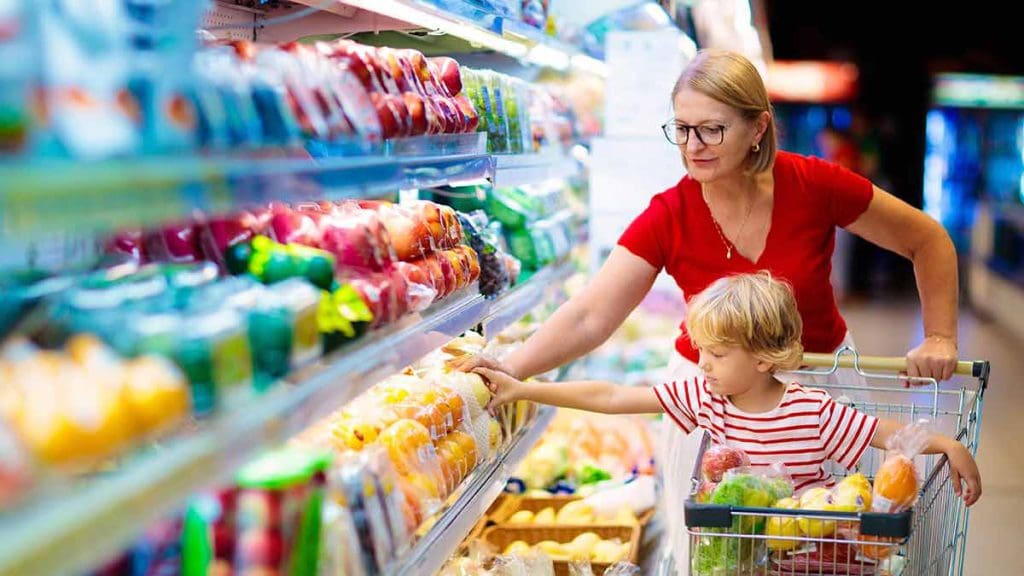
What PLU stickers do
PLU (Price Look Up) stickers are ubiquitous around the globe, and have been used by food producers, shippers, and retailers for decades in tracking and sales of product. From brokers moving product across oceans to the cashier needing to know the difference between two red apples at the till, or differentiating organic versus standard bananas, the small plastic stickers have been an integral part of the global food system.
Not every PLU sticker is removed before produce and produce scraps make it to the waste bin, of course. While the volume of plastic the stickers contribute to the environment is small, they do pose problems for those transforming food waste into compost.
“The context is important. It will be a couple of grams of stickers, typically within many kilograms of organic waste,” says Dan Duguay, senior director of sustainability with the Canadian Produce Marketing Association.
“It’s not a plastic waste issue, it’s a compost contamination issue. PLU stickers are very much a contaminant of organic recycling systems. For the compost industry, this adversely impacts the value of industrial compost, with higher quality compost being more challenging to produce if non-compostable stickers are disproportionately present.”
Sticker science
As of 2025, key figures in the global fresh produce and composting business formally announced the industries would work together to promote and accelerate the transition to compostable stickers. The agreement was made by a broad international group, Duguay says, to ensure there was an economy of scale that would help lower the cost of the transition, while maintaining the integrity of the fresh produce trade.
Making and using decomposable stickers is not a straightforward process, though.
PLU stickers, says Duguay, have three components – ink, adhesive, and the sticker face material itself. The properties of each component matters and requires troubleshooting. They all have to break down at the right rate, for example. Compostable inks and adhesives can also be challenging to develop without unwanted contaminants.
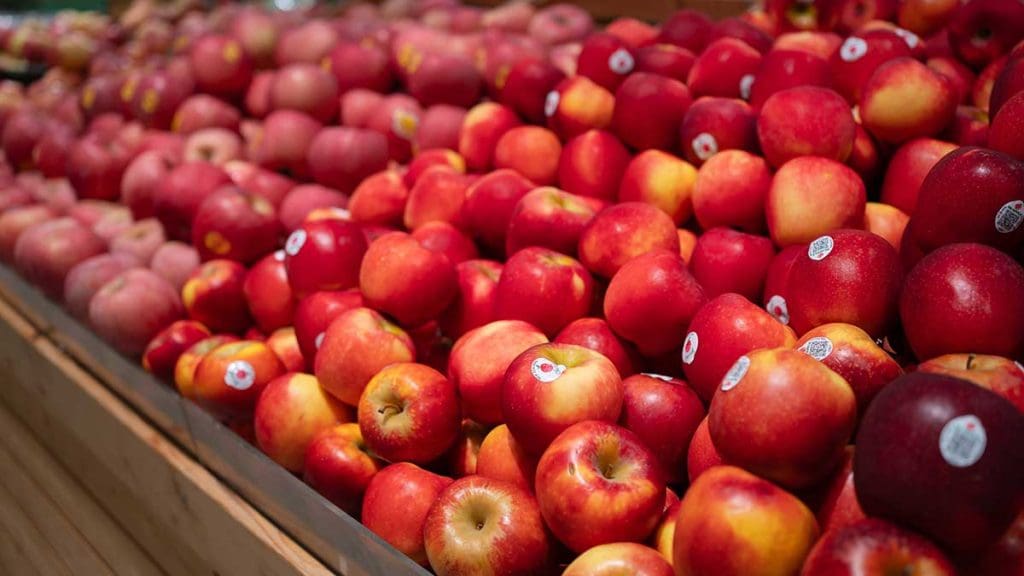
“There are requirements for sticker material to have a fairly demanding performance to be designated as certified compostable,” Duguay says. “The term ‘compostable’ means a certain rate of decomposition, and the resulting product from that decomposition must not be toxic, or exceed a certain concentration of trace elements, such as metals, which are primarily found in inks.”
Further complicating things are differences in trace element concentration limits in different countries. These requirements can vary significantly, with the European Union requirements currently the most stringent in terms of range of elements, as well as their respective concentrations. For this reason, says Duguay, players in the fresh produce market are looking to develop and adopt PLU stickers that meet the strictest trace element standards.
“The answer is compostable stickers that meet the European standard are the most stringent at the moment – and likely to become the global standard as the European Union leads the transition to compostable PLU solutions,” Duguay says.
“We need something that can be printed once and shipped anywhere in the world – this will help promote and enable global fresh produce supply chains that cross multiple borders every day.”
A global transition to compostable PLU stickers is targeted for 2030, with current standard setting and policy making in Europe critical to leading a global transition over the coming years.
Innovations in Food and Farming




 Herbed Mushroom and Goat Cheese Galette
