
Fiddleheads are the young, tightly coiled fronds of the ostrich fern (Matteuccia struthiopteris), and they are one of Canada’s most distinctly seasonal wild foods. When fiddleheads are in season in Canada, the window is short, usually running from about May through early June, depending on where you live and how spring unfolds. Most of the fiddleheads Canadians buy are foraged or commercially wild-harvested rather than farmed, which is part of what makes them feel so fleeting and regional.
If you are curious about fiddleheads but have never cooked them before, this guide covers the essentials: when they are in season, where they are found, how to identify ostrich fern fiddleheads safely, how to buy and store them, how to prepare them properly, and a few simple ways to use them. If you like planning meals around what is fresh and local, you can also explore the broader What’s in Season in Canada hub for more Canadian seasonal food ideas.
At a Glance: When Are Fiddleheads in Season in Canada?
In Canada, fiddleheads are typically ready to pick in a very short spring window that runs from roughly May through early June, although the timing can start earlier in milder southern regions and later farther north. Unlike some seasonal foods that can be stored for months, fresh fiddleheads have only a brief post-harvest window, so once the season ends, fresh local fiddleheads are generally gone until the following spring.
- Wild harvest and forage season is roughly late April through early June, depending on province, elevation, and annual weather.
- Commercial and market availability is usually strongest in May, especially through farmers markets, roadside stands, and some specialty grocers.
- Frozen fiddleheads are available from some retailers year-round and can be a practical off-season option.
Find more Canadian-grown foods that are in season in spring by checking out the What’s in Season in Canada hub and the What’s in Season in May page.



Where Are Fiddleheads Found in Canada?
Fiddleheads are gathered along rivers and streams and sold at farmers markets, roadside stands, and some grocery stores during their short season. This wild-harvested ingredient may be foraged or purchased in New Brunswick, Prince Edward Island, southern Quebec, southern Ontario, and parts of British Columbia, although availability depends heavily on region, weather, and local food networks.
New Brunswick has a particularly strong fiddlehead identity, and fiddleheads are closely tied to spring food traditions in Atlantic Canada. They are also connected to long-standing Indigenous and generational foraging traditions. The fiddlehead industry remains relatively small in Canada, and most fiddleheads Canadians eat are still foraged from the wild rather than grown as a conventional field crop.
How to Identify Ostrich Fern Fiddleheads
It’s important to note that all ferns have fiddleheads, but not all fiddleheads are edible, so readers should avoid treating every curled fern shoot as food. Identification matters, and Health Canada warns that other fern types, including foxglove and bracken ferns, are not safe to eat because they may be toxic or carcinogenic.
What to Look For
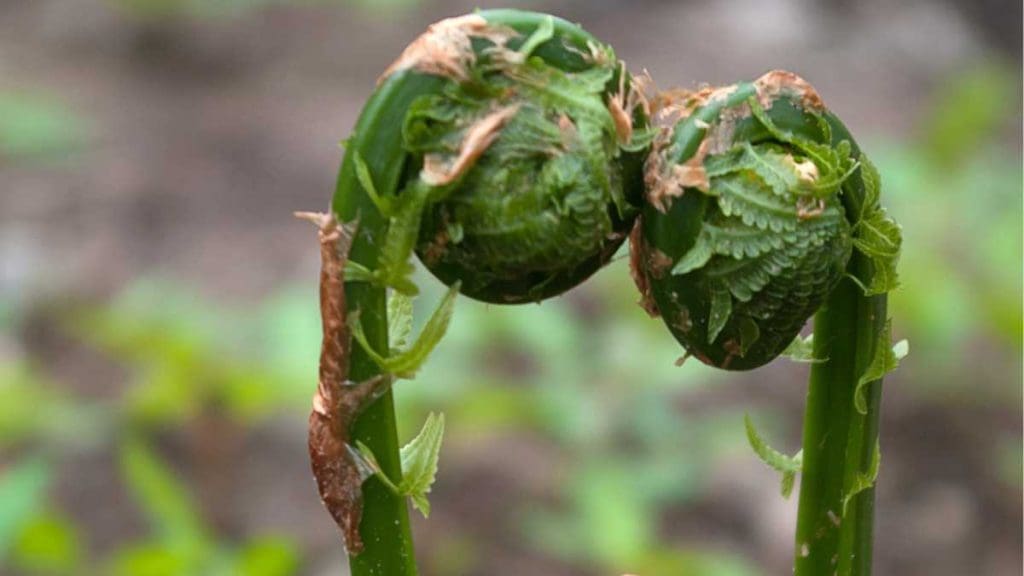
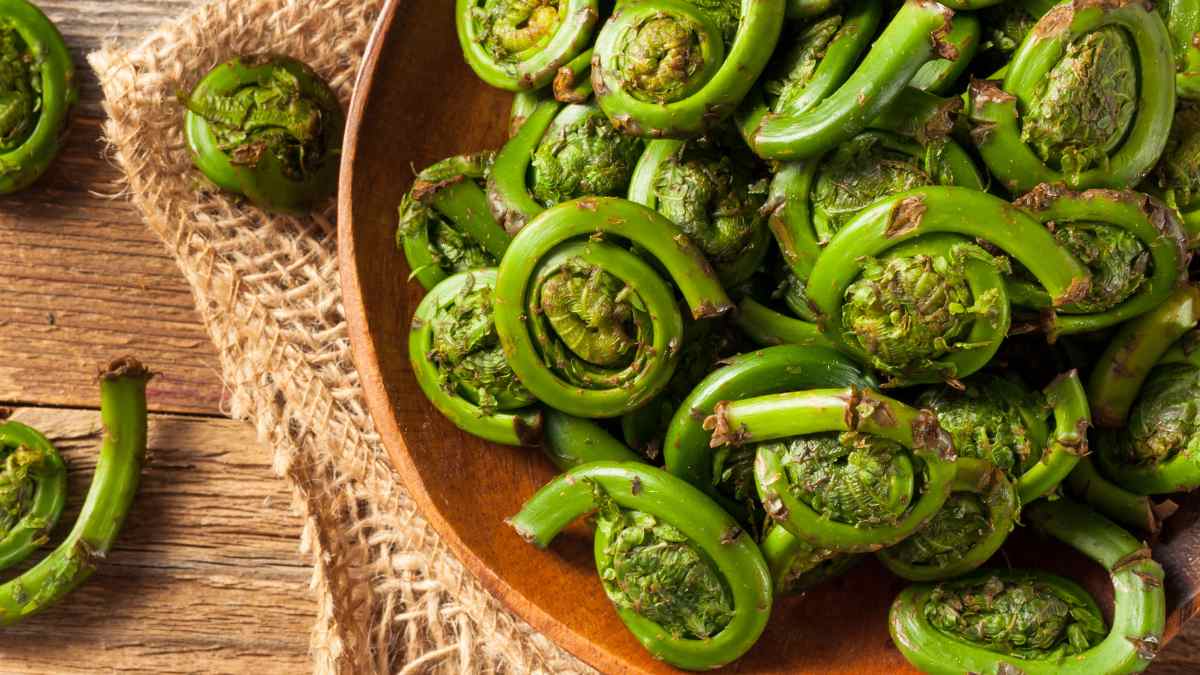
Ostrich fern fiddleheads are identified by a brown, papery, scale-like covering on the coil and a deep U-shaped groove on the inside of the smooth stem, similar to a stalk of celery. They are tightly coiled when harvested and usually emerge in clusters of several fiddleheads per plant near rivers, streams, brooks, and shaded wooded areas.
If foraging is new to you, buying fiddleheads from a reputable grower, market vendor, or grocer is the easier and safer starting point. That way, you can focus on learning how to handle and cook them well before trying to identify them in the wild.
Food Safety: How to Prepare Fiddleheads Safely
Food safety deserves its own section because fiddleheads are safe and delicious when prepared properly, but they should never be eaten raw. Raw or undercooked fiddleheads can cause food poisoning from bacteria that get caught in the tightly coiled heads. Do not eat fiddleheads raw. Always boil fiddleheads in fresh water or steam them before serving or cooking them to reduce the risk of foodborne illnesses.
Before cooking, remove as much of the brown papery husk as possible and rinse the fiddleheads in several changes of cold water. Health Canada advises boiling fiddleheads in a generous amount of water for 15 minutes or steaming them for 10 to 12 minutes until tender, then discarding the cooking water. Fiddleheads should always be boiled or steamed before sautéing, frying, baking, or adding them to soups and other dishes. This step is not optional; it is what makes fiddleheads safe to eat. Learn how to safely prepare fiddleheads for your family in A Step-by-Step Guide to Cook Fiddleheads Safely.
How to Buy Fiddleheads
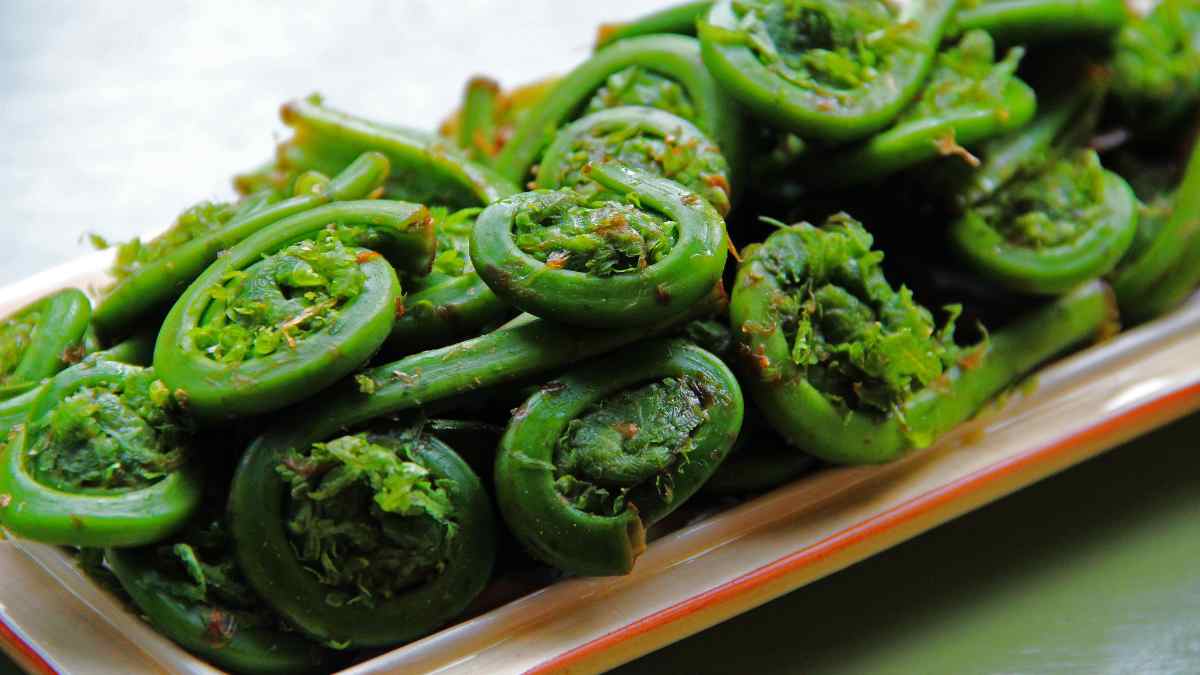
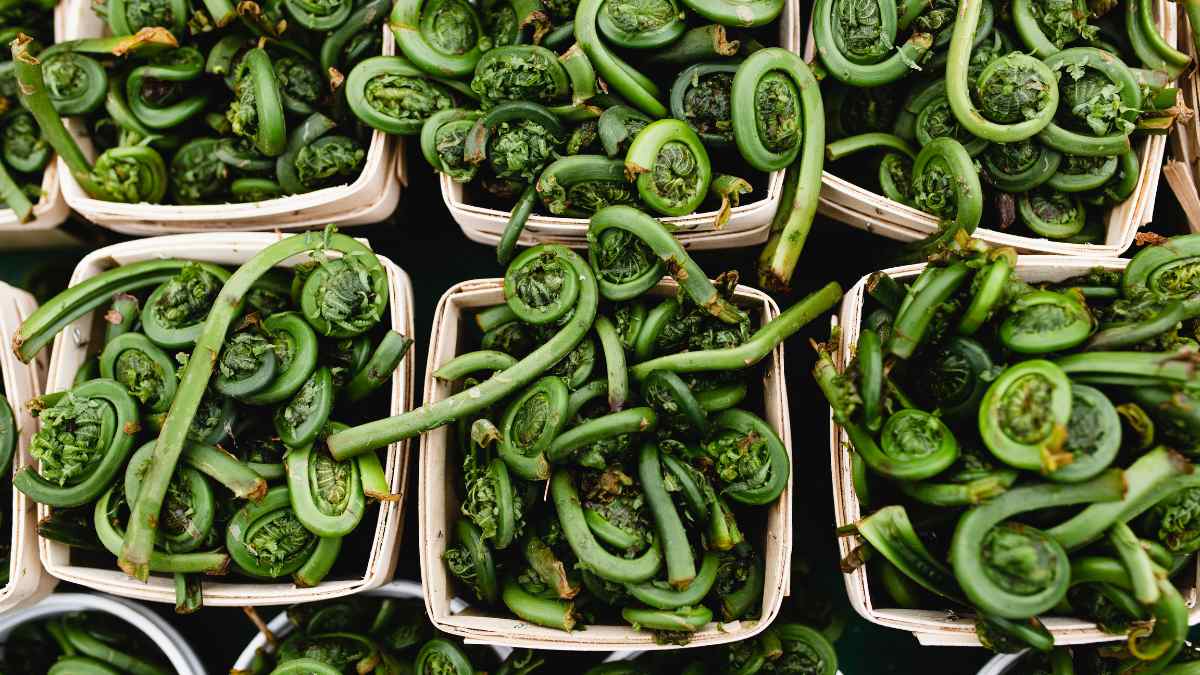
Look for fiddleheads that are small, firm, bright green, and tightly coiled, with only a short section of stem attached. Avoid bunches that look yellowed, soft, slimy, or overly open, since these signs suggest age or poor handling. Because fiddlehead season is so short, availability is highly regional and seasonal, so if you see good-quality fiddleheads at a market or specialty grocer, it can make sense to buy them even if you plan to freeze part of the batch.

Fresh fiddleheads are most often found at farmers markets, roadside stands, and some specialty or independent grocers during peak season. Frozen fiddleheads are another option outside the spring season.
Read Fiddleheads: How to Find and Buy in Canada for more tips.
How to Store Fiddleheads
Fiddleheads are highly perishable, so they are best used within a few days of purchase or harvest. In the refrigerator, keep them cold, minimize air exposure, and plan to cook them soon.
If you want to freeze fiddleheads, clean them thoroughly first and keep food safety in mind at every step. Even if fiddleheads have been blanched or otherwise prepared for freezing, they still need to be fully cooked before eating. This means that when you take them out of the freezer, the fiddleheads must be boiled for 10-12 minutes before you sauté, fry, bake, or use them in other foods like mousses and soups. The simplest approach is to buy them with a short-term plan in mind and treat freezing as a backup rather than the main plan
Easy Ways to Use Fiddleheads
Once fiddleheads have been properly boiled or steamed, they are easy to use in simple spring meals. Their flavour is often compared to asparagus, artichoke, or beet greens, but they are worth trying on their own terms as one of the most distinctive ingredients of the Canadian spring season.
- Toss them with butter, lemon juice, garlic, and a little salt for a simple side dish.
- Serve them warm with Parmesan or a soft poached egg.
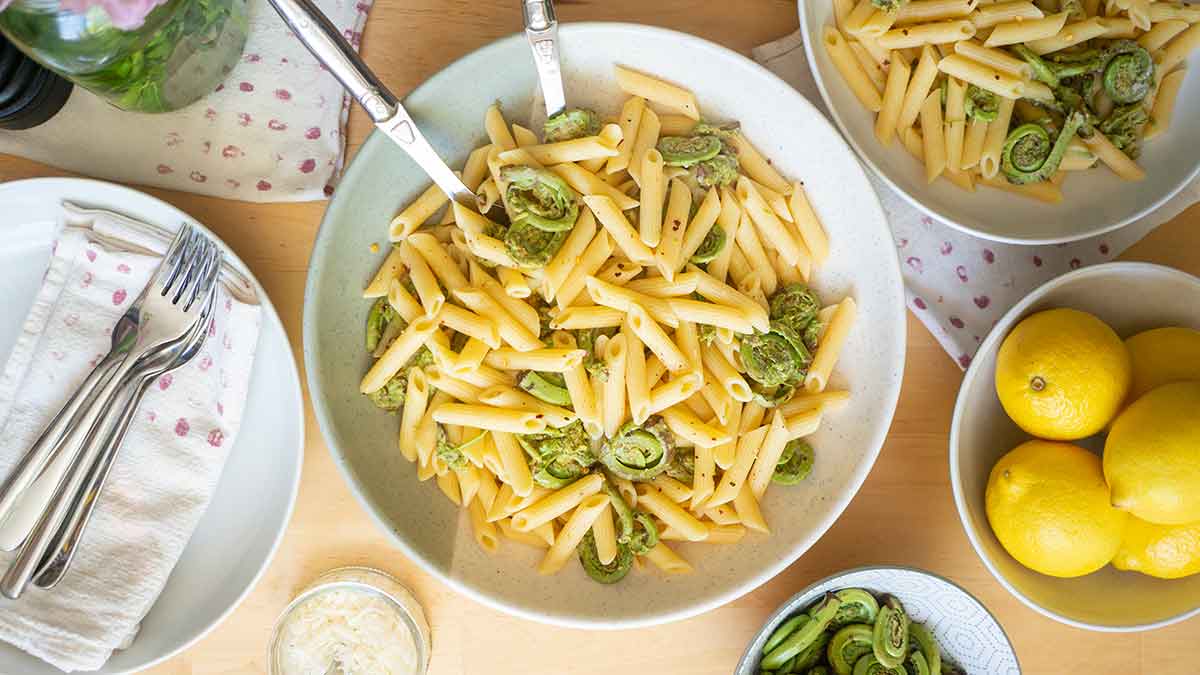
- Add them to pasta, grain bowls, or spring salads after cooking them properly first. This Classic Canadian Dish: One-Pot Fiddlehead Pasta is a simple place to start.
- Fold them into an omelette or frittata.
- Use them as a side dish the way you might serve asparagus or green beans.
Looking for inspiration? Check out these 8 Fiddlehead Recipes for Spring from Food Bloggers of Canada. Here are more ways for Canadians to eat seasonally this spring.

Fiddlehead Nutrition at a Glance
Fiddleheads contain vitamin C, vitamin A as beta-carotene, iron, potassium, and niacin. As with many seasonal foods, nutrient values can vary by source and preparation method, so it makes sense to treat nutrition figures as approximate rather than exact.
For most home cooks, the bigger nutritional takeaway is simply that fiddleheads can add variety to spring meals alongside other vegetables, grains, eggs, and proteins. They are best seen as one more reason to enjoy a broader range of seasonal Canadian foods.
How Fiddleheads Are Grown and Harvested in Canada
Fiddleheads are not a conventional row crop in the way asparagus or carrots are, because most are harvested from wild ostrich fern stands rather than farmed fields. Ostrich ferns grow on the banks of rivers, streams, and brooks and in wooded areas with moisture and shade.
Where Ostrich Ferns Grow
Ostrich ferns are often found near rivers or streambeds but they do not thrive with excessive moisture. They grow best in shade or beneath high hardwood canopies. They prefer sandy or silt loams over soil with too much clay. The fiddlehead industry remains quite small in Canada and many people forage for them in the wild.
The Harvest Window
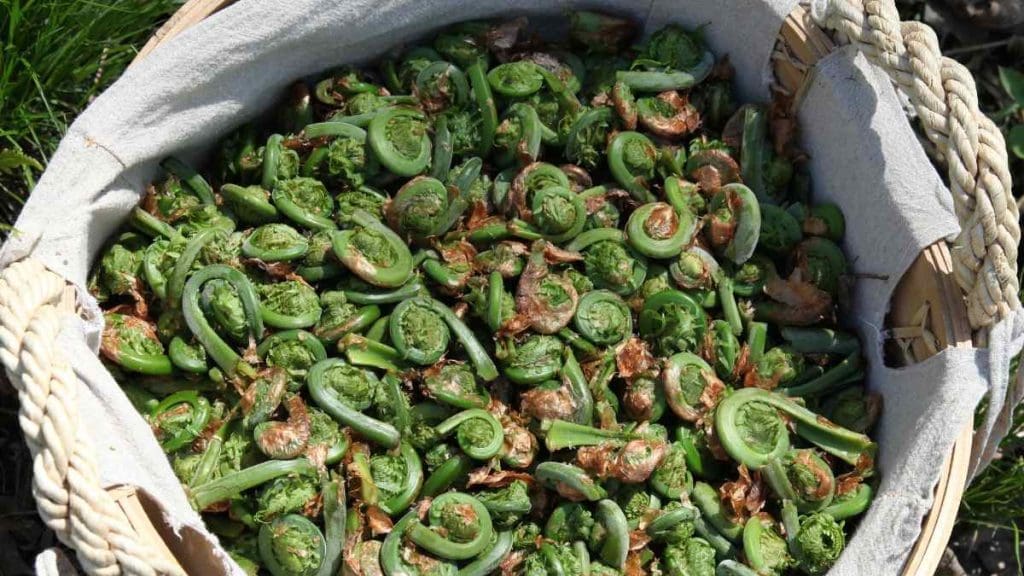
Fiddleheads are only harvested while still tightly coiled, and the short stem is also edible. Once the fronds begin to open, they are no longer harvested for eating. That narrow stage of growth is one of the main reasons that the fresh fiddlehead season is so brief.
Sustainable Foraging Practices
Fiddleheads should only be picked while still tightly coiled. The short stem is also edible. Sustainable harvest practices are very important and it is recommended to leave over half the fiddleheads from any one crown to ensure its survival. If there are fewer than four fiddleheads on a crown, the fern should not be harvested as it is either too young or stunted. Care must also be taken when harvesting by snapping them off or cutting them from the plant.
Wild Harvest vs. Commercial
Most fiddleheads Canadians encounter are foraged from the wild, although some small commercial producers and distributors do exist, especially in Atlantic Canada. This is why fiddleheads feel so fleeting and regional compared with mainstream produce.
Check Out These Related Articles



 Automation Helps Grow Consistent Greenhouse Vegetables
