
Fiddleheads are one of the most exciting ingredients of the Canadian spring season, but they do need a specific preparation step before you eat them. When handled properly, they are easy to cook at home, and the extra care is worth it for a seasonal ingredient that feels fresh, local, and a little special.
If you are new to fiddleheads, start with the basics: buy fresh, firm coils, clean them well, and always cook them before serving. This guide walks through what Health Canada recommends, how to clean fiddleheads step by step, how to boil or steam them safely, and a few simple ways to use them once they are ready. For more on timing, regional availability, and what fiddleheads are, see our Fiddleheads in Season in Canada guide.
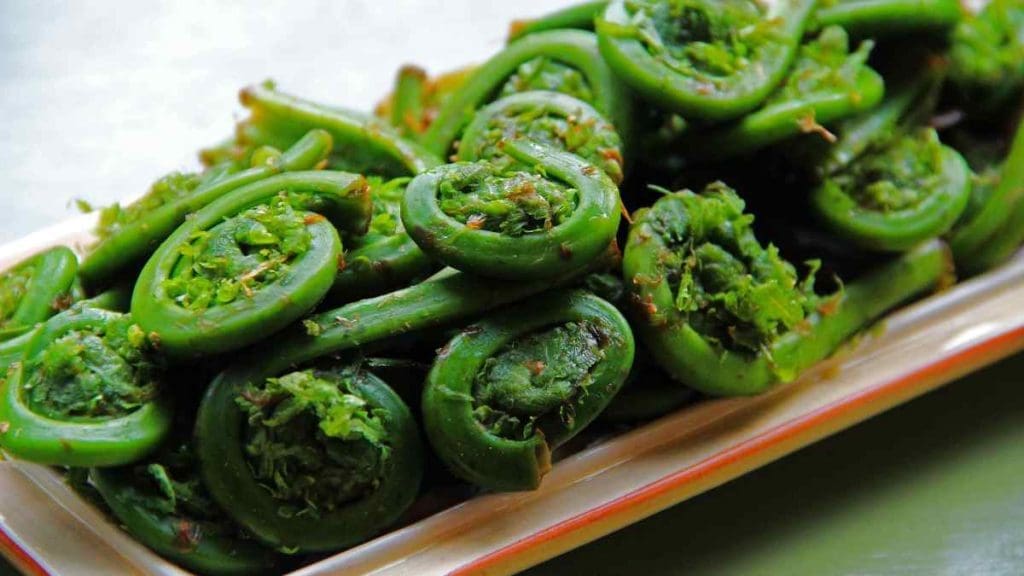
Before You Start: What Health Canada Recommends
The most important thing to know is that fiddleheads should never be eaten raw. According to Health Canada, raw or undercooked fiddleheads can cause foodborne illness, which is why proper cleaning and cooking are not optional.
Before eating fiddleheads, remove as much of the brown papery covering as possible and wash them thoroughly in several changes of cold water. Then either boil them for 15 minutes or steam them for 10 to 12 minutes until tender, and discard the cooking water. Only after that should you sauté them, roast them, fry them, bake with them, or add them to other dishes.
That may sound strict, but the method itself is simple. Once you know the routine, cooking fiddleheads becomes as straightforward as preparing any other spring vegetable. If you are still deciding when to buy them, our What’s in Season in May page can help you time your seasonal shopping.
Step by Step: How to Clean Fiddleheads
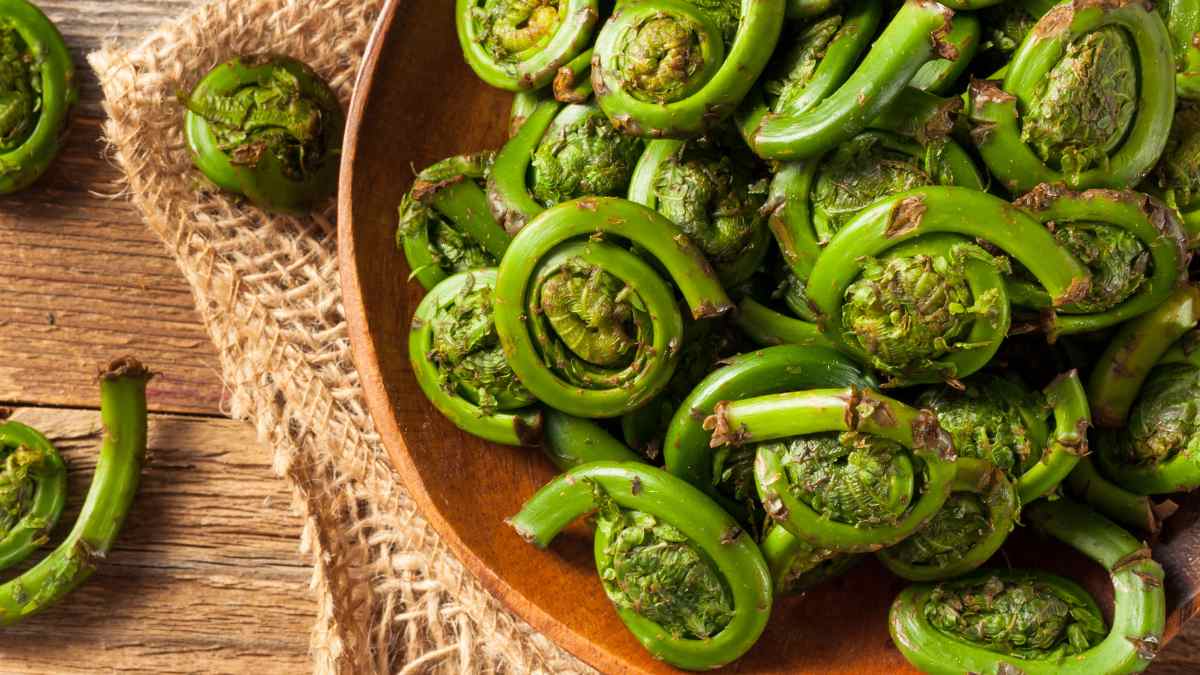
Cleaning fiddleheads well is the first part of cooking them safely. Fresh fiddleheads often still have some of their brown papery husk attached, and because the coils are tight, they can also trap bits of soil or debris.
- Remove the brown papery scales by hand as much as possible.
- Place the fiddleheads in a bowl of cold water and swish them around.
- Lift them out, drain the bowl, and repeat with fresh cold water.
- Rinse under cold running water to help wash away any remaining husk or grit.
- Check the coils once more before cooking.
You may need to rinse them a few times to get them fully clean. The goal is not perfection at first glance, but a thorough cleaning before they go into the pot or steamer.
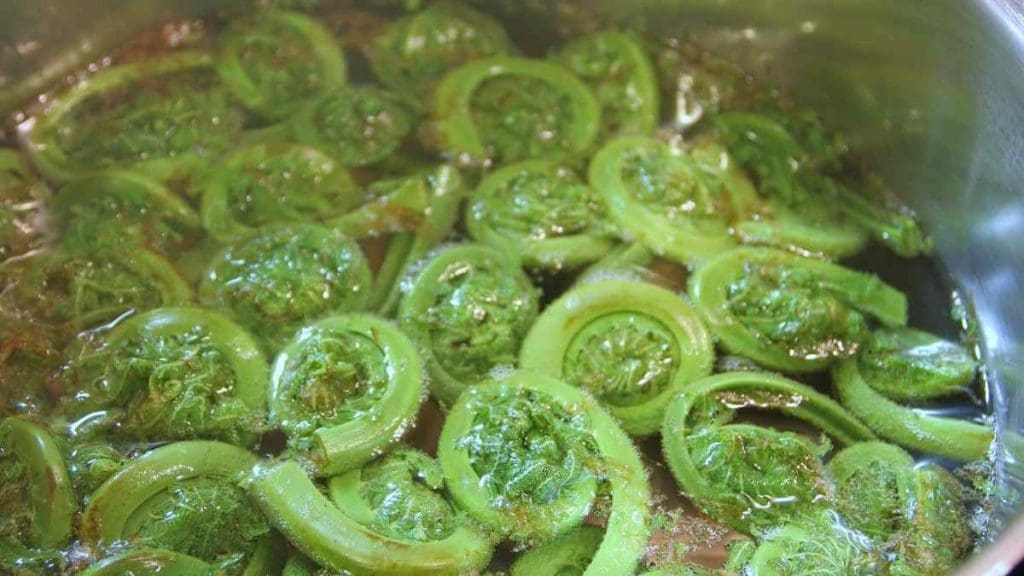
Step by Step: How to Cook Fiddleheads
Once the fiddleheads are clean, the next step is to cook them fully before using them any other way. You have two main options: boiling or steaming.
Boiling method
- Fill a pot with enough water to fully cover the fiddleheads.
- Bring the water to a rolling boil.
- Add the cleaned fiddleheads carefully.
- Boil for 15 minutes.
- Drain them well and discard the cooking water.
Boiling is often the easiest method for first-time cooks because it is simple to time and easy to monitor. After boiling, the fiddleheads are ready to be served as is or added to another cooked dish.
Steaming method
- Add water to a pot fitted with a steamer basket.
- Bring the water to a boil.
- Place the cleaned fiddleheads in the basket in an even layer.
- Cover and steam for 10 to 12 minutes, until tender.
- Remove them promptly and discard the water from the pot.
Steaming works well if you want to keep the fiddleheads a little firmer before finishing them in another recipe. As with boiling, the important part is to complete the full cooking time before doing anything else.

Now the Fun Part: Ways to Serve Fiddleheads
Once fiddleheads have been cleaned and fully cooked, they are easy to work into simple spring meals. Their flavour is often compared to asparagus, artichoke, or beet greens, but they have their own character too.
- Toss them with butter, lemon juice, garlic, and a little salt.
- Sauté them briefly with canola oil and shallots after boiling or steaming.
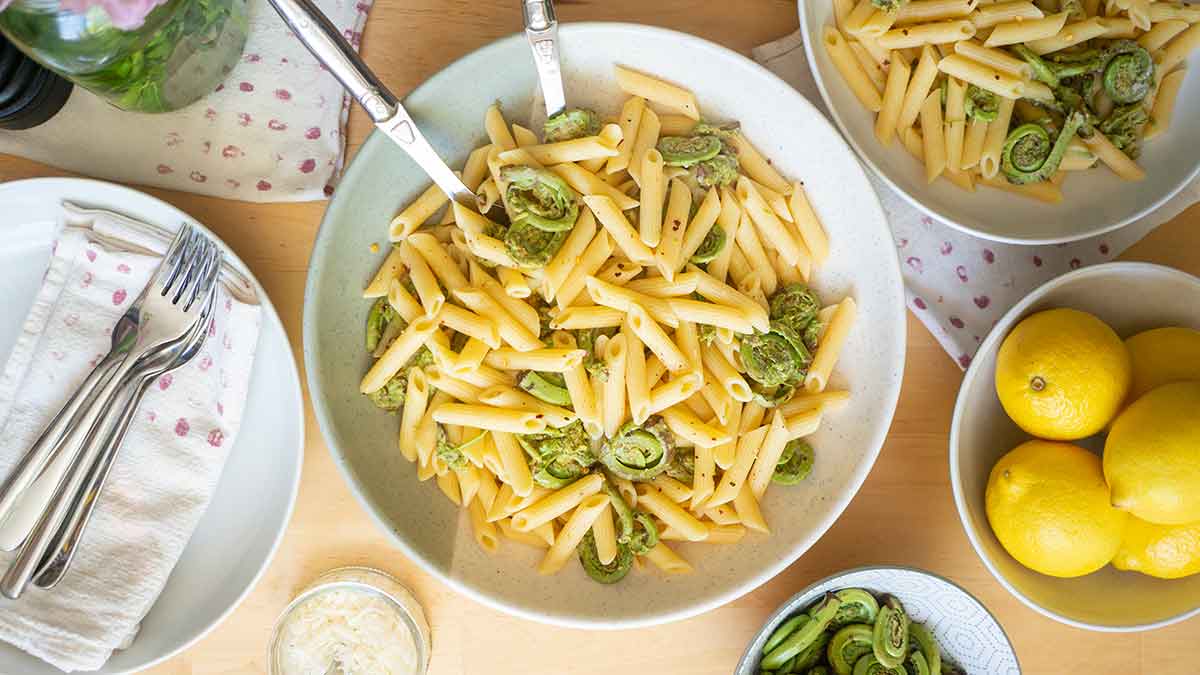
- Add them to pasta, grain bowls, or warm spring salads.
- Serve them alongside fish or chicken as a seasonal side dish.
- Fold them into a frittata or serve them with a poached egg.
If you want a recipe to start with, try Classic Canadian Dish: One-Pot Fiddlehead Pasta. You can also browse more ideas from Food Bloggers of Canada’s 8 Fiddlehead Recipes for Spring or explore other ways to Eat Seasonally this Spring.
Can You Freeze Fiddleheads?
Yes, but they still need careful handling. If you find fiddleheads during their short season and want to save some for later, freezing can be a practical option.
Start by cleaning them well, removing the papery husks and rinsing thoroughly. Health Canada advises that fiddleheads should be cooked before freezing, so keep food safety at the centre of your method. If you want more help with buying, timing, and storage, read Fiddleheads: How to Find and Buy in Canada.
Frozen fiddleheads work best in cooked dishes later on, not as a shortcut around safe preparation. Whether fresh or frozen, they should always be fully cooked before eating.
Common Questions
Do fiddleheads need to be boiled first?
They need to be fully cooked first, either by boiling for 15 minutes or steaming for 10 to 12 minutes. After that, they can be sautéed, baked, added to soups, or used in other recipes.
Can you eat fiddleheads raw?
No. Health Canada advises against eating raw fiddleheads because raw or undercooked fiddleheads can cause foodborne illness.
What do fiddleheads taste like?
People often compare the flavour to asparagus, artichoke, or beet greens. They are earthy, green, and distinctly spring-like, which is part of why so many people look forward to them each year.
Where can you buy fiddleheads in Canada?
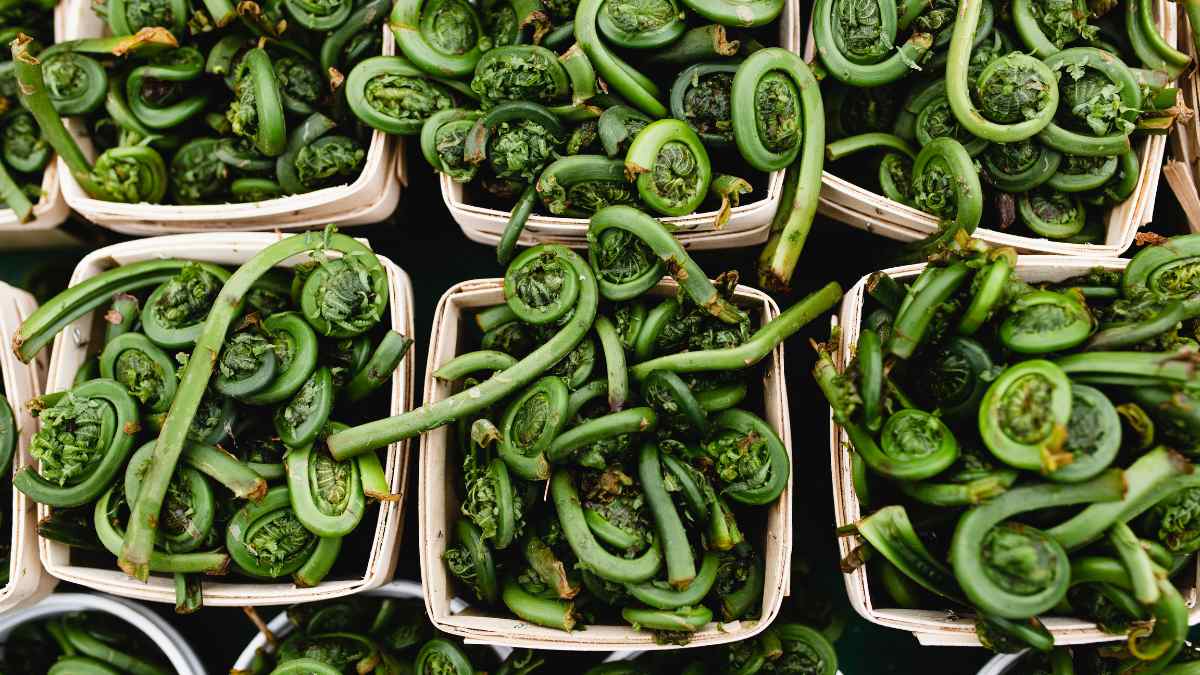
Fresh fiddleheads are usually easiest to find in spring at farmers’ markets, roadside stands, and some specialty grocers. For a broader overview of the season, where they are found, and how to choose them, visit our fiddleheads in season in Canada page.
Check Out These Related Articles





 Fiddleheads: How to Find and Buy in Canada
