
It’s before dawn in late April. Boats are heading out on the northern shores of Toney River, Nova Scotia, each strapped with hundreds of lobster traps. Spectators come to watch as the traps, freshly loaded with bait, are dumped into the water to lure in the season’s catch. This “dumping day” marks the first official day of lobster fishing season for the area.
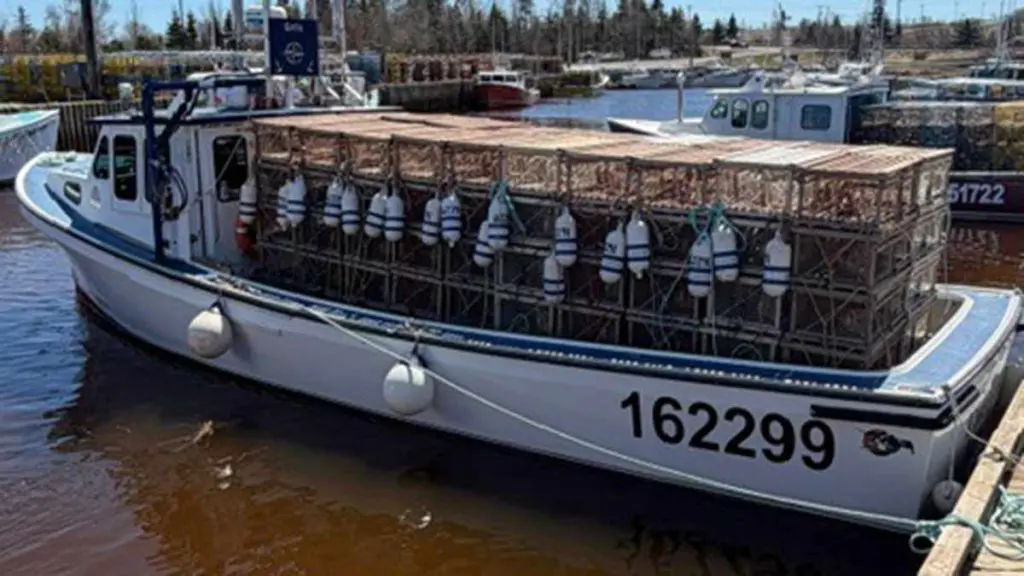
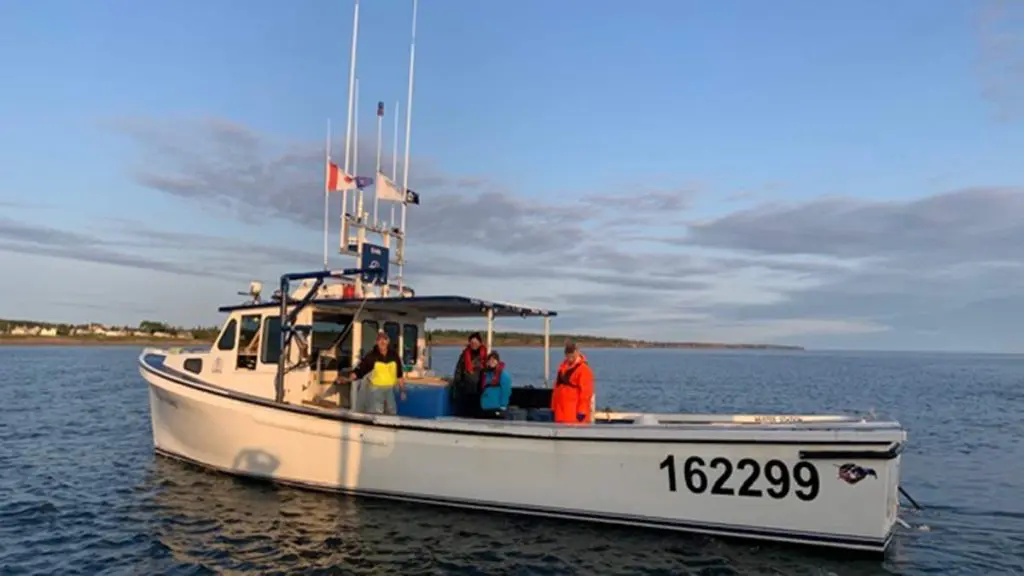
Photo courtesy of Jamie Craig
When Canadians think of commercial lobster fishing, visions of big boats in the deep ocean hauling lobster probably come to mind. While that might be the case for southern Nova Scotia, in the Northumberland Strait, the boats are smaller, the crews are family, and a deep history and unspoken code of conduct are contributing to a province that supplies nearly half of Canada’s lobster by value.
Meet Captain Jamie Craig
Jamie Craig is the captain of The J Kids 19, a boat named after his three daughters whose names all start with “J.” He’s fished since childhood with his father and after getting married in 1989, fished with his father-in-law for 15 years.
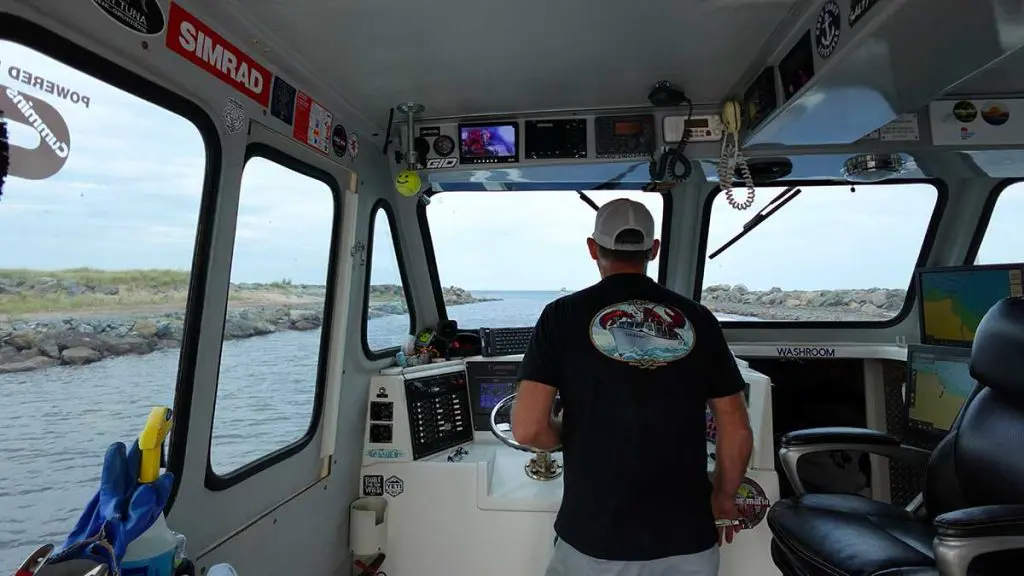
Photo courtesy of Stephanie Gordon
“I was on the boat with my father from the time I was 8 years old, not every day, but when I wasn’t in school and on weekends,” Craig says.
Lobster fishing has been a constant in his life – in addition to a love of the Toronto Maple Leafs. “I’ve been a Leafs fan since I was born in ‘68, so in my 58 plus years, I have yet to see them win. You have to believe in something.”
For commercial lobster fishing, you have to purchase a license from an existing holder and most fishing boats are generational family businesses.
When is lobster season in Nova Scotia?
There is no single “lobster season” in Nova Scotia. Instead, the surrounding waters are divided into Lobster Fishing Areas (LFA) that allow fishermen to fish at different times of the year. The seasons overlap so it’s always “lobster season” somewhere in Nova Scotia.
For Craig in the Northumberland Strait, his fishing area runs from April 27 to June 27. “Two months. That’s all we get. In those two months, you can catch as much as you can catch. Some years it’s enough, some years it isn’t.”
From trap to table – a day in the life of a lobster fisherman
After dumping day, lobster traps stay in the water all season with boats visiting their traps to haul, measure, sort, and band lobsters, and rebait and reposition traps.
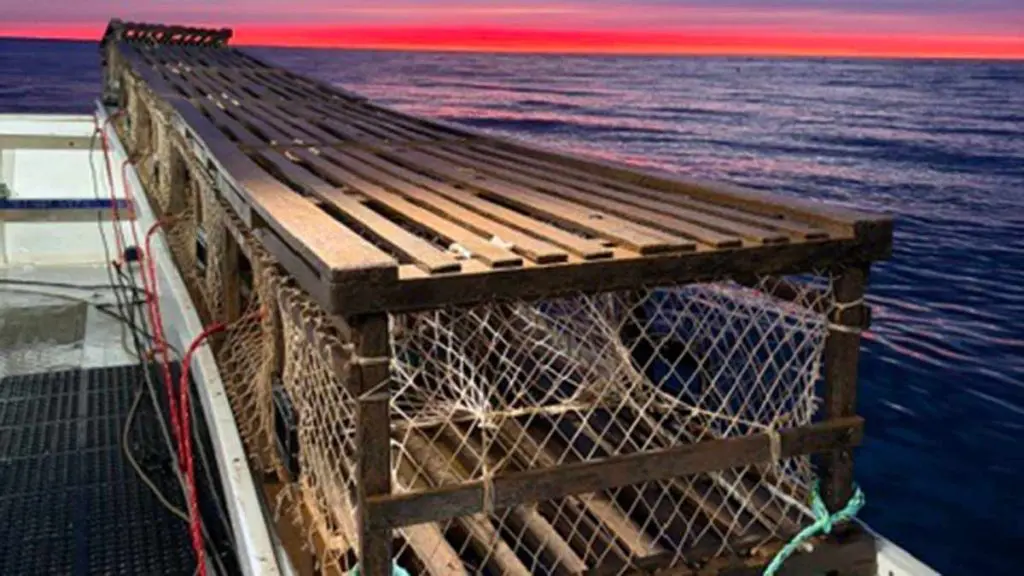
A typical day starts at 4:00 a.m. and boats go out every day – except Sunday – for the entirety of the lobster season. “We have a little rule of thumb here that we don’t leave before 4:00am, which is just a gentleman’s agreement.”
Fishermen can fish anywhere within their area, but abide by traditional lobster grounds to keep the peace. “So my father-in-law’s traditional lobster grounds are from point A to point B. I don’t go outside my area as a courtesy to the guys that fish on either side of me. It’s just that unwritten rule.”
The first task is bait preparation – sometimes frozen fish, sometimes fresh, and Captain Craig’s crew is out on the water by 4:30 a.m. “We’re efficient. We just put our heads down and do up the bait and then get at it.”
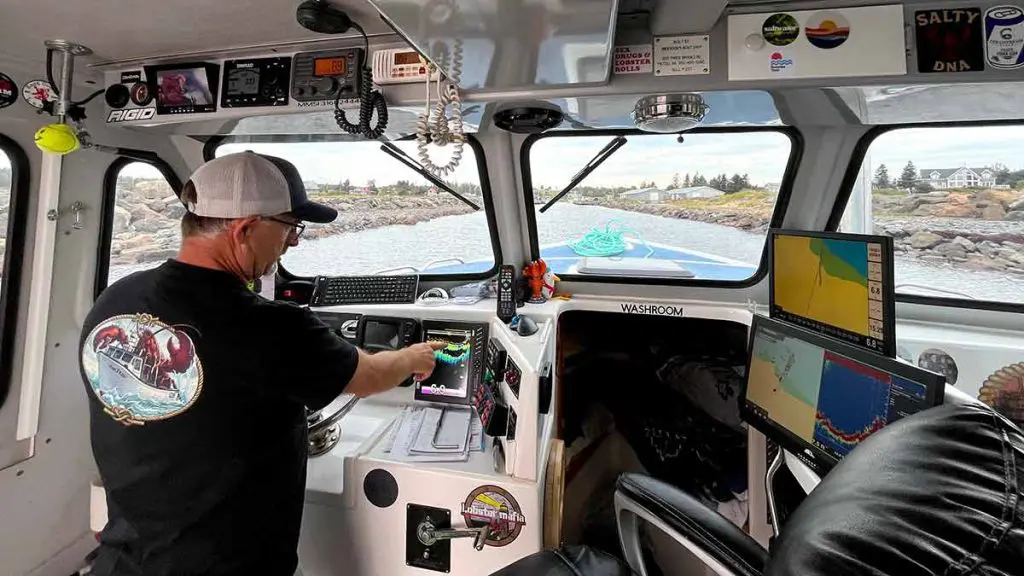
Photo courtesy of Stephanie Gordon
With five traps per line and 280 traps, that’s 56 stops. GPS coordinates and coloured buoys (different for each vessel) help locate the traps. While the younger crew know the ins and outs of the boat’s new computer system, Craig prefers his notebook. “I’m old-school. I write all my GPS coordinates down every day.”
Then the traps are hauled out of the water. “We have no control over what is in the traps, and so when the traps come up, the first thing we do is we grab our measure. If it’s got eggs on it, we automatically toss [the lobster] over and if it falls in short, they go over immediately. The rest of them get sorted to our two bins, select or market box,” Craig explains.
Northumberland Strait fishers focus on two sizes. Smaller “select” lobsters (also called canners) go to processing, while larger market lobsters go straight to buyers. Craig sells his entire catch to the wharf co-op, which handles distribution. Lobsters travel live in refrigerated transport that keeps them dormant until they reach holding tanks at their final destination, whether that is a store or restaurant.
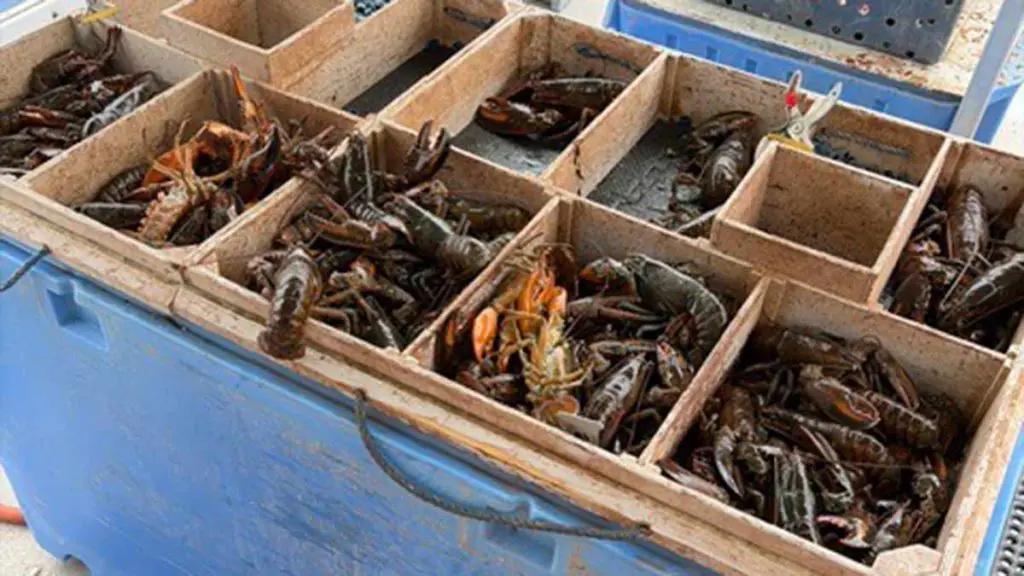
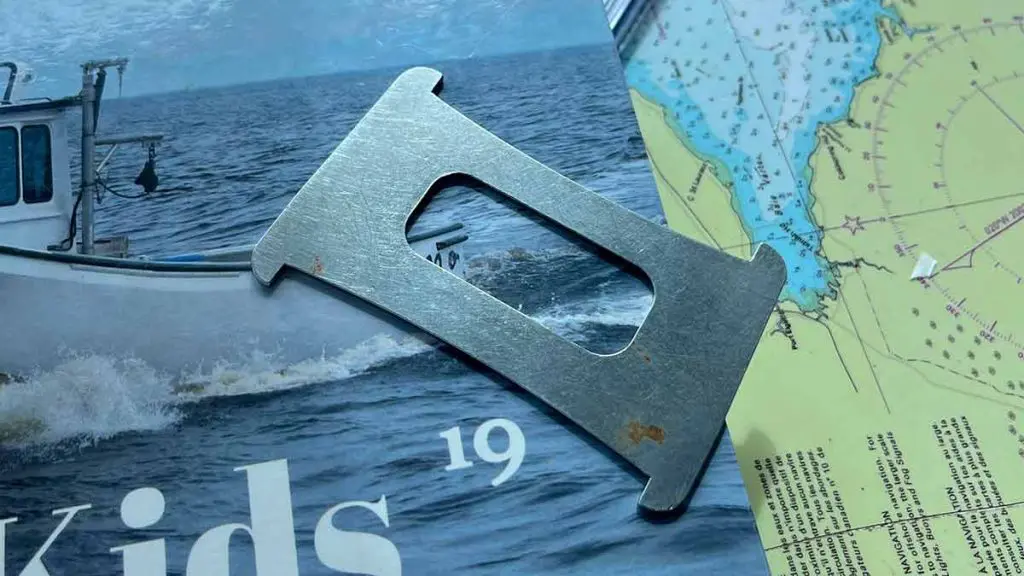
Photo courtesy of Stephanie Gordon
How are Nova Scotia lobster stocks protected?
Fisheries and Oceans Canada (DFO) and fishermen have measures to prevent overfishing.
The current minimum size for a carapace (outer shell) of select lobster is 76 millimeters and 81 millimeters for a market lobster.
Craig adds that his area is pushing for even more measures. “In our area we have 76 millimeters as our minimum and we are trying to get that increased because that means there’s much more chance of smaller animals reproducing.”
If a female lobster has eggs, she is returned to the water. If a female lobster does not have eggs but is between 115 and 129 millimeters, she must also be returned because she’s in her prime and considered a highly productive potential spawner.
Conservation measures also go beyond lobster populations, because the health of the ocean correlates to the harvest. There are programs for lost gear – all fishermen have to report a lost trap – and biotwine which degrades after 60 days so that lobsters in lost traps can escape and continue to reproduce.
Lobsters also prefer cooler water so warming waters, hurricanes, and predators (and bait snatchers) like seals and perch are some ongoing challenges.
“I don’t know about growing the industry. What I would like to see happen is just that we keep it so that it’s sustained,” Craig says. “If we can have a sustainable catch rate and a decent price, then it’s a win-win for everybody.”
Why is lobster expensive?
Lobsters take roughly seven years to reach the minimum size. The time, and all the steps from trap to table, add up to give lobster its price on the market.
“I don’t deem it expensive because of the expenses that go in to catch it,” Craig says, breaking down that the final price considers bait, fuel, insurance, maintenance, gear payments, hired help, license fees, wharf crews, transportation and distribution costs.
What do lobster fishers do in the off-season?
Most lobster fishermen combine lobster fishing with herring, mackerel, scallop, and rock crab fishing. Craig focuses on lobster fishing, summer boat tours, and scallop fishing.
Through Discover The Strait boat tours, Craig offers a “Lobster Fisherman for a Day” tour where you can wake up at 4:00 a.m. and spend eight to 10 hours on a boat seeing what it’s like. Plus, in addition to once-in-a-lifetime photos, you get to take home two lobsters.
“You get to meet people from all over the world. It’s unbelievable,” Craig says, before adding the caveat that you are not allowed to do any substantial tasks because you need a license to handle lobsters.
The next generation of lobster fishermen
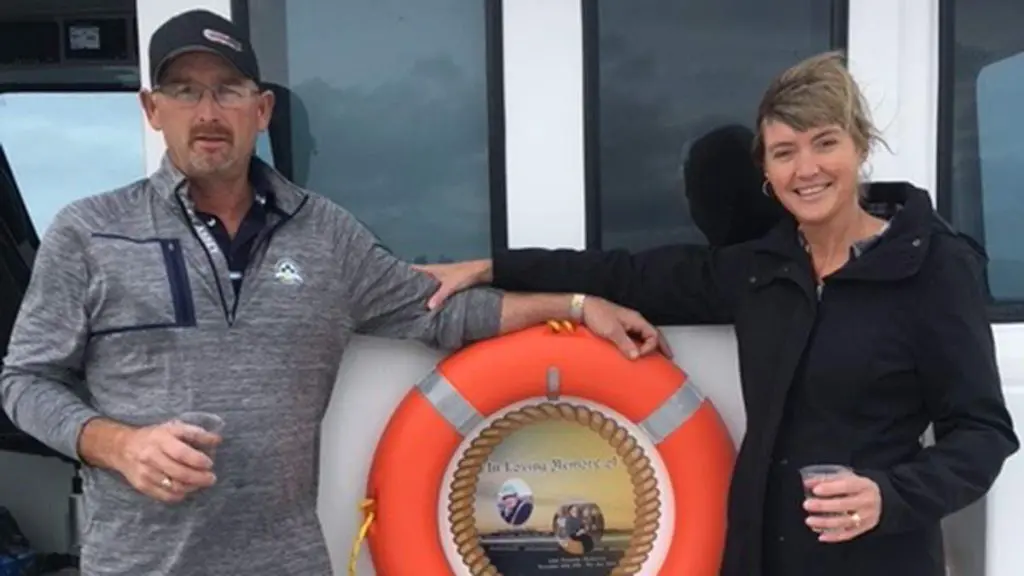
Kathleen MacDonald is a sixth-generation lobster fisher from Pictou, N.S. and began lobster fishing at 18 on her uncle Albert’s boat, who she credits for her love of the industry.
It took some convincing for her mom to allow a high school graduate to board a commercial lobster fishing boat, but MacDonald ended up lasting the entire season and fished throughout university.
MacDonald eventually graduated and became a teacher for several years before she felt called back. “Around April, I started to get this pain in my heart because I felt like I was missing out. I’m sitting in a classroom teaching and I’m so used to working on the boat… I felt heartbroken about it.”


She left teaching to pursue lobster fishing full-time and worked on a boat with an all-female crew before joining her father-in-law’s boat. “There was a girl when I first started fishing who said, ‘Make sure you wear something pink every day so I know you’re out there too,’ and that stuck with me and with most of my clothes I wear, you can see a little pink hood sticking out.”
“I think a lot of the younger people getting into it, everyone is concerned about conservation and I think people have a misconception about fishermen that we’re out here trying to get as much money as we can from the ocean,” MacDonald starts. “I want this industry to be there for my kids. There’s been five generations before me and we have to do preservation and it’s important we protect our industry in ways that are scientifically backed.”
“My absolute favourite part of the job is getting to work with family. I get to work with my uncle, my cousins, my father-in-law and his brother, and my husband. I think that’s something that’s really unique in this industry.”
Additional Articles to Explore






 Canadian Potato Varieties: Taste, Texture and Best Uses