
Oysters – you either love them or hate them.
Some can’t get enough of the salty, briny flavour, whereas others won’t get past the texture of slime sliding in a shell.
Oysters grow wild along the coastline of Nova Scotia. The Porter family knew this all too well because they’d see local oyster harvesters snorkeling for oysters around their cottage in Town Point, located on the northeast side of the province in Antigonish Harbour.
“I’d spend the weekends here at the cottage and always see a few boats going around and people jumping out and picking oysters. I was like, ‘Oh I would like to live at the cottage and pick oysters for a summer job and not work at the construction company.’ My dad Ernie was like, ‘Well, figure out if that’s an option,” Ted Porter says.
He began looking into wild oyster harvesting licenses, but all the licenses were already owned for their area. The dream was put to rest – for a few years at least.
Wild vs. farmed oysters: what’s the difference?
Wild and farmed oysters have the same genetics, except farmed oysters are cultivated to take on more market characteristics like a deep symmetrical cup. Farmed oysters grow faster and can take one to three years to reach maturity, versus up to seven years for wild oysters.
In Canada, oysters grow slower because they hibernate once water temperatures dip below 4°C, whereas oysters in places with warmer water like Louisiana can reach market size in less than a year.
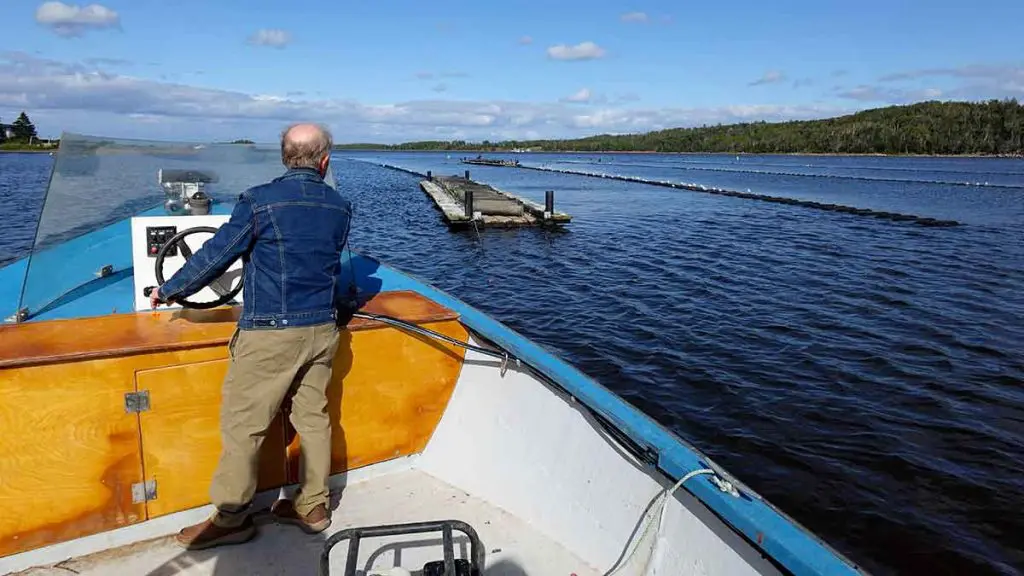
Oysters mainly grow in salt water in estuaries where fresh water from rivers and streams mix with the salty water from the ocean. The salinity and nutrients available all contribute to the merroir – the marine version of terroir – making oysters taste different from coast to coast and harbour to harbour.
Getting licensed to farm oysters in Nova Scotia
Since the summers at the cottage, the Porter brothers Ted and John spent time away getting degrees in entrepreneurship and engineering, and Ted met his partner Rachel Odgers while living in the United States.
In 2020, they returned to Town Point and started looking into farmed oysters. Wild oysters were proof the area would be fruitful so the application process began. It was a grueling application process that took several years, but Town Point Oysters officially launched in 2024 with a license to farm 100 acres.
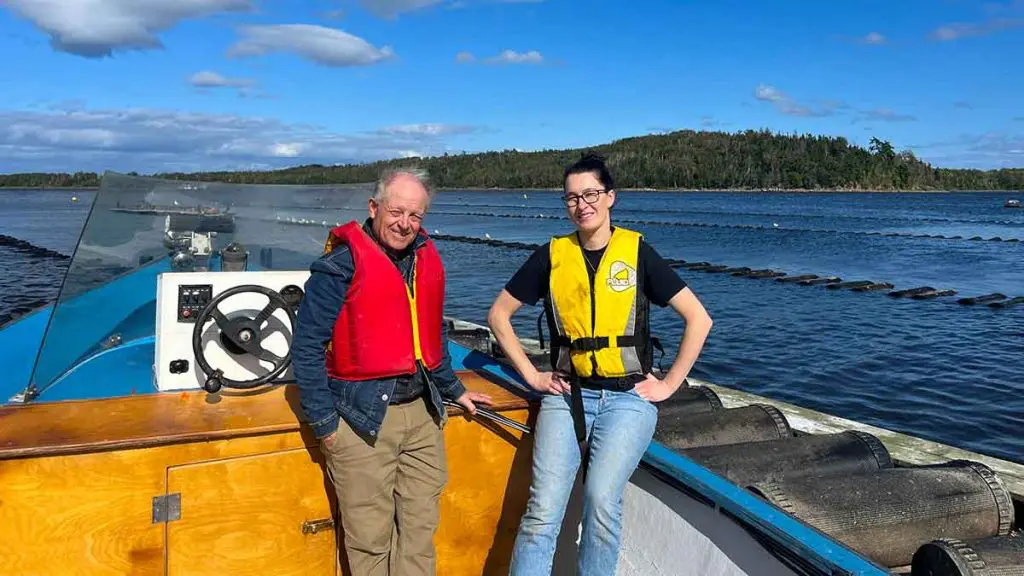
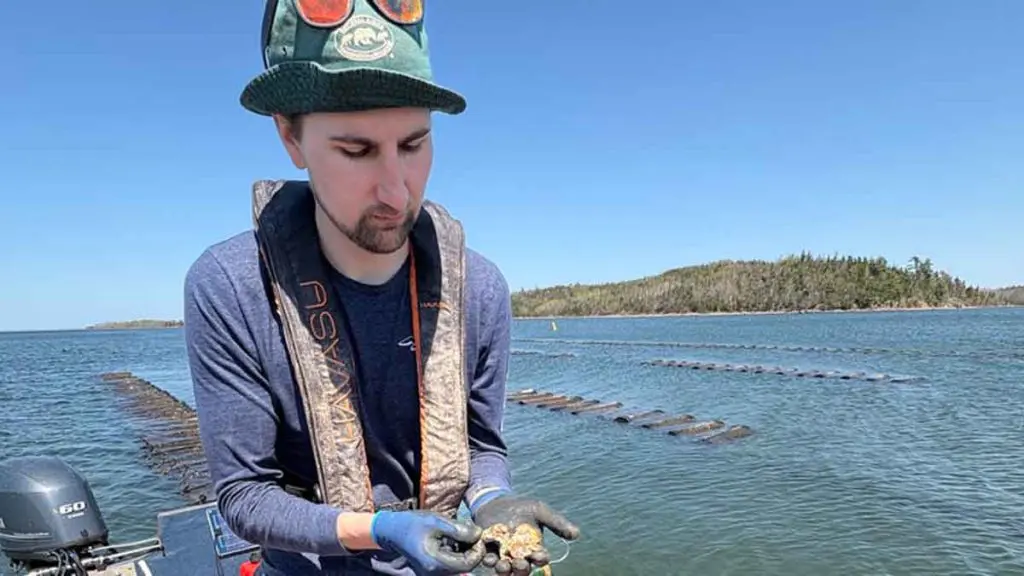
Photo courtesy of Rachel Odgers
While the family waited for approval, they also dipped their hands in oyster farming. John Porter worked for Paqtnkek Oysters run by Paqtnkek Mi’kmaw Nation for two years. “They needed more hands and I needed some experience working on an oyster farm because none of us had any.”
Alex Odgers, Rachel’s brother, also joined the team. “The huge opportunity was to live here and have a career path. So for us, it was the ability to have a meaningful career in Antigonish and the family could stay together,” Rachel Odgers says.
How oysters are farmed: from seed to floating cage
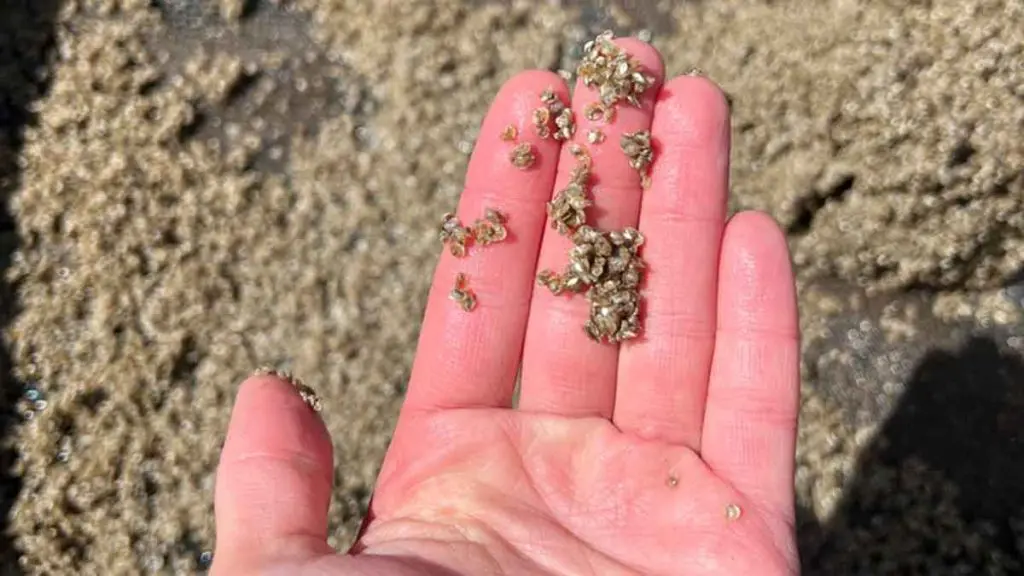
For Town Point Oysters, it all starts with sourcing oyster seeds (oyster younglings) from a hatchery. These new oysters vary in size, with some coming so small, one million oyster seeds can fit into a mesh sock a little larger than a baseball. Farmers can also buy larger sizes depending on their needs and setup. When they’re this small, the oysters are placed into a nursery to grow in a safe controlled environment. After approximately four months, once the oysters get big enough, they graduate from the land-based nursery into floating cages in the harbour.
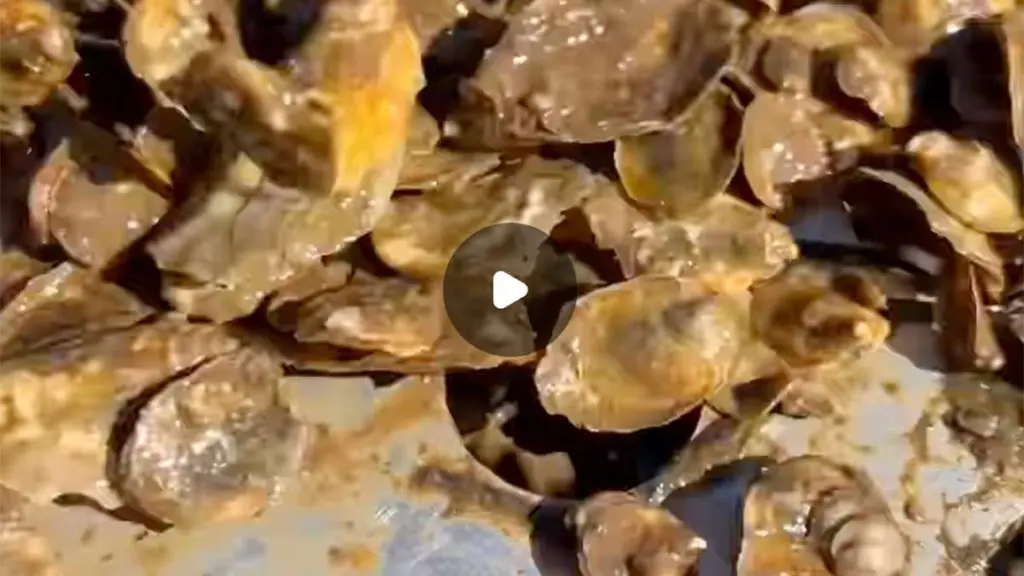
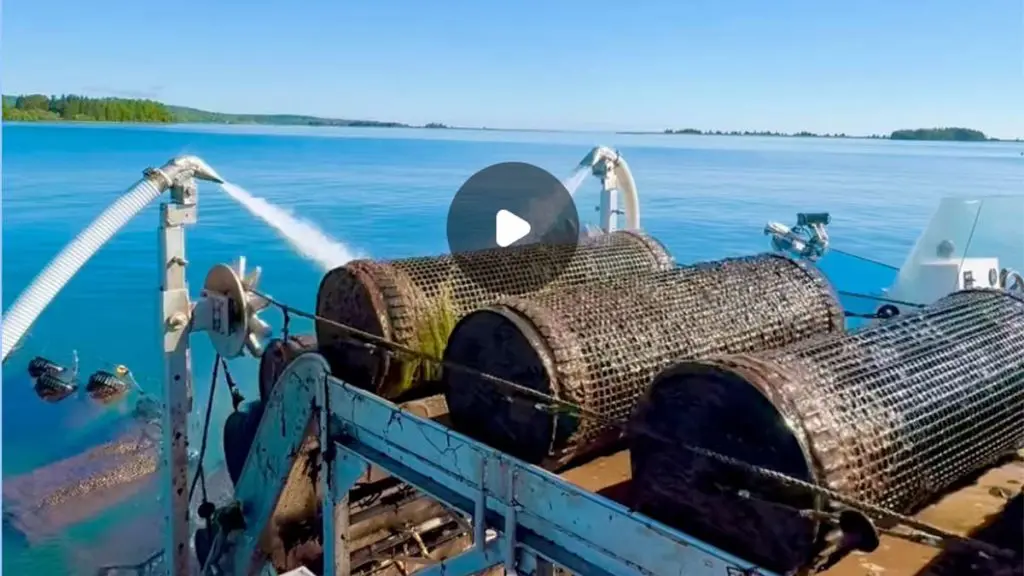
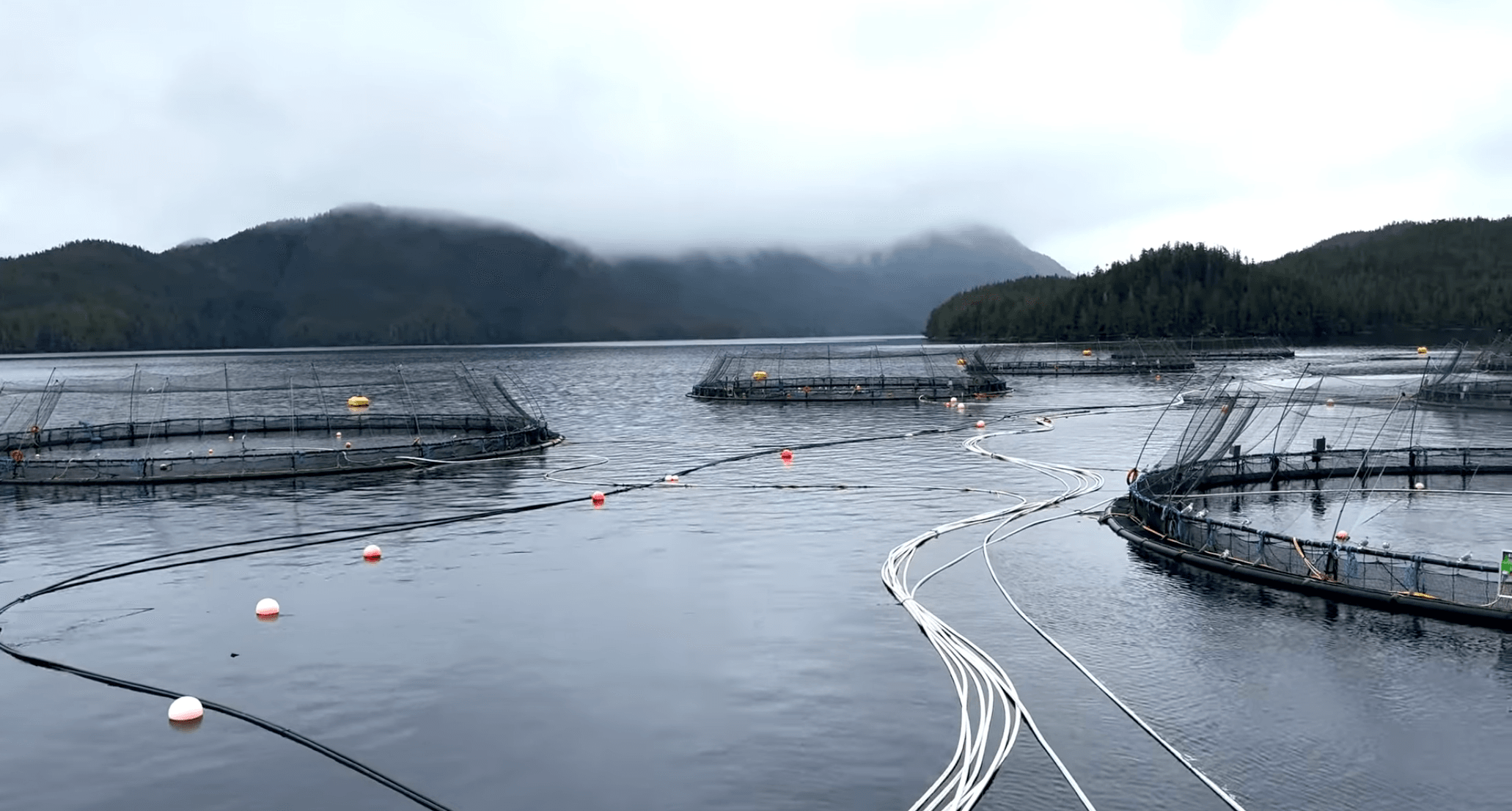
The cages at Town Point Oysters are cylindrical instead of rectangular, and look like giant soda cans bobbing under the water. Oyster cages float because the top foot of water is where the most nutrients are.
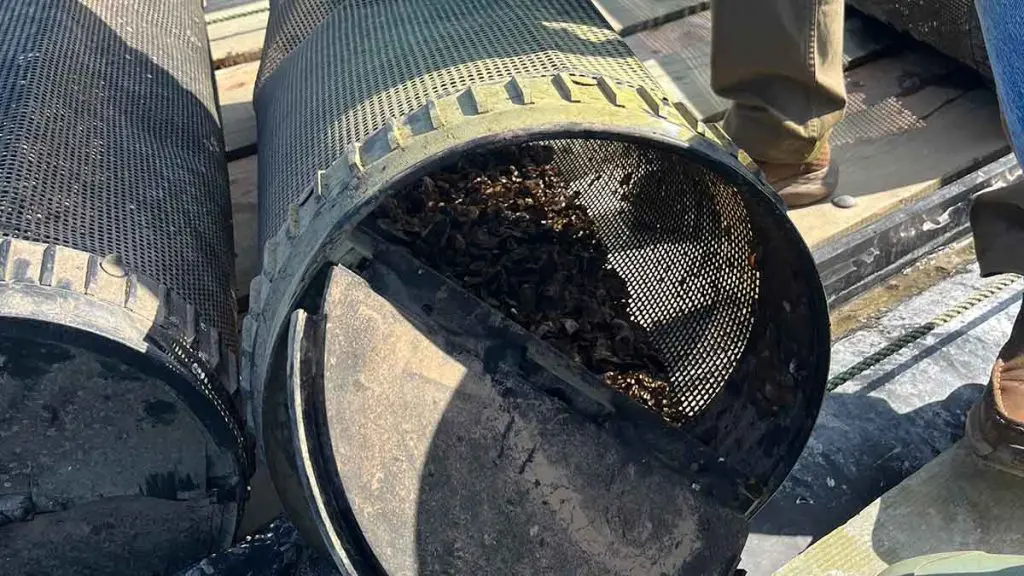
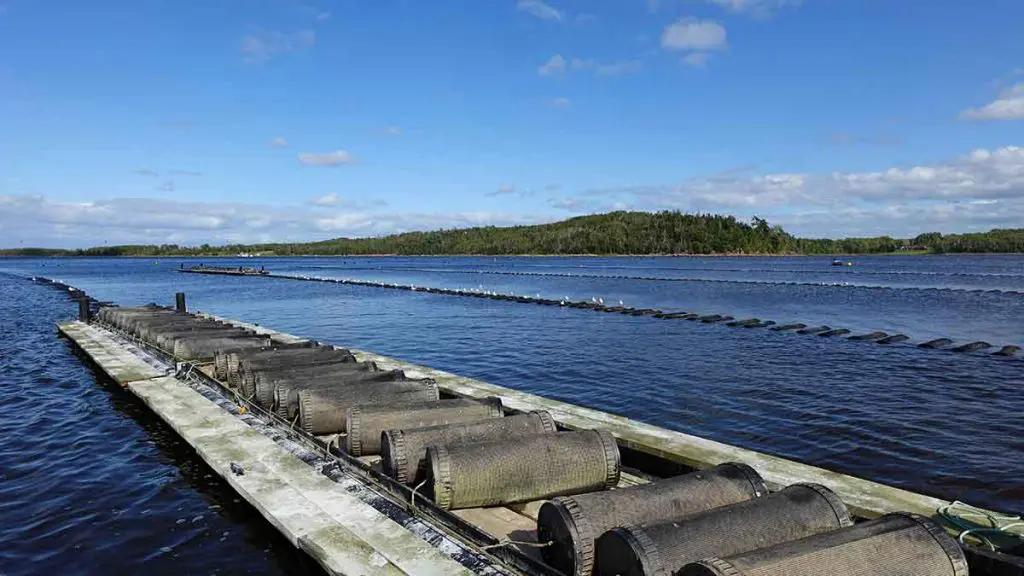
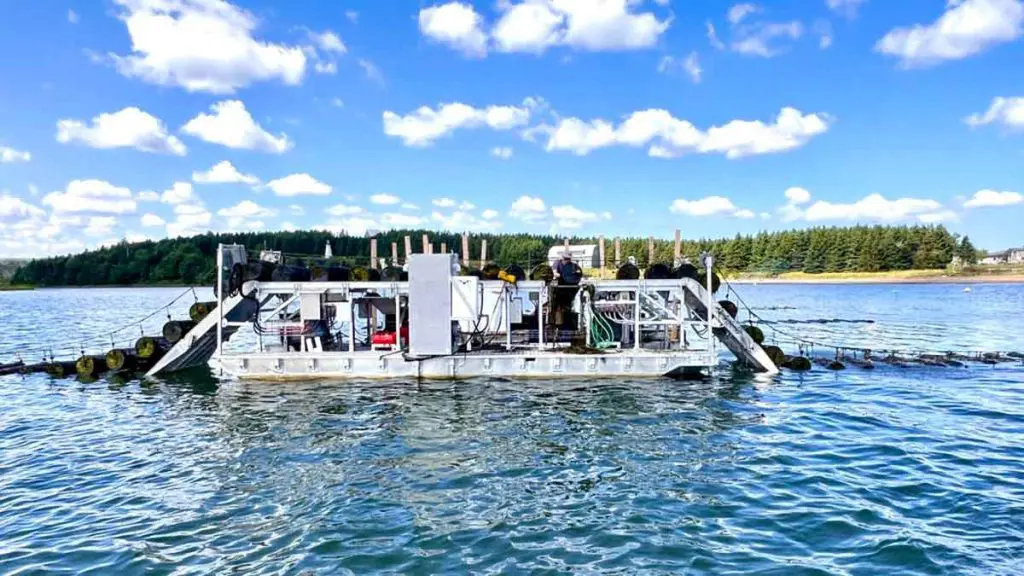
Their growth system was created by DockPort, a company created by Phillip Docker from Shandaph Oysters and Ernie Porter from Town Point Oysters. The “BOBR” (Benefits of Being Round) system gives the team a huge advantage because it allows 95 per cent of husbandry tasks to occur on the water.
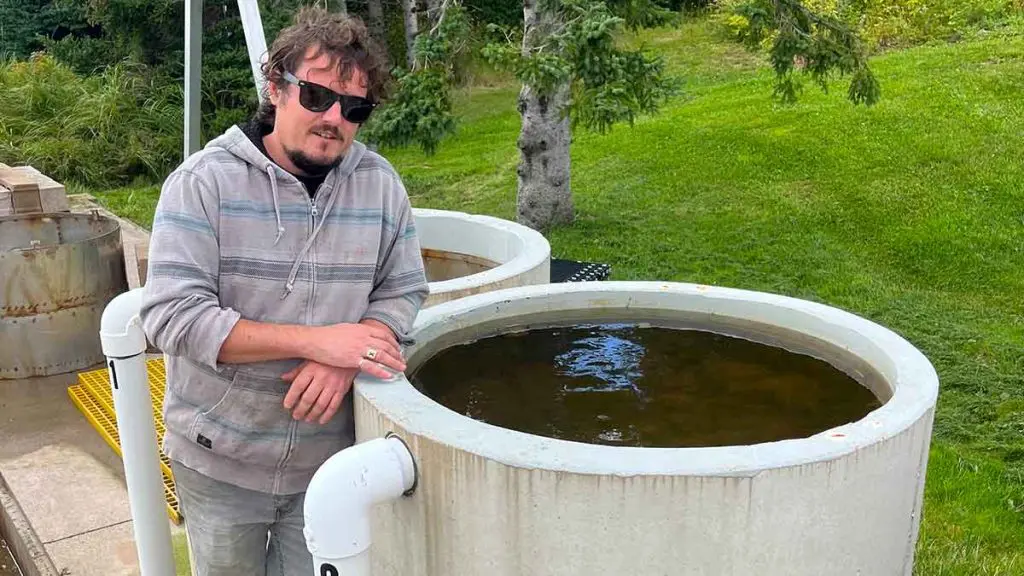
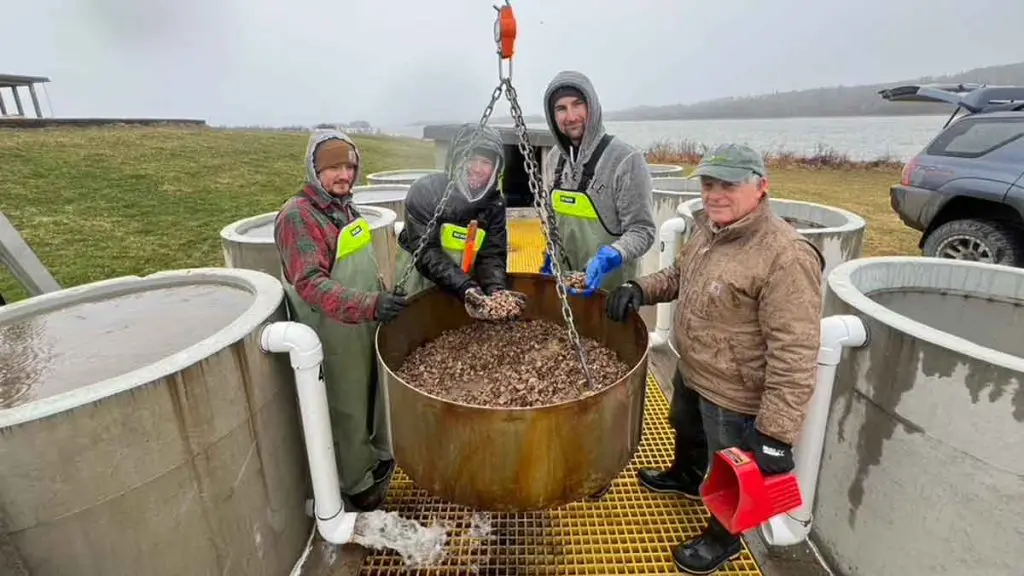
Photo courtesy of Rachel Odgers
Taking care of oysters
Oysters are live animals that require care and attention. “The more attention you can give to an oyster, the better shell shape and health and quality it’s going to be, with the limits being disease and the things that are out of your hands,” Ted Porter says.
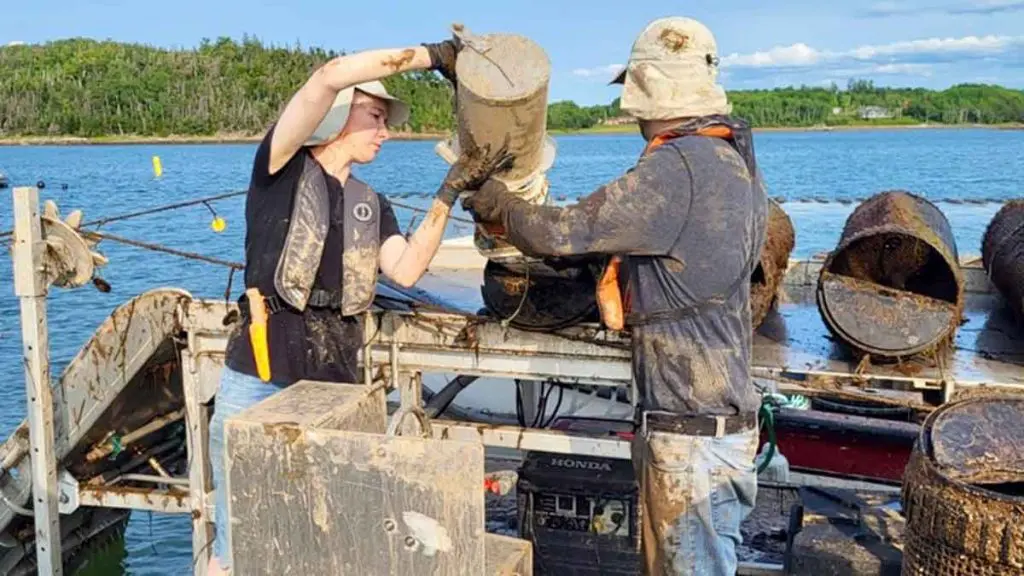
Husbandry tasks include tumbling the cages to give oysters their shape and smooth out rough edges, and de-fouling cages to get gunk off equipment, or in formal terms, “bio-fouling”. The team also sorts oysters by sizes, so bigger oysters don’t overshadow smaller oysters for nutrients. The cages also get cleaned from mussels, algae, and barnacles – which compete with oysters for food – by being left in the sun or dunked into a tank of hot water. All of this happens on the water instead of needing to bring the cages to land like other operations do.
“There’s no fertilizing, no watering, no feeding them. They survive on what is in the harbour. We put them there and make sure they’re happy,” Alex Odgers says.
Oysters are filter feeders and a keystone species, meaning they help filter out extra nutrients in the ocean and regenerate their natural environment in a big way relative to their size. “That’s the food they live on,” Ted Porter says. “It’s one of the reasons we went into oyster farming, because it fits with our values of being a sustainable business and environmentally regenerative practices.”
Wild oyster populations have declined dramatically due to overharvesting, pollution, habitat loss, and disease. In 2026, Fisheries and Oceans Canada (DFO) even introduced the voluntary Oyster Licence Retirement Grant Program to ease pressure on wild oyster stocks.
Responsible oyster farming helps support healthier coastal ecosystems by improving water quality through natural filtration, providing habitat for marine life, and reducing harvesting pressure on wild populations. When combined with restoration efforts, oyster aquaculture can also help rebuild native oyster populations and restore the ecological balance of coastal waters.
During peak growing season from April to December, the team is out for eight hours, five days a week. After harvest, oysters go through a facility approved by the Canadian Food Inspection Agency (CFIA) where they are cleaned, packaged, and put in cold storage.
When are oysters best? Why winter wins.
Just because oysters hibernate in Canada does not mean you cannot source them year-round. In fact, winter oysters are typically meatier because they’ve finished spawning and have built up their fat stores for the winter.
“When you have an oyster in December, it’s going to be the most meaty, plump, delicious oyster that you’ll get. Winter oysters are the best,” John Porter says.
Oyster farming challenges: parasites and disease
Aside from a lengthy application process, oyster farming faces challenges with parasites like MSX and dermo. Prevention strategies include sourcing from hatcheries and limiting cross contamination on everything from your boots to boats.
“Since oysters don’t move on their own, mostly the parasites that infect them aren’t very mobile unless they’re brought in by something attached to a piece of gear or boat or irresponsible movement of oysters from one estuary to another by humans,” John Porter says.
Are raw oysters safe to eat in Canada?
Raw foods carry inherent risks and oysters are no different, which is why oysters in Canada are regulated with a high degree of vigilance.
Oyster safety starts in the water and continues all the way to a consumer’s plate. First, there’s careful monitoring of harvesting waters through the Canadian Shellfish Sanitation Program, a joint partnership across government agencies. Then, all oysters must pass through licensed facilities with strict food safety standards before they’re fit for consumption. Safeguards like water monitoring, product traceability, batch testing, and strictly controlled handling and sanitation requirements work together to help Canadians enjoy oysters with confidence.
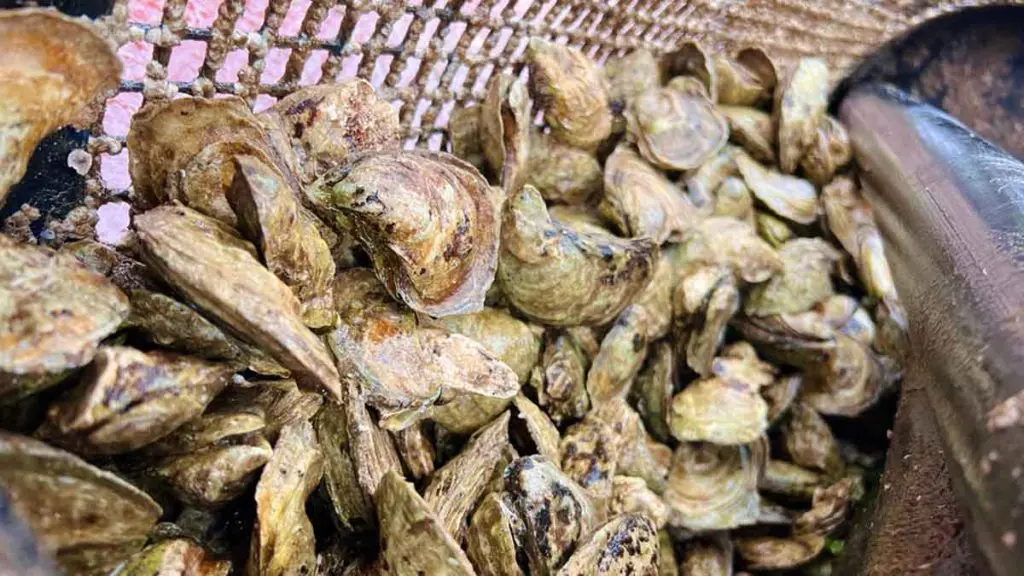
Until you shuck them, oysters are raw and alive. They are refrigerated while being transported, which keeps them alive and fresh. “They’re just chilling, quite literally,” Alex Odgers says.
“If you’ve bought an oyster – you didn’t pick it up out of the water, but you bought it at the store, or at a restaurant, that oyster has gone through these processes and has been stored properly,” Ted Porter says. “It’s going to be no more dangerous than lettuce. Actually, maybe less.”
In Nova Scotia, most farmers’ markets or stores sell oysters and for Canadians further inland, you can buy oysters at a restaurant or online.
How to shuck oysters at home
To shuck oysters, the Town Point team suggests not just jumping into it. Watch a YouTube video first to see the technique. Shucking oysters can result in a pretty nasty cut if not done carefully. “Definitely for your first time, don’t do it with a bare hand. Towel over your hand,” John Porter advises.
Why oyster farming matters to rural Nova Scotia
Nova Scotia is well suited for oyster farming with 13,300 kilometres of coastline and hundreds of harbours. There’s support from the provincial government to grow the industry, including establishing a “business park on the sea” in southwestern Argyle.
“There’s so much outmigration from small rural communities like ours. You want to be able to have careers available. It’s another thing to add value to rural waterfront communities – put an oyster farm, a seaweed farm – now you have all these jobs available and you have people that don’t feel like they need to migrate out to a city for meaningful work. So there’s a lot of value added economically and at the same time, you’re producing a local food source that is healthy and environmentally regenerative,” Rachel Odgers says.
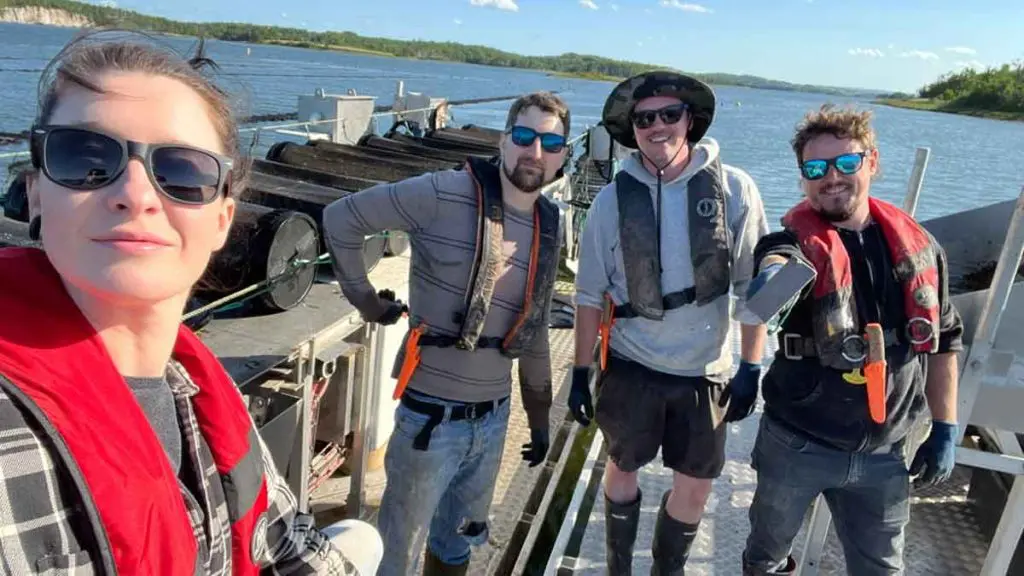
For Town Point Oysters, the business keeps the family together at the cottage in Antigonish Harbour. “It brought us so much closer.”
Additional Articles to Explore

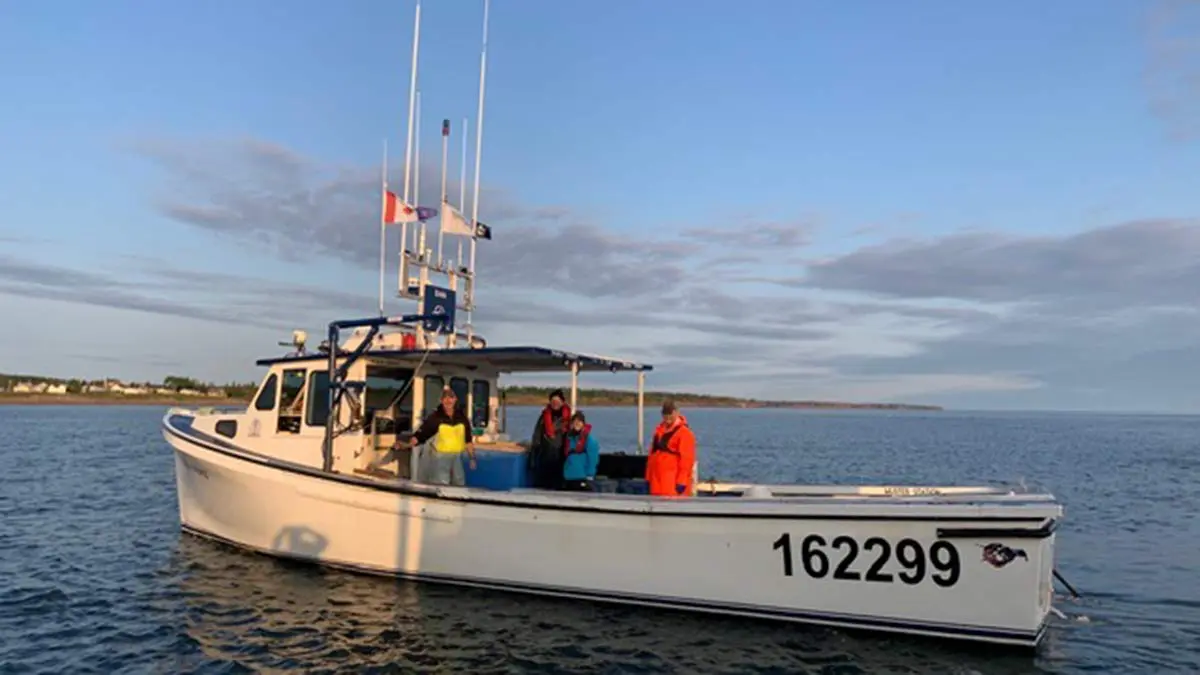
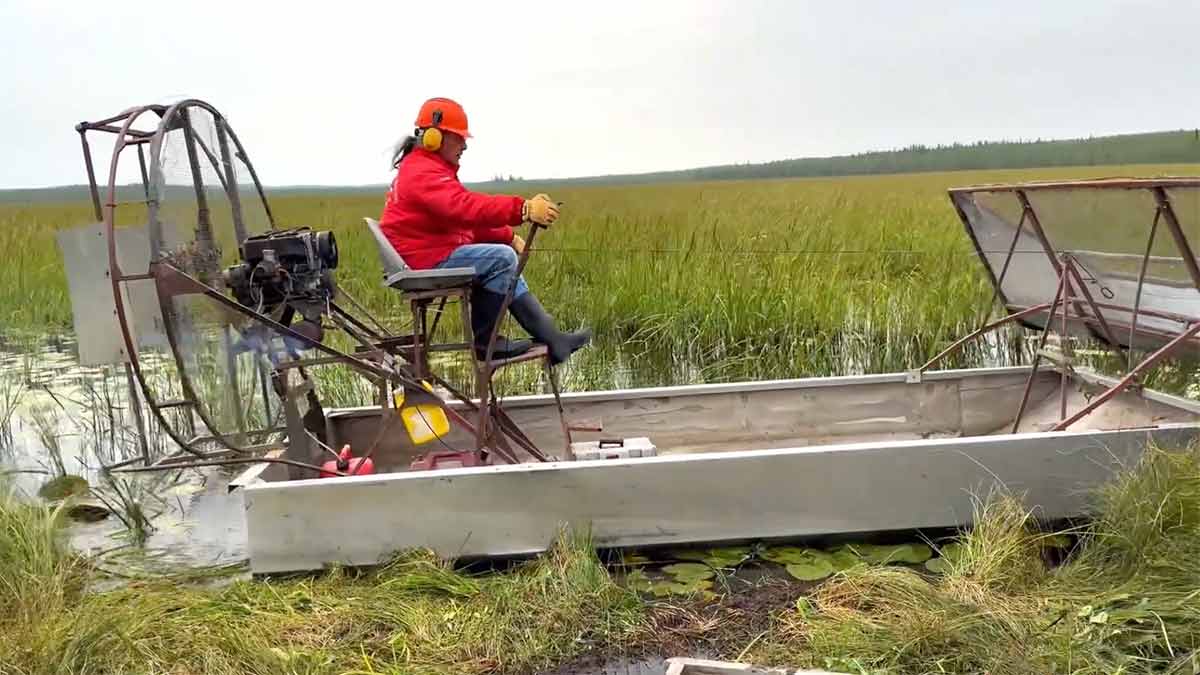





 Nova Scotia Lobster from Trap to Table