
Many Canadians are not familiar with how dairy farms operate from day to day. Behind the milk and yogurt in your grocery cart are decisions about housing, feeding, milking routines, animal care, and safety checks that are not visible. This article walks through ten common questions and straightforward answers about dairy farming in Canada. Where you want more detail, you can follow links to more technical content and regulations, but the goal is to give clear basics so you can feel confident about making choices at the grocery store.
1. Is my milk really from Canadian farms?
When you see a mention of “100% Canadian milk” or the “Quality Milk” logo with the blue cow on dairy products, it indicates that the milk used was produced on Canadian farms and processed in Canada under Canadian standards. This logo is found on more than 9000 products and is one way to signal Canadian origin clearly to shoppers. It is voluntary for brands to use, so some products can be entirely Canadian even if the symbol is not present. Labels such as “Product of Canada” or “Made in Canada from domestic ingredients” also indicate that the primary ingredients and processing took place here in Canada.
What milk from Canadian farms means for you
If you want to prioritize Canadian dairy farmers and processors the Blue Cow logo is a quick shortcut. You can also look for 100% Canadian milk logo, “Product of Canada,” or similar wording on the package, and check the manufacturer’s information on the label.
2. Are most Canadian dairy farms “factory farms” or family farms?
The majority of farms in Canada, including dairy farms, are family‑owned, even when they operate under incorporated business structures. “Family‑owned” describes who controls and manages the farm, not the number of animals on the farm, so herd size can range from a few dozen cows to several hundred. In 2025, the average farm size is less than 110 cows and 89% of dairy farms in Canada have under 200 milking cows. On many farms, multiple generations work together, and ownership and management are passed from one generation to the next over time.
What family owned Canadian dairy farms means for you
When you buy Canadian dairy, you are typically supporting family‑run farms that participate in national assurance programs and must meet the same regulatory requirements (for animal care, food safety, transportation and more), regardless of size.
Stories from the Farm
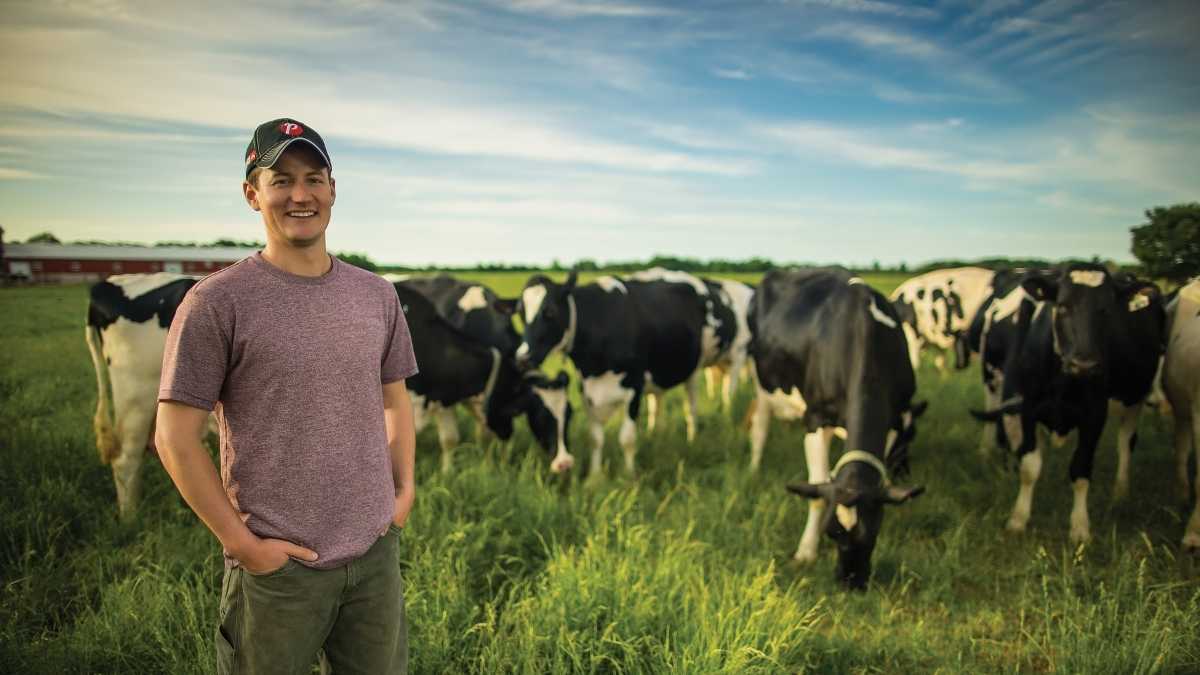


Take a Virtual Tour of a Dairy Farm
3. Do dairy cows live indoors all the time, or do they go outside?
Housing systems for dairy cattle in Canada vary by region, farm design, and management approach. Common systems include free‑stall barns, where cattle move freely and choose individual lying stalls, and tie‑stall barns, where cattle are housed in individual stalls and usually milked in place. Many tie-stall farms already provide access to pasture or outdoor yards, particularly in seasons and locations where weather and infrastructure allow.
The latest Code of Practice for the Care and Handling of Dairy Cattle stipulates that cows need to have freedom of movement at least part of the year. The code also sets expectations for space, bedding, ventilation, and general care in all housing systems. Barns are typically designed to protect cattle from heat, cold, wind, and precipitation, and to provide consistent access to feed, water, and clean, soft and comfortable lying areas.
What housing dairy cows in barns or having pasture access means to you
Whether dairy cattle are in barns year‑round or have seasonal pasture access, Canadian standards specify the requirements for housing, bedding, ventilation, and care that farms are expected to follow to ensure healthy dairy cows.
Learn More About Animal Care


4. How often are cows milked, and does it hurt them?
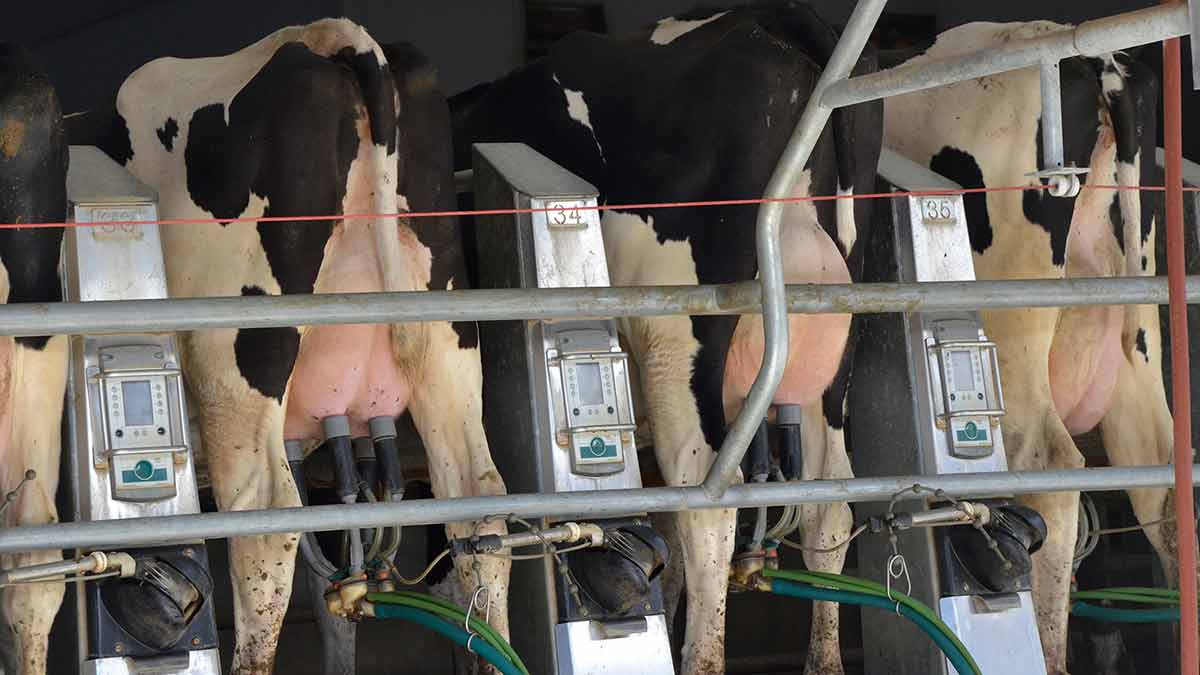
On most Canadian dairy farms, lactating cows are milked two or three times per day, for about 4 to 7 minutes each time. This can occur in stalls, in milking parlours, where cows walk to a separate area for milking, or in robotic milking systems, where automated units attach the milking equipment and record milk data.
With robotic milking systems, which are used in almost a quarter of the farms in Canada, the cow decides when she wants to be milked. An electronic responder on their collar or eartag signals to the robotic system when she was last milked, the amount she produced and other data that can be leveraged to detect whether any inconsistencies exist. The Code of Practice requires that milking systems are designed and maintained and calibrated to protect udder health. Udders are cleaned before milking and an iodine solution is also applied on teats after to protect udder health.
Milking equipment is maintained so it offers consistently gentle squeezing movement, much gentler than milking by hand. A vacuum holds the equipment in place until a slow down in the milk let-down is detected, at which point the take-off is generally automatically triggered.
Does milking hurt?
No, the only time this could happen is if equipment is defective. And the cow would kick it off quickly and force the farmer to fix it before resuming milking of the herd. If a cow feels pain or discomfort in her udder, it is not likely to be related to milking.It is more likely when there is mastitis (udder infection) or injury. Farmers monitor udder health, milk quality, and signs of problems, and they address issues right away, because poor udder health affects both animal welfare and milk yield.
What dairy cow milking methods and frequency mean for you
Milk from healthy cattle with well managed milking routines contributes to quality and safety of milk, as well as health and comfort of animals. Canadian standards and on‑farm programs are designed to support that outcome.
5. Do cows have to have calves to make milk, and what happens to the calves?
Cows must give birth (calve) to begin producing milk; a period of milk production (lactation) follows the calving. After calving, cows are typically milked 2 or 3 times a day for about 10 months, then have a 60 day rest period before the next calving, according to the average industry recording of a yearly lactation cycle.
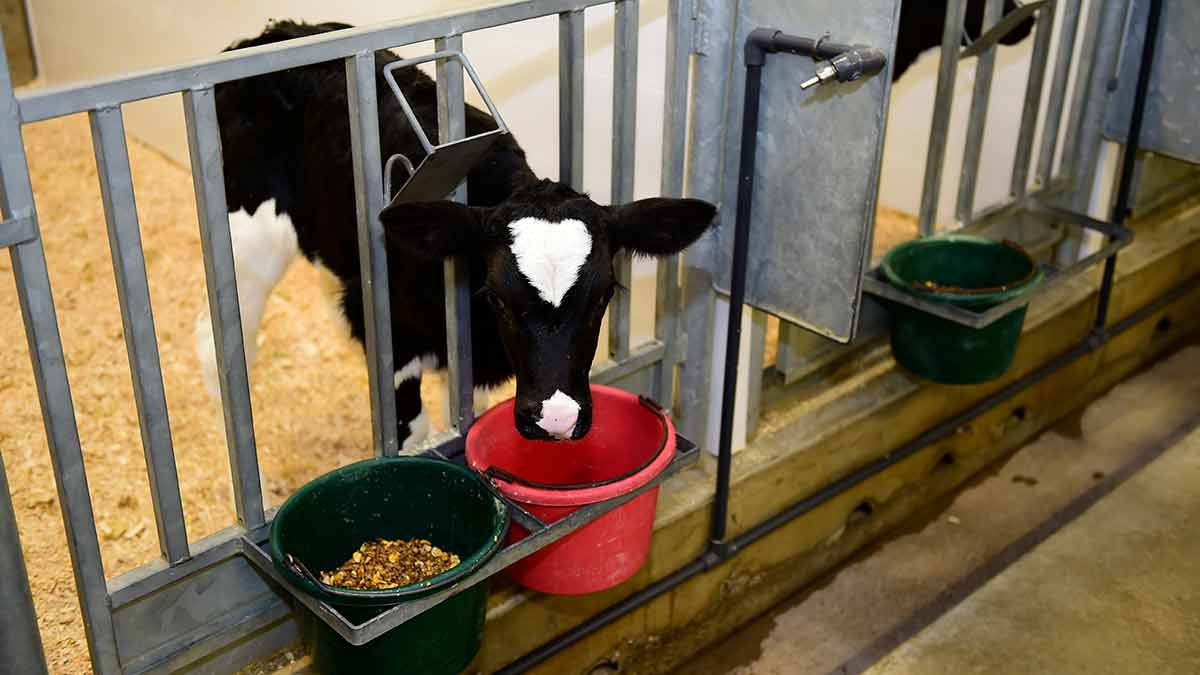
Calf care is a structured part of dairy management. Calves are fed colostrum, the first milk produced after calving, within a recommended timeframe to provide antibodies that support immune function. Calves from dairy cows can be housed in individual pens shortly after birth and then in groups with calves of the same age and size. Housing requirements in the Code of Practice are followed to ensure good health, proper space, bedding, clean water, adapted feed, and social contact. Heifer (female) calves are often kept on the farm to become dairy cows, while most bull (male) calves in Canada are raised separately as beef cattle. Calf management and housing, is an active area of research, which means recommendations are updated and options available to farms are increasing.
What dairy calf management practices mean for you
Calf nutrition, housing, and health are covered by welfare standards in the national Code, and farms are expected to follow those requirements and work with their veterinarians and other experts to adopt recommended practices as they manage young animals.
6. What do dairy cows eat on Canadian farms?
Dairy cattle diets, often called rations, have forages such as hay and silage, as the main ingredients and they provide fibre and energy. Grains and protein sources are added to supply additional energy and protein, with a bit of vitamin and mineral supplements to meet micronutrient requirements. Most farms work with animal‑nutrition specialists to formulate rations that match cows’ needs at different ages and stages of lactation and production. Cattle must also have constant access to clean water.
What dairy cow nutrition means for you
The ration eaten by dairy cows that produce Canadian milk is designed to maintain cattle health and support consistent milk production and composition. These outcomes are monitored within on‑farm assurance programs. Veterinarians and animal nutrition specialists also look at the outcomes of diet and rely on an impressive amount of research and veterinary and nutrition guidelines.
Canadian dairy rations include forage for fibre and energy, grains for additional energy, protein sources, and a precise vitamin‑mineral mix guided by nutrition science.
7. Are hormones used in Canadian dairy, and what about antibiotics?
Synthetic growth hormones such as recombinant bovine somatotropin (rbST) are not approved for use in dairy cattle in Canada. This means farmers cannot use rbST to increase milk production in Canadian herds.
Antibiotics may be used under veterinary oversight to control, or treat disease caused by bacteria, but there are strict requirements for how milk from treated cows is handled. They are milked separately to keep milk from a treated cow must be kept out of the bulk tank. Once the withdrawal time has passed and residues are expected to be below regulatory limits, that cow’s milk can again be included in the milk collected from that farm.
Every tanker load of milk collected from farms is tested for antibiotic residues, and milk that tests positive is rejected and does not enter the food supply. If this happens, an investigation follows to determine the cause, and a farmer responsible for shipping that milk is penalized.
What having strict guidelines for milk production in Canada means for you
Canadian milk is produced without synthetic growth hormones, and milk must test negative for antibiotic residues before it is accepted for processing under both regulatory and industry programs.
8. How is milk checked for safety and quality?
On farms, milk is cooled rapidly after milking and stored in clean, refrigerated tanks until it is picked up by licensed milk transporters. The national proAction program is a mandatory system of audits and documented procedures that farms must follow for equipment cleaning, milk storage, and record‑keeping as part of their on‑farm food‑safety and quality‑assurance requirements.
Each time milk is picked up at the farm, the licensed grader takes a sample, which will be later tested in a laboratory for several factors of safety, quality and composition. The sample also serves for trace-back purposes.
At the processing plant, incoming milk is sampled and tested for antibiotic residues, bacterial counts, and other quality indicators. Milk that does not meet standards is rejected. Approved milk is pasteurized and processed according to federal and provincial regulations under the Safe Food for Canadians Regulations and related acts. The proAction program, which covers milk quality, food safety, animal care, traceability, biosecurity, and environment, is recognized by the Canadian Food Inspection Agency as a national on‑farm assurance framework.
What Canadian milk safety and quality standards means to you
Milk from Canadian farms passes through on‑farm, transport, and plant‑level checks before reaching retail, with both industry programs and government regulations setting and enforcing standards.
Take a Virtual Tour of a Milk Processing Plant and Cheese Processing Plant
9. What is supply management and why does it matter for dairy?
Supply management is a policy framework that coordinates domestic production, imports, and pricing for dairy (and for eggs and poultry) to align supply from Canadian farms with Canadian demand. Under this system, farms hold quota that gives the right to produce a set volume of milk. Farmers are paid regulated prices that are set with the goal of covering production costs for efficient farms, while limiting large swings in supply and price. Farmers, processors and policy makers meet regularly to review sales data and estimate how much milk and dairy products are needed and then plan quota to supply enough dairy products from Canadian farms to meet Canadian demand. Public‑opinion research shows that many Canadians express high levels of trust in supply‑managed sectors and value having dairy, eggs, and poultry produced in Canada under consistent national standards.
What dairy supply management means to you
Supply management is one reason Canadian milk and many dairy products are available year‑round from Canadian farms and processors. All milk in Canada is produced under the same national regulations and on‑farm assurance programs across the country. Without supply management, there would be significantly more dairy products from outside Canada in stores and restaurants.
What dairy supply management doesn’t do
Supply management does not regulate retail prices of milk or dairy products, only the farm price.
10. How can I make more confident choices with dairy at the store?
If you want to make more confident decisions about dairy, there are a few practical steps that do not require detailed technical understanding. You can check labels for the origin of the food and wording that indicates Canadian milk, choose the fat level and product type that match your household’s nutrition and cooking needs, and focus on safe handling and storage at home by keeping dairy products refrigerated. The best‑before dates indicate when products are of the best quality. If you also use plant‑based alternatives or a mix of products, you can still draw on Canadian, evidence‑based information to compare options.
What this means for you
A basic understanding of where milk comes from, how animals are housed and fed, and how milk safety is managed in Canada can help you read labels with more confidence and use dairy in ways that fit your budget and preferences.
Learn More About Food Labels







Key Takeaways
Canadian dairy products with the Dairy Farmers of Canada Quality Milk logo or wording like “100% Canadian milk” or “Product of Canada” are made from milk produced and processed under Canadian standards.
Most dairy farms in Canada are family‑owned and operate under a national Code of Practice for dairy‑cattle care and on‑farm programs such as proAction.
Dairy cattle are housed in barns designed to manage Canada’s climate, with defined requirements for space, bedding, feed, water, and health management.
Synthetic growth hormones are not permitted. Milk from treated animals must respect withdrawal times, and every tanker load is tested for antibiotic residues before processing.
Supply management and national assurance programs contribute to a stable, domestic supply of milk produced under consistent standards that Canadians can review and understand.
Dairy in the Kitchen









 How GPS Guidance on Farms Helps Bring Food to Your Table
