

Why consider canola oil for baking?
Many people reach for butter or shortening automatically when they bake, especially for cakes, muffins, and quick breads. Canola oil is already in many pantries, but it is not always clear how it behaves in baking.
This guide explains why canola oil works well in many baked goods, when you can substitute it for solid fats, and how to do that using a simple chart. It is designed to give straightforward, practical guidance that can be used with favourite recipes.
What makes canola oil a good baking fat?
Canola oil has several properties that make it a practical choice in many baking recipes.
First, it has a mild, neutral flavour that does not compete with vanilla, cocoa, spices, fruit, or nuts. This is useful when you want other flavours to stand out.
Second, canola oil is liquid at room temperature, so there is no need to soften or melt it before use. This can save time and simplify preparation, especially in quick “one-bowl” recipes.
Third, canola oil works well in many cakes, loaves, and muffins where the batter is mixed rather than relying on creamed solid fat for structure. Using canola oil in these items can produce a moist, soft crumb.
Compared with butter, shortening, and some other solid fats, canola oil is lower in saturated fat and contains no trans fat. Clinical research has found that diets using canola oil in place of some higher saturated-fat sources can improve cholesterol profiles, particularly LDL cholesterol. While baking is just one part of overall diet, this is an additional consideration for people who are paying attention to the type of fat they use.
When can you substitute canola oil for solid fats?
Canola oil is not a universal baking substitute, but it works consistently well in specific types of recipes.
It tends to work especially well in:
- Cakes (snack cakes, Bundt cakes, sheet cakes).
- Muffins and quick breads (carrot loaf, bran muffins).
- Many loaf-style or brownie-style bars that don’t rely on heavily creamed butter for lift.
In these recipes, fat is primarily there for moisture and tenderness, which liquid oil can provide effectively.
It may not behave the same way in cookies and pastry, where solid fat is creamed with sugar to create structure and aeration. In many traditional cookie recipes, that creaming step traps air, contributing to height and texture. Replacing all of the solid fat with liquid oil in those recipes can lead to cookies that spread more and have a different texture than expected.
As a simple rule of thumb: start by using canola oil in cakes, muffins, and quick breads, and treat cookies and pie crusts as separate experiments where results may vary.
How to substitute canola oil for butter or other solid fats
In many cakes, loaves, and muffins, you can use a 1:1 ratio of canola oil to melted solid fat in the recipe.
In other words, when a recipe calls for melted butter, margarine, shortening, or lard, you can generally replace that amount with the same amount of canola oil.
If the recipe calls for solid fat (butter, margarine, shortening or lard) then you reduce the amount of canola oil by about 25 percent. For example, replace:
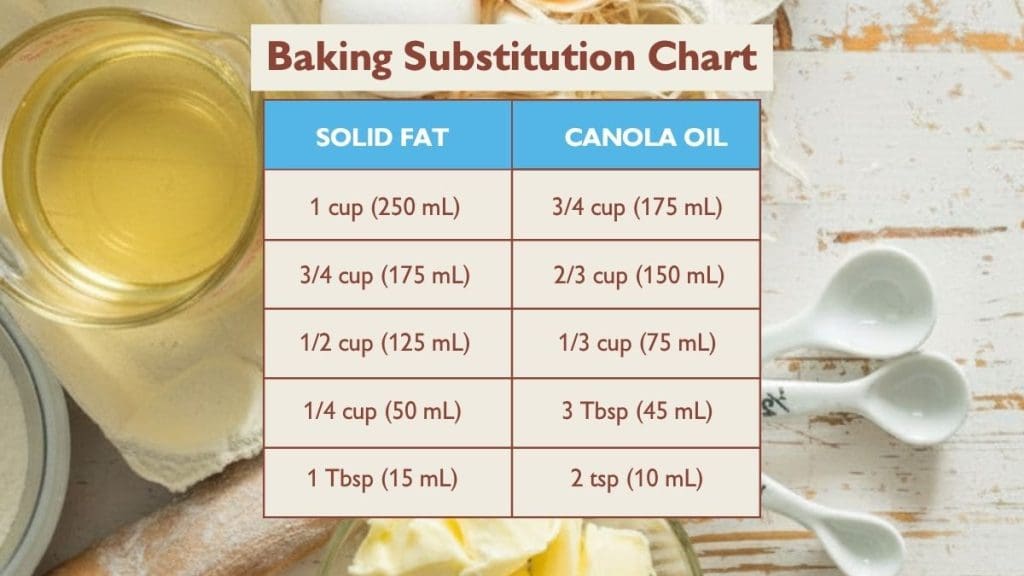
- 1 cup (250 mL) solid fat with about 3/4 cup (175 mL) canola oil.
- 3/4 cup (175 mL) solid fat with about 2/3 cup (150 mL) canola oil.
- 1/2 cup (125 mL) solid fat with about 1/3 cup (75 mL) canola oil.
- 1/4 cup (50 mL) solid fat with about 3 Tbsp (45 mL) canola oil.
- 1 Tbsp (15 mL) solid fat with about 2 tsp (10 mL) canola oil.
These ratios are designed to maintain moisture and texture and have the added bonus of reducing the total amount of fat.
This substitution works well for many cakes, loaves, and muffins. However, cookies and pastries that rely on creamed fat for their structure may not convert as well and will likely have a different texture.
Baking substitution chart
Here is a practical chart you can use when adapting recipes that call for solid fat to canola oil.
Step-by-Step: Converting one of your favourite recipes
Here is how you might adapt a basic quick bread or snack cake.
Suppose your recipe calls for 1/2 cup (125 mL) butter.
- Check the chart.
- For 1/2 cup (125 mL) butter, use 1/3 cup (75 mL) canola oil.
- Mix the wet ingredients.
- Beat eggs and sugar together as usual.
- Whisk in canola oil and other liquids such as milk, yogurt, or vanilla.
- Combine with the dry ingredients.
- Add flour, leavening, and any spices or add-ins (for example, grated carrot or berries), stirring just until combined.
- Check the batter consistency.
- If the batter looks significantly thinner than it usually does for this recipe, reduce another liquid slightly the next time you bake it.
- Bake as directed.
- Use the same oven temperature and approximate baking time as the original recipe, checking towards the end with a toothpick to avoid over-baking.
The first time, you might notice the crumb is a bit more moist or the crust slightly different. You can keep notes and refine the recipe over a couple of bakes if you want to fine-tune the texture.
What to Expect When You Bake with Canola Oil: Taste, Texture, and Fixes
Trying canola oil in baking for the first time naturally raises questions about taste and texture. Understanding likely changes makes it easier to decide where to use it and how to adjust recipes if needed.
Flavour: neutral and adaptable
Canola oil is known for its mild, neutral flavour. Making it a good choice when you want other ingredients to stand out, such as cocoa, vanilla, fruit, or spices.
Because it does not carry strong flavour notes of its own, canola oil is well-suited to:
- Chocolate cakes and brownies.
- Vanilla or spice cakes.
- Fruited loaves and muffins.
Most people do not notice a significant flavour difference when using canola oil in the recommended substitution ranges compared with melted butter or other neutral fats. Strong flavour differences are more likely if a recipe originally relied on butter for its distinct taste, such as some shortbread-style cookies, rather than for neutral moisture.
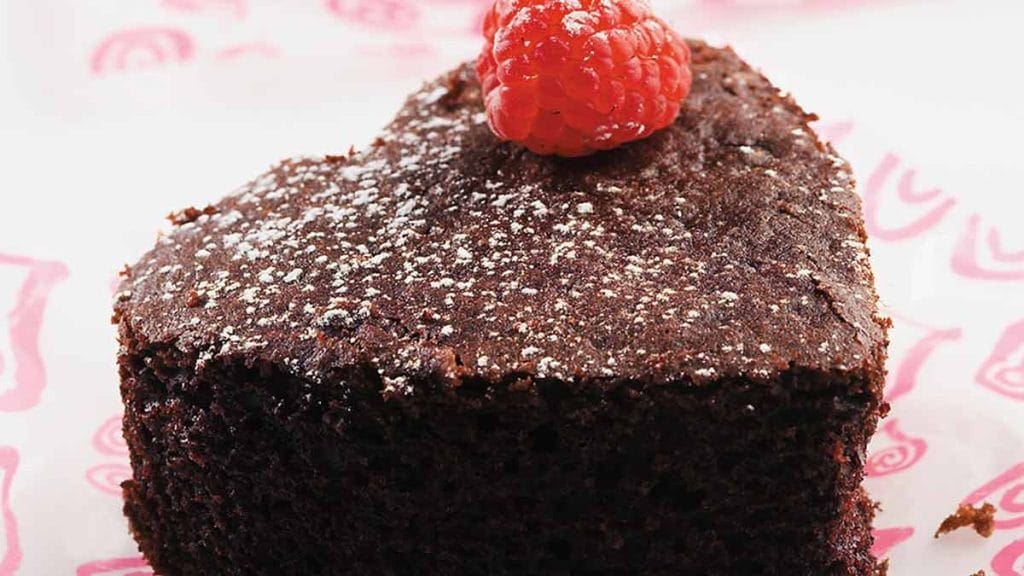
Chocolate Cake
This Chocolate cake makes a great special occasion cake for company, birthday parties or Sunday tea! Canola oil blends easily with other ingredients to create a moist, soft textured cake.
Texture: moist and tender
Texture is where many bakers see the biggest changes. Canola baking guides note that using canola oil in cakes, muffins, and quick breads often produces a moist, tender crumb. Because the oil is completely liquid, it coats flour particles effectively and distributes evenly through the batter.
Typical texture differences include:
- A softer, possibly slightly denser crumb in some recipes.
- Moist crumb that stays tender for a day or two.
- Slightly different crust appearance or feel compared with butter-based versions.
For everyday baking, these changes are usually acceptable, especially when the goal is reliable moisture and ease of preparation.
In cookies and pastries that rely on creamed butter, texture changes can be more dramatic. Without solid fat structure, cookies may spread more and lack the same crispness or lift. Those recipes are better made either with solid fat or with a cookie formula specifically designed for oil.
Common issues and how to fix them
Even when following substitution guidelines, some recipes may need small adjustments. These simple fixes can help.
Batter too thin
If you substitute canola oil and notice that the batter is noticeably thinner than usual, one likely cause is that the overall liquid content is now too high relative to the dry ingredients.
Possible fixes:
- For the next bake, reduce other liquids such as milk or water by 1–2 tablespoons.
- Keep the canola oil amount aligned with the “3/4 rule” rather than increasing it.
Baked goods feel greasy
If cakes or muffins feel greasier than expected, it may indicate that too much oil is being used in the substitution.
Possible fixes:
- Double-check that you are using about 3/4 as much oil as the melted solid fat amount.
- If you used a 1:1 swap, reduce the oil closer to the chart amounts on your next attempt.
Cookies spread more than usual
If cookies flatten or spread excessively when you switch to canola oil, it often means the recipe depends heavily on creamed butter for its structure. In these cases, simple substitution is unlikely to solve the issue.
Possible responses:
- Use a cookie recipe designed specifically for oil.
- Return to solid fat for that particular cookie.
- If you still want to experiment, reduce total fat, chill the dough, and consider increasing flour slightly, understanding results may still differ.
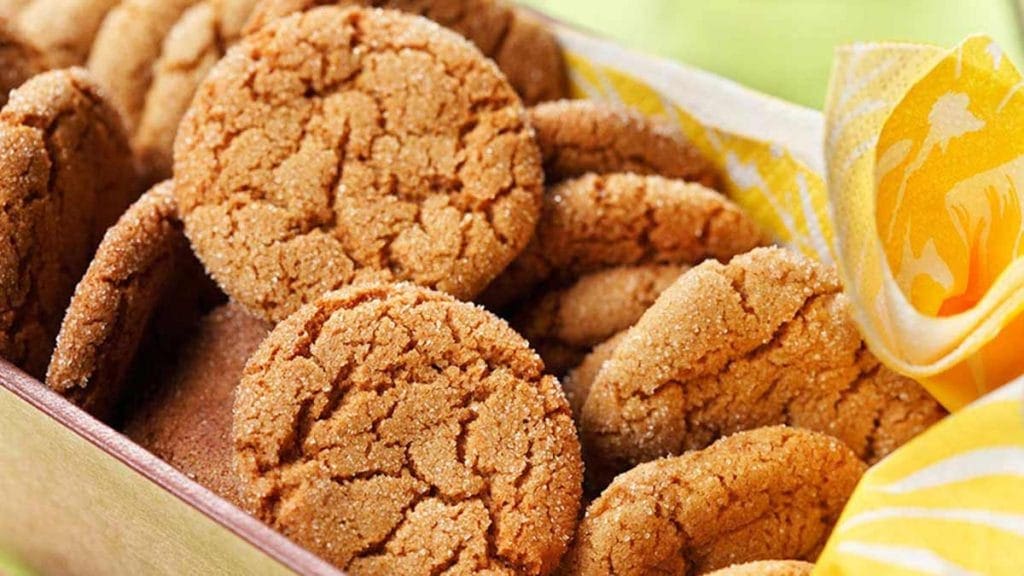
Betty’s Gingersnaps
These moist and chewy cookies are made with canola oil, reducing saturated fat while keeping all the flavour.
How to test recipes with minimal risk
Because each recipe is unique, testing canola oil substitutions in a controlled way is helpful.
Good starting points include:
- Simple muffin recipes.
- Fruit loaves.
- Basic snack cakes that already use melted fat.
When testing, it helps to:
- Change only the fat type and amount according to the substitution guideline.
- Keep a brief note about what you changed, how the batter looked, and how the finished product turned out.
If the result is close to what you like, small tweaks such as adjusting other liquids by a tablespoon or two can help dial in the texture.

Where canola oil fits in your baking routine
Because canola oil is a common pantry staple, it can easily become part of everyday baking.
It is especially useful in:
- Weeknight muffins for lunches and snacks.
- Simple birthday or snack cakes where you want reliable results and easy mixing.
- One-bowl recipes where you prefer not to worry about softening butter.
- Loaves and cakes that feature other flavours such as spices, cocoa, fruit, or nuts.
Using canola oil in these ways can simplify prep and provide consistent results while giving you a straightforward way to adjust the type of fat used in your baking.

Apple Bran Muffins
These tasty Apple Bran Muffins are a delicious source of fibre! Making them the perfect muffin to have on hand for breakfast or a snack.
Frequently asked questions
Can I replace all the butter in a cake with canola oil?
In many cakes, yes. A common guideline is to use about 3/4 cup (175 mL) canola oil for each 1 cup (250 mL) of butter or other solid fat. This works best in recipes where the fat is melted and mixed in, rather than creamed with sugar.
Does baking with canola oil change the taste?
Canola oil has a neutral flavour, so most people notice little change in taste. Flavours like chocolate, vanilla, fruit, and spices usually stand out more than the fat itself.
Is canola oil okay for cookies?
It can work in some cookies, especially those developed for liquid oil, but cookie recipes that rely on creamed solid fat for lift may not convert well. These cookies may spread more and have a different texture.
Does canola oil have different nutritional properties than butter or shortening?
Yes. Canola oil is lower in saturated fat and contains no trans fat. Studies have shown that replacing higher saturated-fat sources with canola oil in certain diets can help lower LDL cholesterol. This does not make any one baked good “healthy,” but it does change the fat profile.
Additional Articles to Explore





 How To Store Yogurt Safely And Cut Food Waste At Home
