

The ultimate prairie companion can be found on a plate. Perogies (also spelt perogy, pyrogy, pierogi or pyrohy) are a fixture at fall suppers, family get-togethers and holidays across the Prairies. They have become an iconic Canadian food, especially amongst the Polish and Ukrainian populations across the prairie provinces. While perogies weren’t invented here in Canada, they have been adopted into our culinary canon, a beloved pillow of potatoes representative of generations of hard work (and deliciousness). They’re so ubiquitous now that even places like Swiss Chalet offer them as an appetizer and Boston Pizza serves up a spicy perogy pizza.
Perogies are filled dumplings made with unleavened dough, folded, sealed and boiled, and usually pan-fried afterwards for extra crispiness and flavour. It’s potato and cheddar cheese that can be found inside most dumplings in Canada, but you’ll often see potato and onion and sometimes sauerkraut as well. Toppings vary widely (especially in recent years), but typically perogies are served with caramelized onions and a dollop of sour cream.

How the perogy hath travelled
According to culinary lore, it’s said that the explorer Marco Polo brought perogies to the Western world from China in the 13th century. During the same period, it’s said that St. Hyacinth, the patron saint of the perogy, brought a recipe for the dumplings back to Poland from Ukraine. By the 17th century, recipes for perogies were starting to appear in cookbooks, and they have since become synonymous with Eastern European cuisine. But the travels weren’t over for perogies, as their makers headed to North America in the 19th century.
Perogies in Canada
In 1993, the world’s largest perogy was established in the town of Glendon, Alberta. This 6,000-pound statue is emblematic of the perogy’s prominent place on the prairie plate, and the history of the peoples who brought the perogy tradition there. It was the waves of Polish and Ukrainian immigration that flooded the prairies in the 19th and 20th centuries who brought their perogy recipes with them and settled mostly in Manitoba, Saskatchewan and Alberta. The first wave of Ukrainian immigrants arrived between 1891 and 1914, encouraged to come to the prairies to farm by the Canadian government, and again after the First World War. Canada now has the third-largest Ukrainian population in the world after Russia and Ukraine itself.
The Polish variation of perogies came along with the waves of immigrants also arriving in the late 19th and early 20th centuries. The biggest wave came to the prairies between the two World Wars, with another coming after the Second World War due to the mass diaspora caused by the Holocaust. Due to their practicality and their deliciousness, perogies soon became a staple at community dinners and church events, and many sold them as fundraisers (which still happens today). By the 1960s, perogies were a common staple in the frozen foods aisle of Canadian grocery stores, as commonplace as french fries. Brands like Cheemo, which was established in Edmonton in 1972, helped to introduce them to the rest of the country.
Today’s perogies
Perogies have become an iconic Canadian food, part of the culinary canon alongside dishes like poutine. October 8th just happens to be National Perogy Day. Perogy supper fundraisers and fall suppers abound in the prairie provinces, and many restaurants serve them – in Saskatoon you can even drive through at Baba’s Perogies to get your fix.
Canadian chefs have embraced perogies; you’ll see their modern takes in high-end restaurants, and there are chain restaurants devoted to them. At the Loaded Pierogi, a Toronto-based chain founded in 2014 with locations across the country, you can get a serving of perogies topped with 75 different variations from Chicken Parm to Bang Bang Cauliflower. Whatever way you want to enjoy perogies, one thing is for sure: they are an iconic Canadian dish worth celebrating.
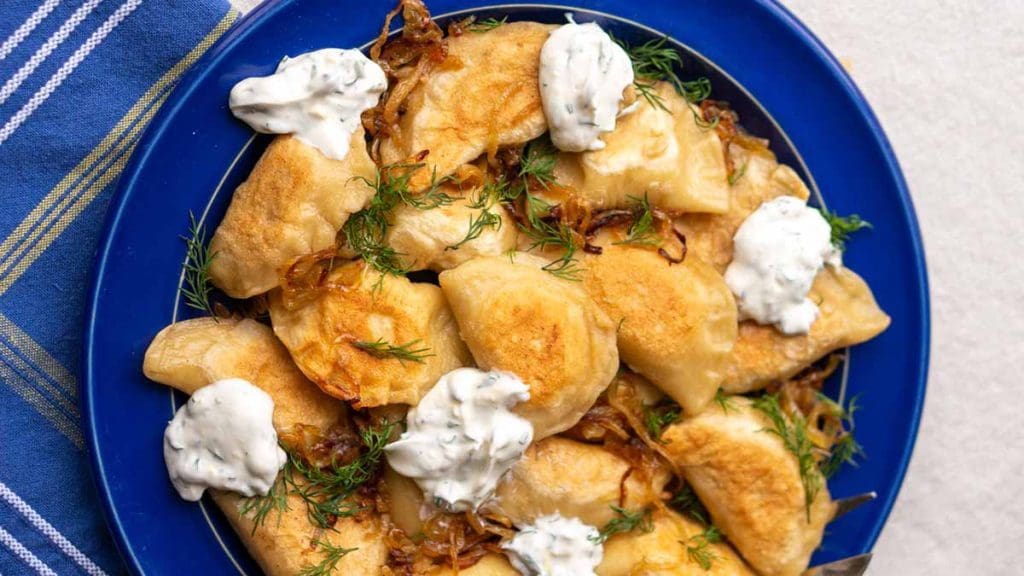
Potato & Cheddar Perogies with Lemon-Dill Sour Cream
Discover the ultimate comfort food with these Potato & Cheddar Perogies, perfectly paired with a zesty Lemon-Dill Sour Cream. A cheesy, tangy delight you’ll love!
Interested in other Canadian food stories? Check out these Classic Canadian Dishes:
- In a Jam(Jam): The History of Jam Jams in Canada
- Triple Threat: A History of the Nanaimo Bar
- Delicious Squared: History of Date Squares
- The History of the Iconic Jiggs Dinner
- The History of Pea Soup in Canada
- The History of Baked Beans in Canada
- Meat Pie Magic: The History of Tourtière
- Classic Canadian Dishes: Pouding Chômeur
- Classic Canadian Dishes: The Lobster Roll
- Classic Canadian Dishes: Saskatoon Pie
- Classic Canadian Dishes: Cod au Gratin



 Types Of Butter And How To Use Them