
This toolkit is designed to help people address misconceptions surrounding the use of agricultural pesticides.
Canadians already struggle to eat enough fruit and vegetables. For people on a strict grocery budget, fears about possible residues can cause considerable anxiety around shopping. In fact, there is research to support that lower income families will buy fewer fruits and vegetables overall when they hear this type of messaging. Organic and conventionally grown produce are both nutritious and safe and are both inspected by the Pesticide Management Regulatory Agency of Health Canada.
By sharing evidence-based information and links to a variety of vetted sources, you will have information at your fingertips to help you share facts and make confident, informed decisions about food without unnecessary fear.
Toolkit Resources
Facts About Pesticides
What is a pesticide?
The term pesticide is a broad category that refers to substances used to protect crops from devastating losses associated with insects, weeds, and diseases.. Agricultural pesticides include insecticides (which target insects like bugs, flies, and worms), herbicides (for weeds), fungicides (for disease-causing organisms), rodenticides (for rodents), as well as antimicrobials and sanitizers.
Why are pesticides used?
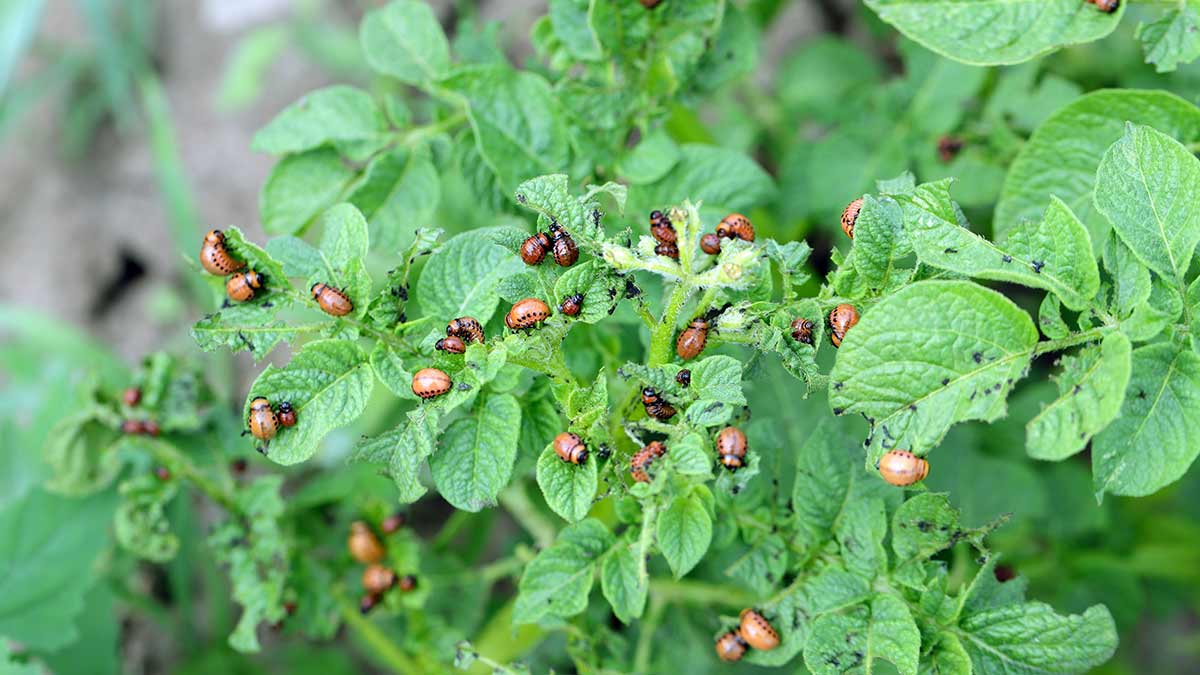
Farmers face constant challenges from thousands of pests, including insects, weeds, and fungi. Pesticides are one of the methods farmers use to protect their crops and maintain healthy plants.. Often pesticides are the best option for controlling pests that would otherwise threaten to destroy an entire crop, but farmers monitor their crops closely and consider all of the tools available to them.
Benefits of pesticides:
- Allow a larger supply of food by reducing crop losses by up to 50%
- Improve food quality, helping to reduce waste
- Keep food costs down for consumers

When and how are pesticides used?
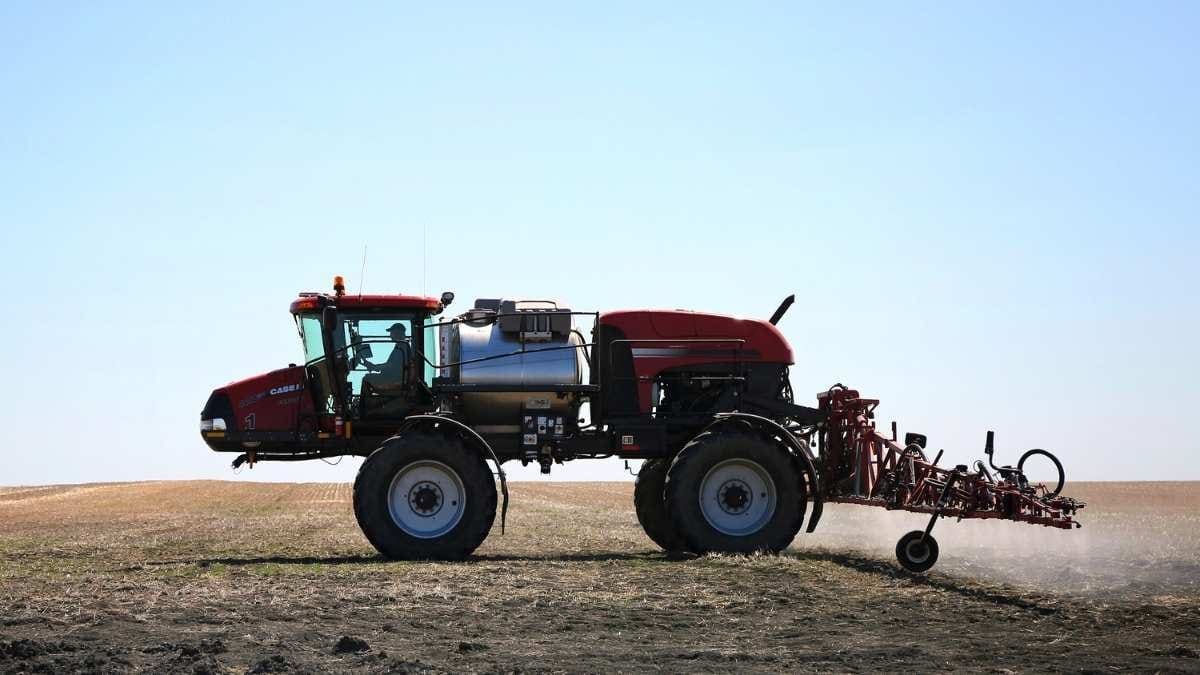
Carefully and strategically. While pesticides can be an important tool for many farmers, they are just one part of a broader approach called Integrated Pest Management. This system emphasizes regular monitoring and informed decision-making to manage pests effectively and responsibly.
Farmers keep a close eye on their crops, watching for early signs of pests like insects, weeds, or diseases. When an issue arises, they consider all available options—biological controls (such as beneficial insects or bacteria), habitat adjustments (like changing irrigation practices), mechanical methods (such as netting or traps), and, when necessary, pesticides.
How are pesticide residues regulated in Canada?
Health Canada’s Pesticide Management Regulatory Agency (PMRA) sets Maximum Residue Limits (MRLs)—the highest amount of pesticide residue allowed on a given crop when the product is used according to label directions. They are set hundreds to thousands of times below the Acceptable Daily Intake (ADI)—the amount a person could safely consume every day without any adverse health effects. The ADI threshold is based on thorough scientific evaluation and is designed to protect everyone, including vulnerable groups like infants, children, and pregnant women.
MRLs apply to all food sold in Canada, whether grown domestically or imported.
To ensure compliance, the Canadian Food Inspection Agency (CFIA) regularly monitors and tests foods for pesticide residues. The most recent data shows that over 99% of produce in Canada, including imports, contain residues below the MRLs —often far below.
What’s The Deal With Pesticides?
See CropLife Canada’s consumer handout outlining the basics of pesticide use and pesticide safety
Back to Table of Contents
Pesticide FAQs
Are organic foods pesticide free?
Organic producers can and do use pesticides, however they are usually naturally derived, and must be included in the list of permitted substances from the Canada Organic Standards, Canada’s organic regulations.
Organic And Conventional Food Production: Facts And Myths
A consumer handout exploring myths and facts about organic and conventional food production.
Learn about organic standards, and how organic labelling is regulated.

Erin MacGregor, RD shares her take on organic and conventional food.
Will following the Dirty Dozen list help reduce pesticide residue intake?
No. The Environmental Working Group’s Dirty Dozen list ranks produce based on the number of pesticide residues detected, not the absolute amount (dose) consumers would be exposed to, or whether the dose exceeds safety thresholds. None of the produce on the dirty dozen list comes anywhere close to meeting Health Canada’s conservative safety threshold.
Sharable Resources

Dirty Dozen Myths
Canadian Food Focus explores some Dirty Dozen Myths.
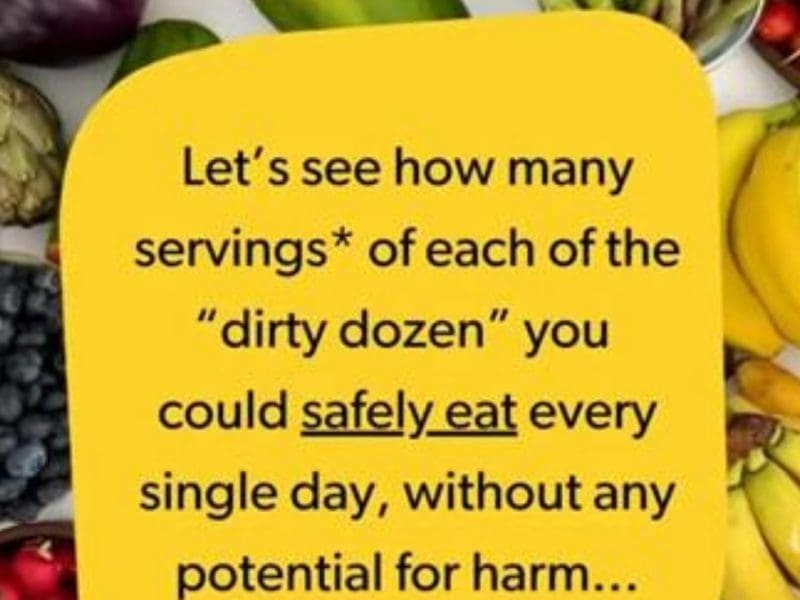
Safely Eaten Servings
Learn how many servings of each of the “dirty dozen” you can safely eat every day, without any potential for harm.

Shopper’s Guide to Popular Fruits and Vegetables
We’re taking the opportunity to highlight the benefits of each of this years Dirty Dozen.

The Dirty Dozen’s Dirty Secret
Are pesticide residues found in the Dirty Dozen a health risk? To assess the risk of pesticide residues on our produce, we need to know a few simple things.
Are Pesticides Toxic?
To be toxic or any chemical, whether it’s a pesticide or something as common as table salt, the dose must be high enough to cause harm. It’s the amount, not the substance itself, that determines toxicity.
The Dose Makes The Poison: Understanding Chemicals In Everyday Life
CropLife Canada’s consumer handout about chemicals in everyday life demystifies the term “toxic”.
Do Pesticides Cause Cancer?
There is no credible scientific evidence that dietary exposure to pesticides causes cancer. Pesticides in Canada are strictly regulated and undergo extensive safety evaluations, including long-term health evaluations, before approval. Misinformation online often ignores the science and the rigorous protections already in place.

What Is Glyphosate?
CropLife Canada reviews how pesticides like glyphosate are assessed for safety, including cancer risk, by global regulatory agencies.

The Truth About Glyphosate
Dietitians Nita Sharda and Jessica Penner play out a fun scene that underscores the safety of glyphosate.
Are Imported Foods Less Safe?
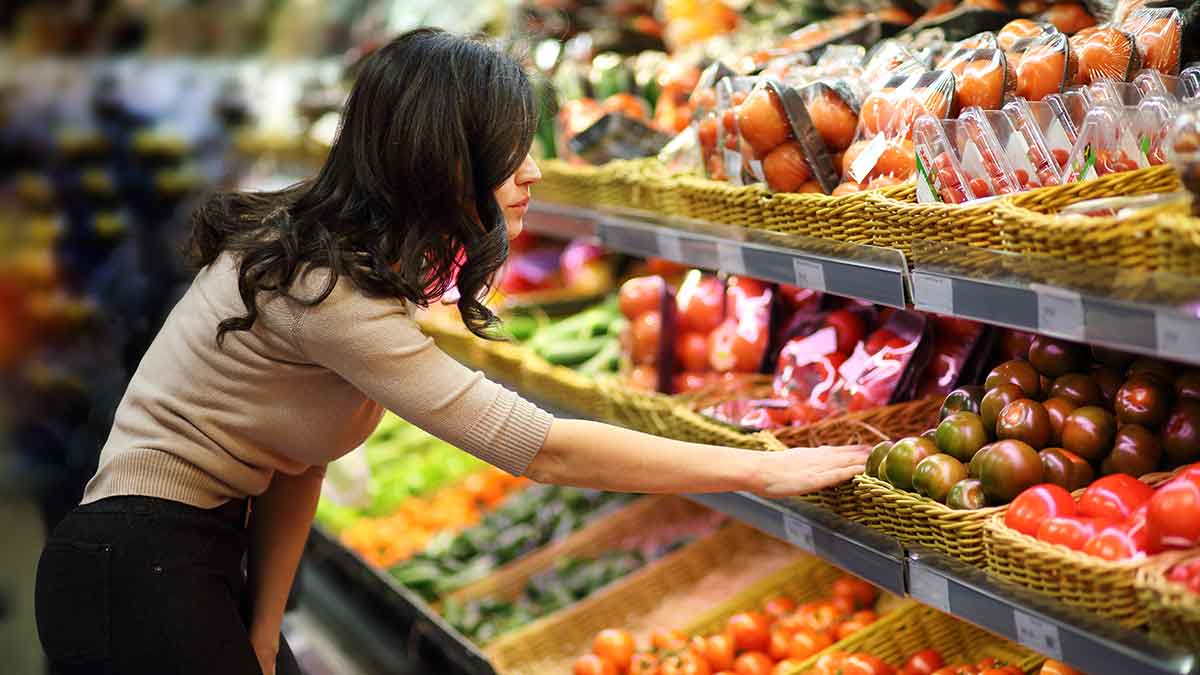
Both domestic and imported fruits and vegetables—organic or conventional—are safe to eat. Health Canada sets and enforces the same strict MRLs for all produce, including imports.

Are Pesticides Residues On Food Harming Your Health?
Read Dietitian Michelle Jaelin’s full blog post on the safety of pesticides, including imported produce:
Is Imported Produce Safe to Eat?
Dietitian Michelle Jaelin reviews why imported produce is safe to eat.
Are Natural/Organic Pesticides Safer?
Naturally derived pesticides aren’t automatically safer than synthetic ones—toxicity depends on the dose, not the source. Some natural substances can be highly toxic, just like some synthetic ones can be very low-risk. Believing “natural = safe” is a common error called the naturalistic fallacy.
Learn more about why natural does not equal safer, and what the term “natural” on a food label means

What Does All Natural on a Food Label Mean?#
“All Natural” are perhaps the biggest buzz words of our millennium. Do you know what All Natural on a food label means?
Back to Table of Contents
Key Takeaways: Understanding Pesticides
1
Pesticide use is strategic and science-based.
Farmers use pesticides carefully, as part of Integrated Pest Management, which includes monitoring crops and considering biological, mechanical, and habitat controls before spraying.
2
Residue levels are tightly regulated—and very low.
Health Canada’s Maximum Residue Limits (MRLs) are set hundreds to thousands of times below levels considered safe, for both domestic and imported foods. Over 99% of produce in Canada meets these conservative standards.
3
Natural doesn’t always mean safer.
Organic and conventional farmers alike may use pesticides. Naturally derived pesticides are not inherently safer – toxicity depends on the dose, not whether the substance is natural or synthetic.
4
The Dirty Dozen list is misleading.
Lists like the Dirty Dozen focus on the presence of residues, not whether levels pose any health risk. Eating fruits and vegetables, regardless of how they’re grown, is vital for health, and residue levels are far below harmful thresholds.
5
Science, not fear, should guide food choices.
Pesticides used in Canada are thoroughly evaluated for safety, including long-term cancer risks. Misinformation is widespread, but credible sources and regulatory oversight protect consumers and support a safe, abundant food supply.
More Resources
Articles




Shareable Social Content
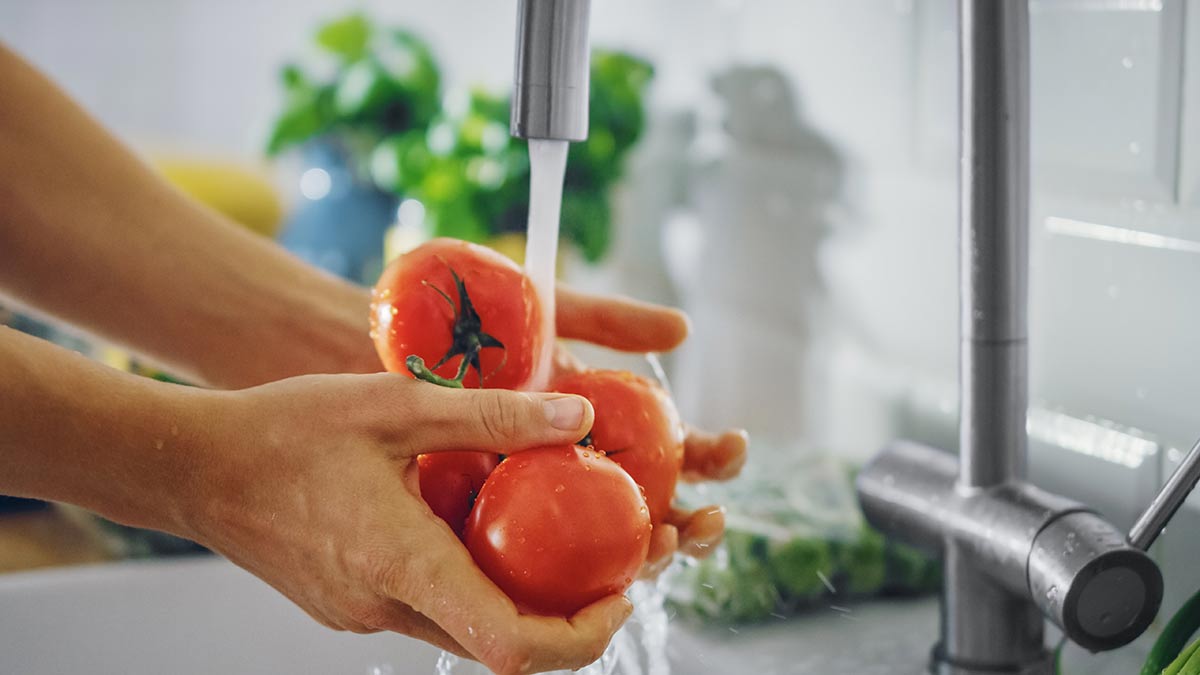
Should I wash my fruits and veggies?
Abby Langer, RD breaks down plant science misinformation spread by grocery aisle fearmongers.
Sarah Remmer, RD shares a family favourite recipe while tackling questions about glyphosate.
Sarah Remmer, RD answers the question “Should I be worried about glyphosate in my kids’ cereal?”
Dietitian Andrea Hardy tackles crop protection and pollinator health.
Tools and Resources
Pesticide Residue calculator
(How much could you eat before you reached a threshold of a potential adverse impact?)

The Real Dirt on Farming
A national Farm & Food Care resource in Canada that provides information about various aspects of agriculture, such as organic production, farm size, and animal care.

Additional References:
References from Health Canada
Back to Table of Contents
Call To Action: Feel Confident About Your Food
1
Use This Toolkit To Correct Misinformation.
Share evidence-based insights about pesticides, food safety, and farming practices to push back against fear-based narratives and help your audience make informed choices.
2
Highlight The Facts, Not The Fear.
Emphasize that pesticide residues in Canada, on both domestic and imported produce, are strictly regulated and consistently fall well below safety thresholds.
3
Normalize Safe Pesticide Use.
Explain that both organic and conventional farmers use pesticides responsibly, and that “natural” does not always mean safer. Support consumers in moving beyond the naturalistic fallacy.
4
Empower With Practical Tools.
Share the videos, graphics, calculators, and handouts included in this toolkit. These tools make technical topics relatable and help consumers better understand risk and safety.
5
Encourage Confidence In Produce—Of All Kinds.
Reinforce that eating a wide variety of fruits and vegetables is far more important for health than worrying about trace pesticide residues. Help your audience feel good about their food choices.

 Nourishing Families on a Budget