
Sweet corn has a well-earned reputation for perishability, and that reputation is mostly deserved. The sugars that make a just-picked cob extraordinary begin converting to starch the moment the corn is harvested. A late July farm stand cob that was harvested that morning is a different eating experience from the same variety after two days on a kitchen counter.
The good news is that this is a manageable problem, not a crisis. Cold temperature slows the sugar-to-starch conversion significantly, and the freezer stops it almost completely. With a few simple habits, you can enjoy peak-season Canadian corn well into winter. Here’s how.
For more on buying the freshest corn in the first place, see What’s in Season? Corn.
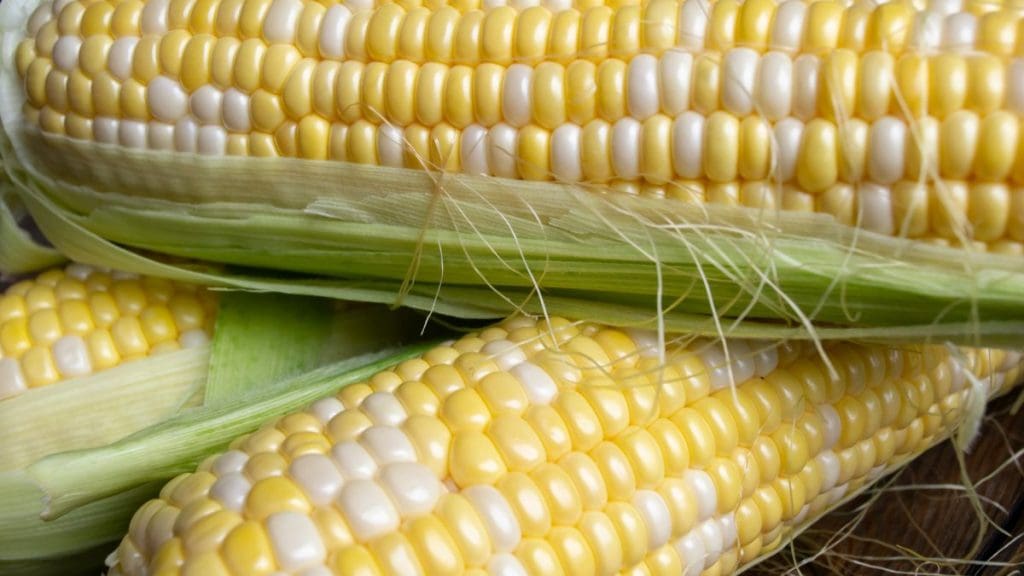
How Long Does Sweet Corn Last?
The honest answer depends on the type of corn and how cold you keep it.
Normal sugary (su) corn: best eaten within one day of harvest; acceptable within two days if refrigerated immediately. By day three, the flavour difference is noticeable.
Sugar-enhanced (se and se+) corn: holds one to two days refrigerated with good quality; acceptable up to three days.
Supersweet (sh2) corn: the most forgiving type; holds two to three days refrigerated without major flavour loss; acceptable up to four days for cooked applications.
For comparison, unlike apples, which can be stored for months in controlled-atmosphere facilities and weeks in a home refrigerator crisper, sweet corn is designed by nature to be eaten at peak maturity. Think of its storage life more like fresh berries than like root vegetables.
The practical rule: buy what you will eat within one to two days. If you have more than that, freeze it.
How to Store Sweet Corn in the Fridge
- Refrigerate immediately. Do not leave sweet corn on the counter. Move it to the refrigerator as soon as you get home.
- Keep the husks on. The husks protect moisture and insulate the kernels. Leave them on until you are ready to cook.
- Place in the crisper drawer or the coolest part of your refrigerator. Corn stores best at temperatures just above 0°C.
- Use within one to two days for su and se varieties; within two to three days for supersweet. Even within this window, you may notice some quality loss compared to the day of purchase.
If you’ve already husked the corn and aren’t cooking it right away, wrap it tightly in plastic wrap or place it in a sealed bag before refrigerating. This prevents the kernels from drying out.
Cooked corn on the cob can be refrigerated in a sealed container for up to three days and makes excellent leftovers for corn salads, quesadillas, and grain bowls.
Can You Freeze Sweet Corn?
Yes, and this is one of the most rewarding things you can do during peak season. A bag of home-frozen Canadian sweet corn in January is a genuine treat in soups, chowders, salsas, and succotash.
Frozen corn does change texture compared to fresh; the kernels become softer and are best suited to cooked applications rather than eaten raw. But the flavour holds well when the corn is frozen at peak ripeness.
Method 1: Blanch and Freeze Whole Cobs
- Husk the corn and remove all silk.
- Bring a large pot of water to a rolling boil.
- Blanch the cobs for 4 minutes.
- Immediately transfer to a bowl of ice water to stop the cooking. Leave for 4 minutes.
- Drain and pat dry.
- Freeze in a single layer on a baking sheet for 1 hour, then transfer to freezer bags. Remove as much air as possible.
- Label with the date. Use within 10 to 12 months.
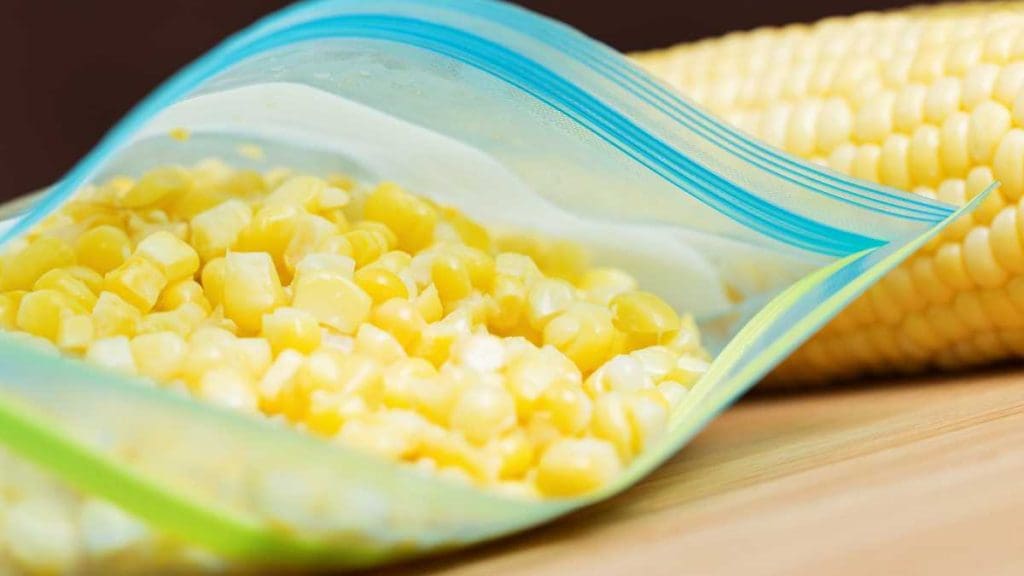
Method 2: Blanch and Freeze Kernels
- Blanch and ice-bath the cobs as above (Method 1).
- Once cool, stand the cob upright on a cutting board and use a sharp knife to cut the kernels off in downward strokes.
- Spread kernels in a single layer on a baking sheet and freeze for 1 hour.
- Transfer to freezer bags, label, and store for up to 10 to 12 months.
This method is the most convenient for winter cooking: kernels pour straight from the bag into soups or skillets.
Method 3: Raw Kernels (No Blanching)
Raw kernels can be cut from the cob and frozen without blanching. This is faster but produces a lower-quality result over longer storage: the colour may fade and the flavour can degrade within a few months. Use within 3 months for best results. Best for corn you’re planning to use relatively quickly in cooked applications.
Why blanching matters: briefly blanching deactivates enzymes that continue to break down flavour and colour even in the freezer. It’s a two-minute extra step that meaningfully extends the quality of your frozen corn.
Using Less-Perfect Corn
Even the best-intentioned plan can result in corn sitting in the fridge a day longer than intended. Here’s how to evaluate what you have.
Still good (use in cooked applications): Silk is dry or shrivelled but husks are still intact and corn smells clean – Kernels feel slightly less plump but still firm when pressed through the husk – Cut end shows some drying but no discolouration or mould – A few kernels at the tip have dried down.
Discard (or compost): Mould anywhere on the cob, husk, or silk – Slimy or off-smelling husks – Cobs that have been husked and refrigerated for more than three days – Any corn with an unpleasant or fermented smell.
Ideas for less-perfect corn: Corn chowder or corn soup: the longer cook time and added liquid mask any small texture losses – Corn fritters: mix cut kernels into a simple batter with flour, egg, and herbs – Corn salsa: lime, onion, tomato, and herbs refresh slightly-past-peak kernels beautifully – Mexican Street Corn Dip: a roasted or grilled preparation that brings out sweetness even in corn that’s a day or two past its fresh-eating peak.
For ideas on using surplus corn before it turns, see Easy Ways to Use Sweet Corn.
Simple Habits to Waste Less Sweet Corn
- Buy only what you’ll eat fresh within two days. The rest of your purchase should be for freezing.
- Refrigerate the moment you get home. Don’t let corn sit in a hot car or on the counter.
- Freeze surplus the same day you buy it if you know you won’t use it in time.
- Check your corn before you leave the stand. Husks should be bright green, silk should be fresh, and the cob should feel full.
- Plan a corn-heavy meal for the first night: corn on the cob as a side dish uses up fresh corn at its best and saves the rest for later.
- Keep a supply of freezer bags in the kitchen during peak season so freezing is never more than five minutes of extra work.
- Use imperfect corn in soups and chowders rather than letting it go to compost.
For more on reducing food waste at the seasonal produce level, see 6 Tips to Reduce Food Waste and How Long Can I Store This?.
Additional Articles to Explore








 Canadian Sweet Corn Types: Taste, Texture and Best Uses
