
The window for local Canadian sweet corn is short: roughly late July through October, with the serious peak concentrated in August and September. That brevity is part of the appeal. It means that corn on the cob with butter and salt is not a boring meal in August; it’s the right meal. But if you want to move beyond the cob and get more out of every cob you bring home, sweet corn is one of the most versatile summer vegetables in the Canadian kitchen. Here are the ideas worth having in your back pocket.
Fresh Off the Cob
The simplest preparations are often the best when corn is at peak freshness.
Boiled Corn on the Cob
Bring a large pot of water to a rolling boil. Add husked cobs and cook for 3 to 5 minutes for corn that was harvested that day or the day before. Very fresh su or se corn may need only 3 minutes; corn that’s been in the fridge for a day or two benefits from 5 minutes. Do not add salt to the boiling water; it toughens the kernels. Season at the table.
For flavour beyond butter: try rubbing with lime juice and chili powder, spreading with a little miso butter (softened butter blended with white miso), or finishing with smoked paprika and butter.

Grilled Corn in the Husk
Pull back the husks without removing them, strip away the silk, then re-wrap the husks around the cob. Soak the cob in cold water for 20 minutes to prevent charring. Grill over medium heat for 15 to 20 minutes, turning occasionally. The husk steams the corn while the direct heat caramelizes a few kernels through the gaps.
For a crowd-pleasing Canadian summer version: after grilling, pull back the husks, brush the cob with mayo, and finish with cotija cheese, lime, and chili flakes. A version of this style forms the basis of Mexican Street Corn Dip, which brings the same flavour profile into a shareable dip format.
Microwaved Corn (Faster Than You Think)
Place an unhusked cob in the microwave. Cook on high for 3 to 4 minutes per cob. Let stand for 2 minutes. Cut off the stalk end, squeeze the cob out of the husk, and the husk and silk slide off together. No boiling water, no mess. This method is surprisingly effective and works well for a single cob.
Cut-Off-the-Cob Ideas
Once you get the kernels off the cob, the options multiply. Stand the cob upright on a cutting board inside a large bowl; the bowl catches the kernels as they fall. A single large cob yields roughly half a cup of kernels.
Corn Salsa
Combine cut corn kernels with diced tomatoes, red onion, jalapeño, fresh lime juice, and cilantro (or flat-leaf parsley if you prefer). Salt to taste. Corn salsa is one of the best uses for peak-season corn: the raw kernels are sweet and crisp, and the whole thing takes about 10 minutes to make.
Serve with grilled fish, chicken, tacos, or simply with tortilla chips.
Mexican Street Corn Dip
The cut-off-the-cob version of grilled street corn. The Mexican Street Corn Dip recipe on Canadian Food Focus combines grilled or roasted corn kernels with sour cream, lime, chili, and cotija for a crowd-pleasing party dip that comes together quickly.
Corn Salads
Corn kernels make an excellent addition to grain salads, green salads, and bean salads. Try corn with black beans, cucumber, lime dressing, and a handful of fresh herbs for a quick summer side. Cut corn is also excellent in a simple pasta salad with cherry tomatoes, fresh basil, and vinaigrette.
Soups and Chowders
Corn chowder is one of Canada’s great late-summer-into-fall dishes. It works with fresh-cut corn, home-frozen corn, or commercially frozen corn, and the recipe is fundamentally the same: sweat aromatics, add potato, add corn, add liquid (chicken stock, vegetable stock, or milk), simmer, finish with fresh herbs.
For a reliable version of corn chowder or corn bisque, Spend with Pennies has a well-tested corn chowder recipe that works cleanly with Canadian sweet corn. UnlockFood.ca also maintains a range of corn-based soup recipes developed with Canadian dietitians, worth searching for “corn soup” or “corn chowder” on the site.
The advantage of corn chowder: it is forgiving of corn that is slightly past its fresh-eating best. The sweetness that may have faded after a day in the fridge comes through again when simmered in a savoury base.
Corn stock: after you’ve cut the kernels off the cobs, don’t throw the cobs away. Simmer them in water with half an onion, a celery stalk, and a few peppercorns for 30 minutes, then strain. The resulting stock is lightly sweet, deeply corn-flavoured, and excellent as the base for corn chowder, risotto, or polenta.
Baking and Stovetop Cooking with Corn
Corn Fritters
One of the best uses for corn that’s a day or two past its fresh-eating peak. Combine 2 cups of cut corn kernels with 1 cup of flour, 1 egg, a splash of milk, salt, pepper, and a handful of sliced green onions. Mix into a thick batter and fry in a lightly oiled skillet over medium heat, about 3 minutes per side. Serve with sour cream or a simple herb sauce.
Corn fritters work with fresh, frozen (thawed), or canned corn.
Cornbread
Canadian corn season coincides with the height of barbecue season, and cornbread is an ideal accompaniment to grilled meat, roasted chicken, or a bowl of late-summer chili. Sweet corn kernels can be mixed directly into cornbread batter for texture and natural sweetness.
Corn and Tomato Dishes
Sweet corn and tomatoes are in season at the same time in Canada, and they are natural partners in the kitchen. Combine grilled or roasted corn kernels with fresh tomatoes, fresh basil, and a light vinaigrette for a summer salad that uses two peak-season Canadian vegetables in the same bowl. This pairing also works in pasta, grain bowls, and frittatas.
Save Some for Later
The best time to freeze Canadian sweet corn is during peak season, when the corn is at its cheapest and most flavourful. A few hours of work in late August or September sets you up with Canadian corn for winter soups and chowders through to next spring.
Quick frozen corn prep: 1. Husk and silk the cobs. 2. Blanch in boiling water for 4 minutes. 3. Transfer to ice water for 4 minutes; drain and dry. 4. Cut kernels off the cob. 5. Freeze in a single layer on a baking sheet, then bag and store for up to a year.
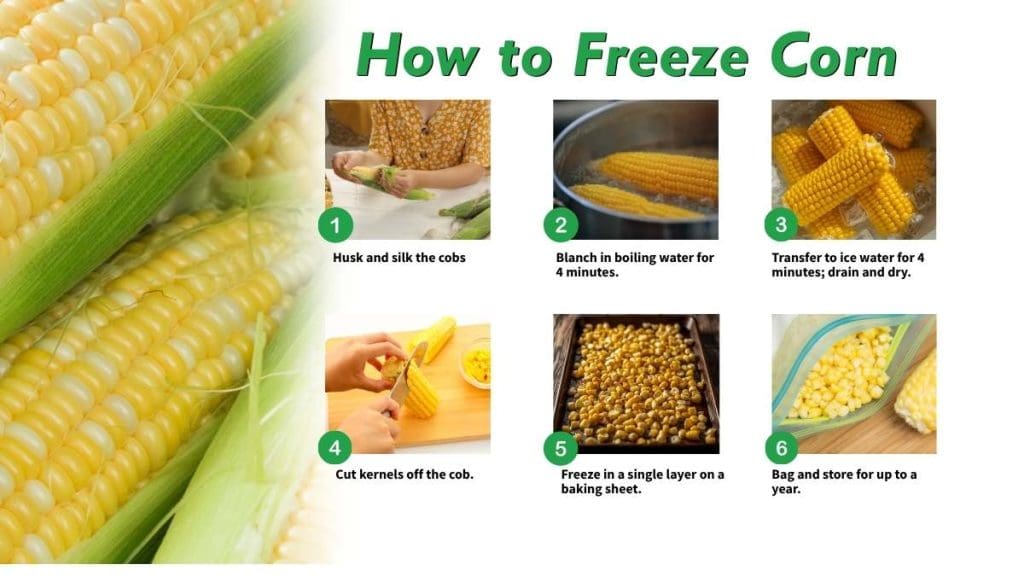
For full instructions, see How to Store Sweet Corn to Cut Food Waste.
For more recipe inspiration from Canadian food bloggers and dietitians, Food Bloggers of Canada is a good source for Canadian-developed recipes that use seasonal ingredients like sweet corn. Search “sweet corn” or “corn on the cob” for summer and fall recipe ideas.
Additional Articles to Explore


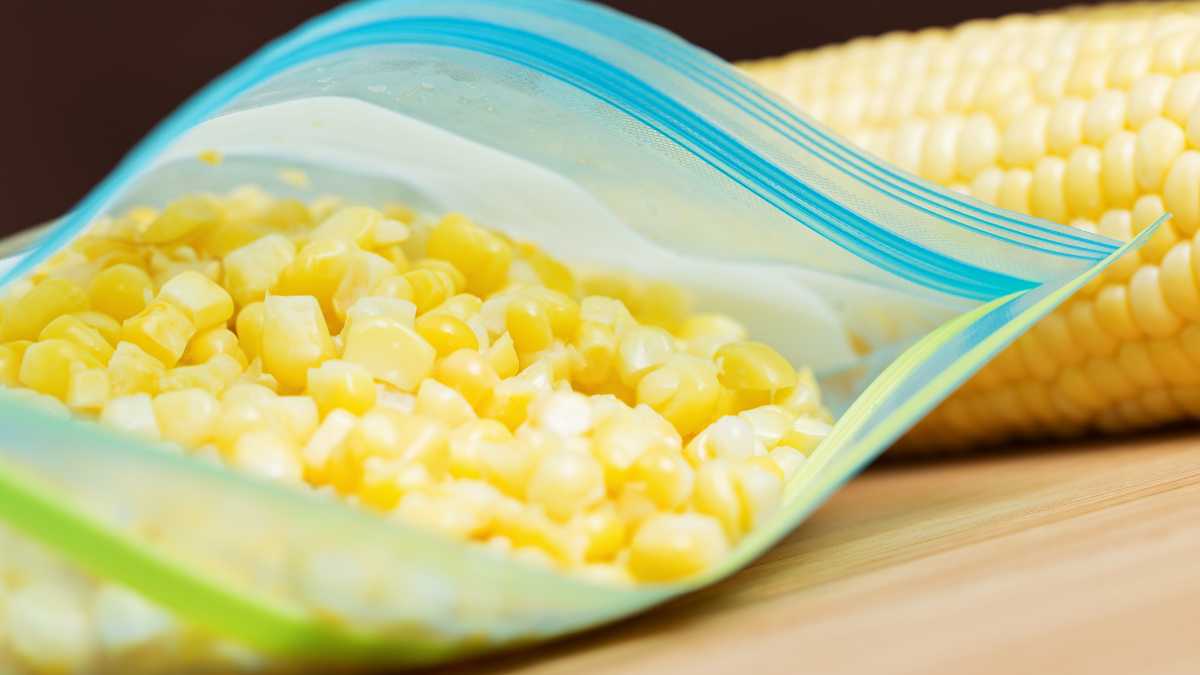


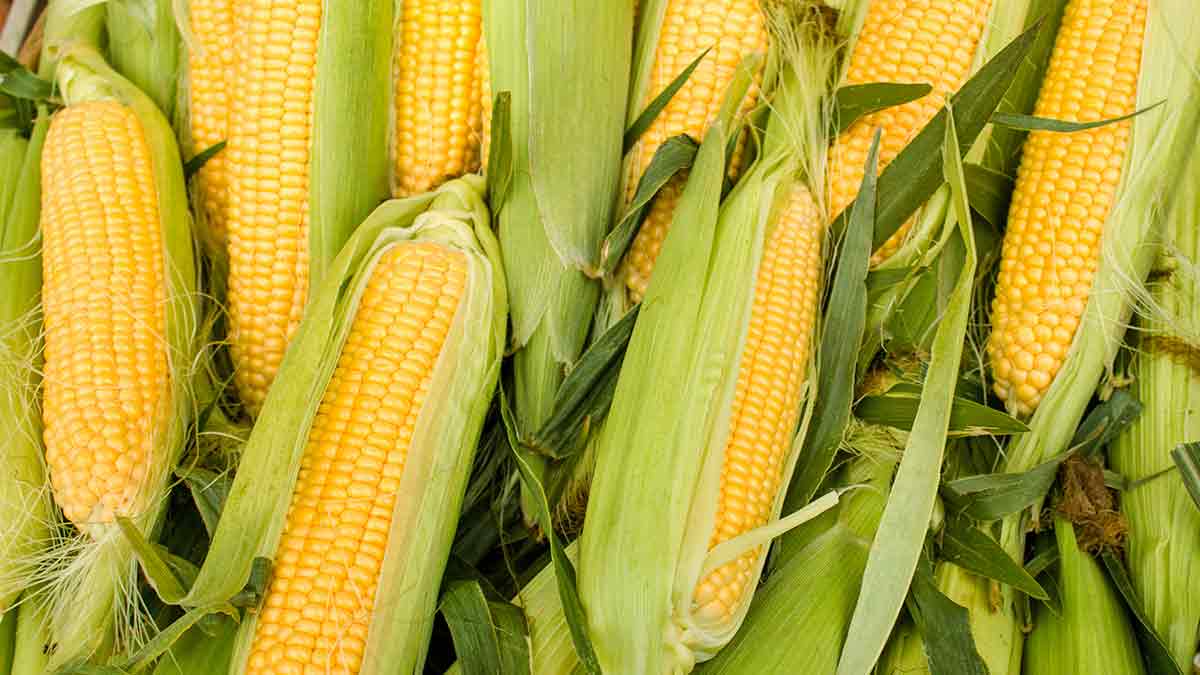



 How to Store Sweet Corn to Cut Food Waste
