
Since the last glaciers retreated around 8,000 years ago, the boreal forest has sustained the lives and wellbeing of people. It is a place of deep meaning, yet its heritage is largely unrecognized outside Northern communities.
Almost ten years ago, the Keewatin Career Development Association was looking for opportunities for people of the community, located in Treaty 6 and Treaty 8 territories, the traditional and ancestral lands to the Woodlands Cree, Métis, Plains Cree, Dene and Saulteaux, near the community of Air Ronge, Saskatchewan.
For generations, people in northern and Indigenous communities have relied on the forest for food, medicine, materials, and livelihoods. These harvesting practices are rooted in deep knowledge of the land, shaped by seasons, and guided by respect for the forest’s ability to renew itself. Forest foraging, sometimes called wildcrafting, is the practice of searching for and harvesting wild food and medicinal plants in forests.
Randy Johns is the CEO of Keewatin Community Development Association. In 2017, the group started a business called Boreal Heartland to develop and market foraged forest products. Johns became the Manager of Boreal Heartland in addition to his responsibilities at the Association.
“The first actual job that we had was providing fireweed for cosmetics,” recalls Johns. “That involved harvesting fireweed, drying and grinding it for their extract that goes into shampoo and skin cream. It was a fairly large order, but because we weren’t very experienced, a bunch of it got wet and laid around in puddles and was ruined. But at the same time, the puddles turned brown, and we thought, “Hey, that’s tea!”
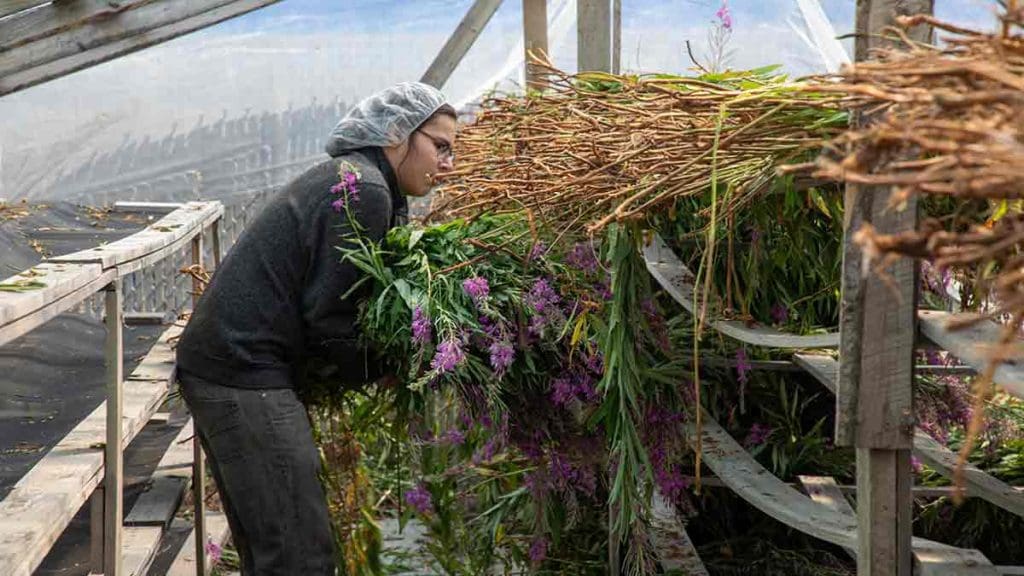
Fireweed, with its bright pink flowers in kind of an elongated cluster, is an herbaceous or shrub-like plant of the evening primrose family and native to the boreal forest region. Fireweed is the floral emblem of Yukon Territory.
Randy learned that Russians have been fermenting fireweed for tea for thousands of years. He ordered some and set about reverse engineering it. He and his team came up with an herbaceous, caffeine-free tea enlivened by the addition of dried lake mint, called ‘Restoration Blend’.
“I founded the idea there and then we started investigating what could be made from non-timber forest products. There was a lot of research and development that went into that and then trying to figure out how to process and how to engage people,” says Randy.
The happy accident with the fireweed led to a line of teas, culinary spices and other wild foods, all harvested by First Nations and Métis people. Some of the plants foraged in northern Saskatchewan include:
- fireweed
- rose hips
- mint
- bearberry
- sarsaparilla root
- birch leaf
- labrador
- morels
- goldenrod
- chanterelles
- stinging nettle
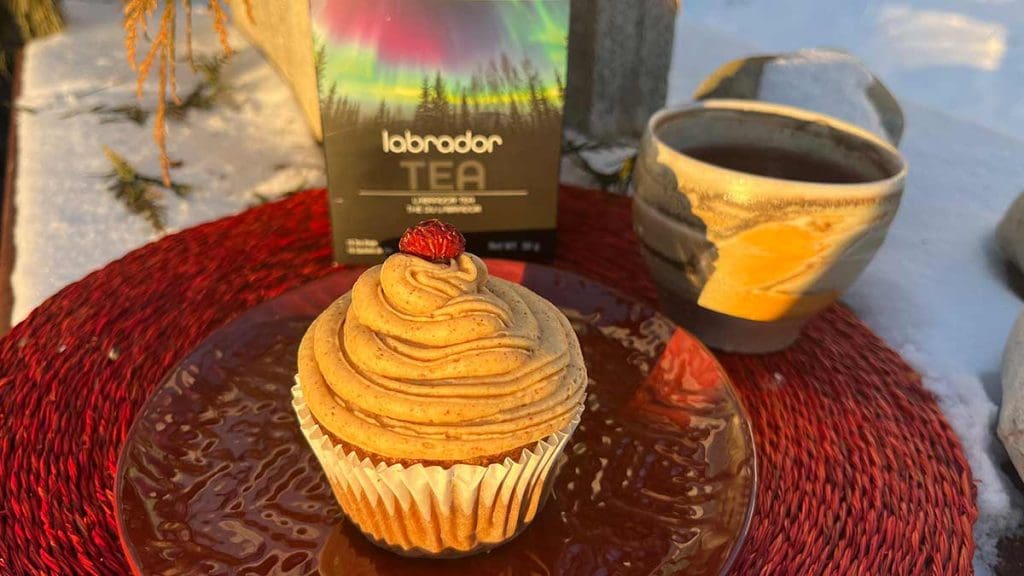
Spiced Carrot and Flax Cupcakes with Rose Hip Buttercream
Paired with a steaming cup of Boreal Heartland tea (my favourite is Labrador), these cupcakes are a definite mood booster! Rose Hips are harvested at their peak ripeness, dried, and then ground to a powder that retains a bit of texture and has a sweet, almost fruity flavour.
Another challenge was creating a Canadian Food Inspection Agency-approved drying and processing facility.
“Necessity is the mother of invention,” laughs Randy. “We were trying to figure out how to dry plants on a large scale. The greenhouse idea came along and with heat and wind, you’re drying!”
Now there are three drying sheds set up in communities in northern Saskatchewan, accepting deliveries of plants, berries and mushrooms throughout the growing season.
Every spring, prospective harvesters take training to learn to identify the proper plants, how to harvest so the plant comes back right after they pick and how to handle the plant after they harvest it, so it doesn’t go to waste. To ensure sustainability and protocols, the company has an advisory panel made up of Indigenous community members and Elders. Many of the harvesters operate on their own traditional traplines.
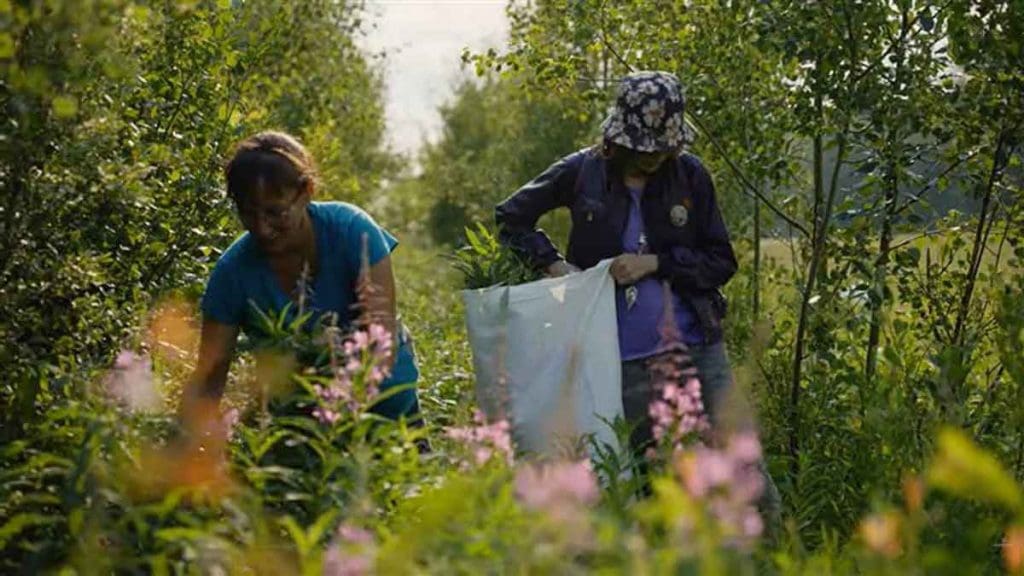
Desiree Johns is the Sales Manager for Boreal Heartland although that’s only part of “a little bit of everything” she does since they’re still a team of less than ten people aside from the harvesters.
“I think the main thing is that we’re respectful of the tradition of plant use and there are some things we don’t sell.”
Aside from the positive economic impact, Desiree has witnessed other ways the Boreal Heartland has benefited Northerners.
“As Indigenous people, we were taught that our land didn’t have value and our culture and our traditions didn’t have value,” she says. “Then we lost our purpose. It’s healing for people to have purpose and getting onto the land has always been our culture and our tradition. So, having our people reconnect back to the land is such an important mission, at least for me personally. I just love seeing all these families out there harvesting.”
Additional Articles to Explore


 Spiced Carrot and Flax Cupcakes with Rose Hip Buttercream
