
On Canadian grain and oilseed farms, swathers (windrowers) cut crops and lay them in rows to dry before combining.
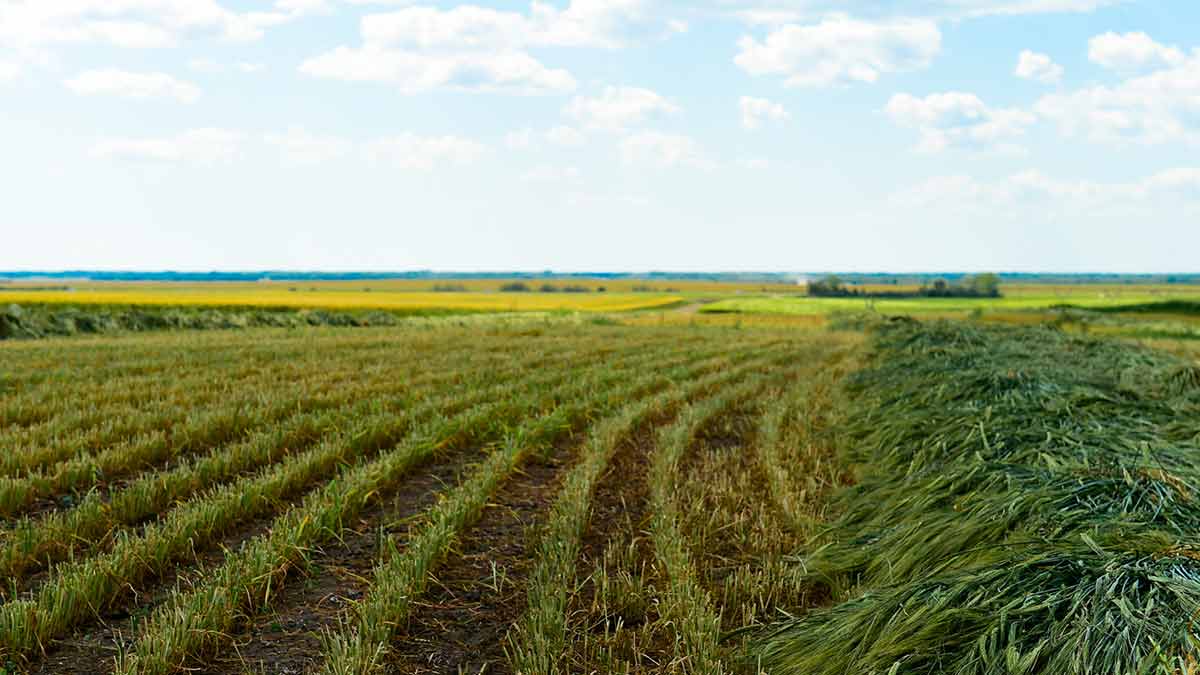
If you have driven past a field in late summer or fall and seen long, even rows of cut crops lying on the ground, you have seen swaths. Swaths (also called windrows) are a step between standing plants and the combine that eventually picks up and harvests the crop.
On many Canadian farms, swathers are used to cut crops, then lay them in swaths to dry and even out plant maturity before harvesting with a combine. Swathing can help farmers manage harvest timing and reduce certain quality risks. Swathing is one of the behind-the-scenes decisions that can influence the quality of the canola oil, flour, cereal, pasta or other foods that begin in Canadian fields.
What are swathers and windrowers?
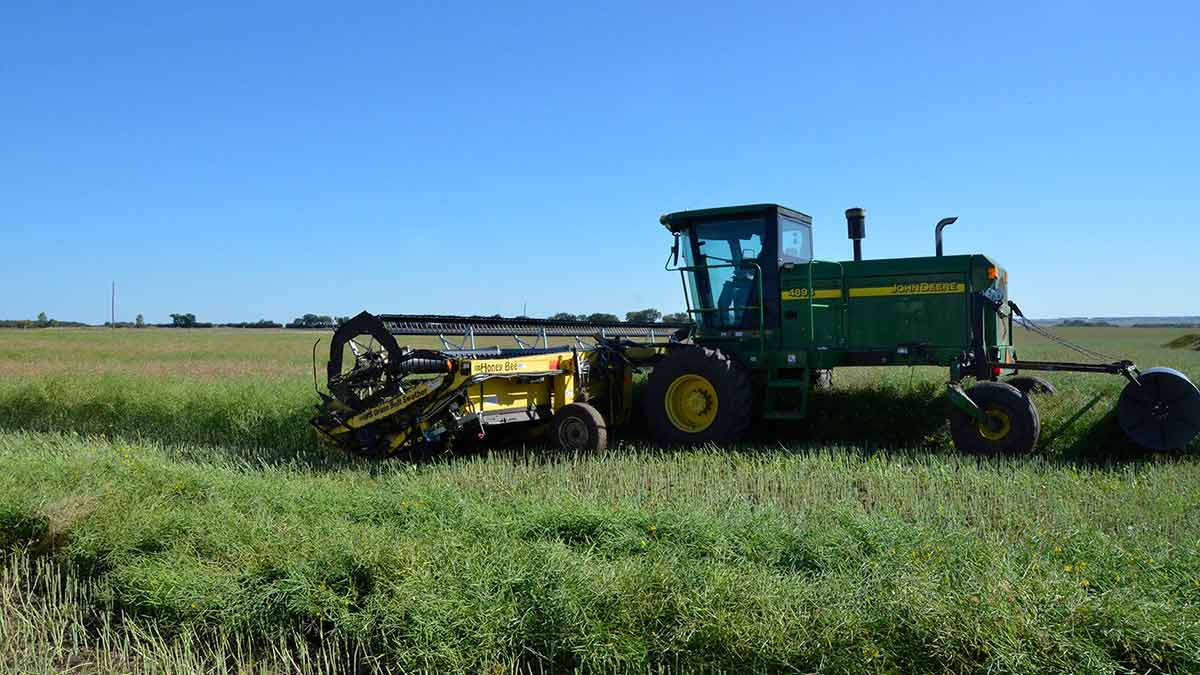
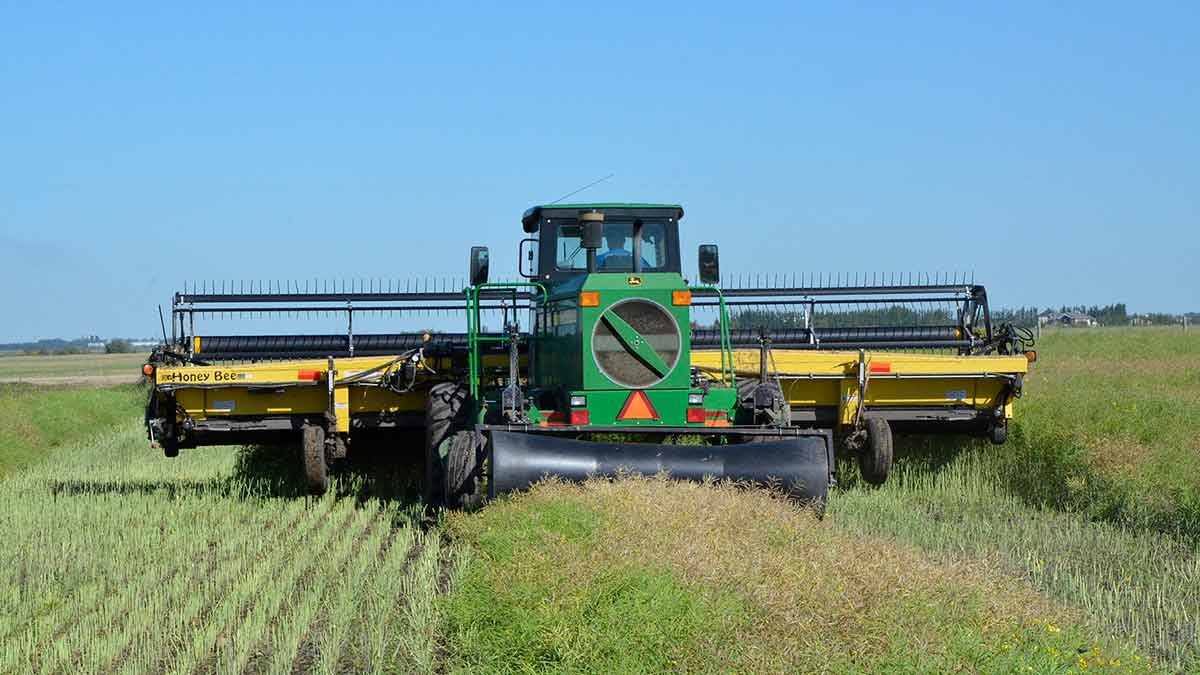
Swathers, or windrowers, are machines that cut standing crops and lay them in a continuous row, known as a swath or windrow, on top of the remaining crop stubble. A front attachment on the swather, called a header, cuts and gathers the crop. You’ll probably notice the rotating reel that helps to sweep the cut crop onto rubber belts that then deposit the crop to form a uniform row in the field. Later, a combine fitted with a pickup header lifts the dry swath (windrow) and separates the seed from the straw and chaff.
Swathing is common when harvesting canola and may also be used for wheat, barley and oats in particular regions and growing seasons. It gives farmers an extra option for managing uneven crop maturity, lodging (when the crop is lying on the ground), dry-down, and weather risk. Farmers may decide not to swath a crop and instead direct-cut, or straight-cut combine, crops while they are still standing. The farmer’s choice depends on the crop variety, plant maturity, field conditions, equipment available, and the weather.
Food Quality and Safety
Do swathers make grains and oilseeds “safer”?
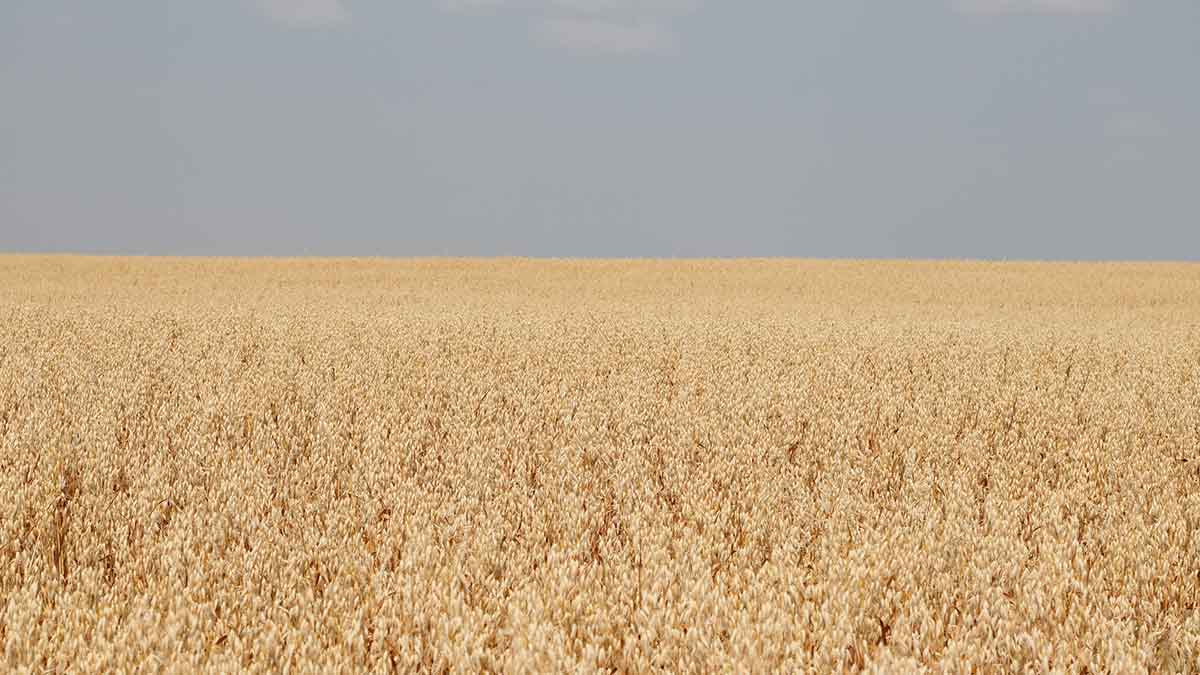
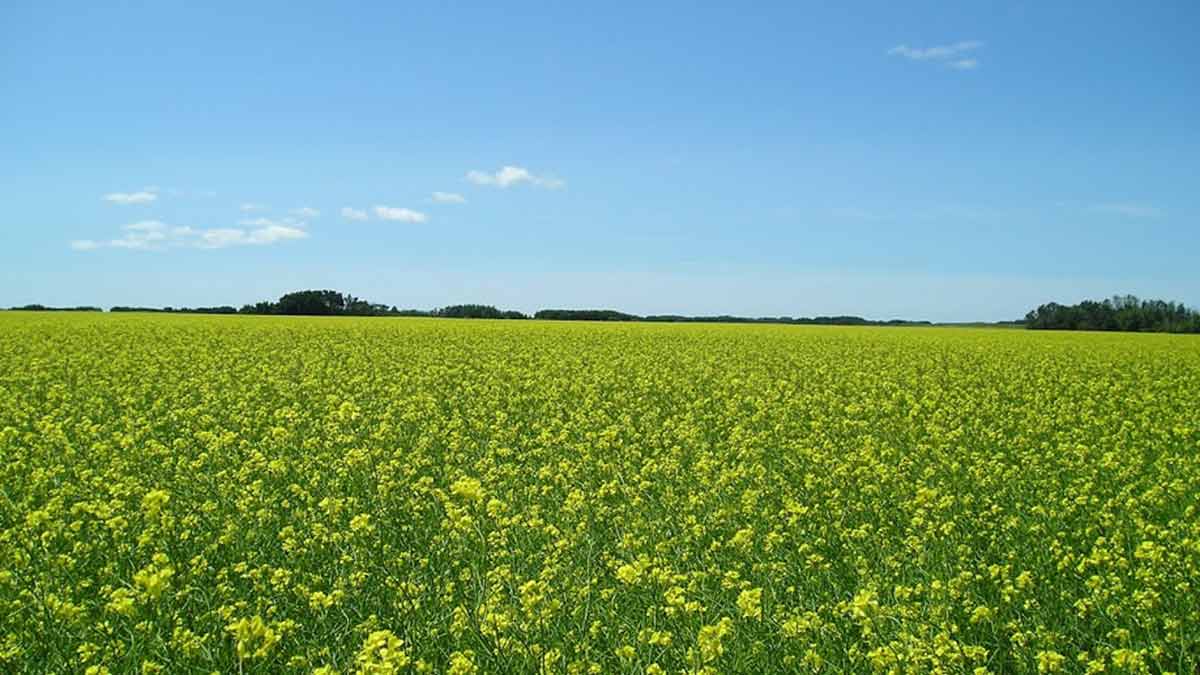
Swathers do not replace food-safety controls, inspection, or grading. Swathers can help farmers manage crop maturity and quality before the crop enters the rest of the food system. For canola, cutting at the right crop maturity can reduce the chance of high green-seed counts and this improves seed quality, which also supports canola oil quality. For oats, farmers may choose swathing to even out the maturity of the crop and reduce the possibility of mature oat seeds shelling out in the wind. This allows a more uniform crop to be harvested.
Do swathers change inspection or grading standards?
No. Oilseed and cereal crops must still meet the applicable quality and safety requirements established through the supply chain. Swathing is simply a harvest-management tool. Swathing can give a crop a better opportunity to mature and dry evenly before it is harvested with a combine or help meet grain contract requirements.
Can swathing too early cause problems?
Yes. Seeds that are still soft and easily crushed have not finished filling and will not continue developing after the crop is cut. That is why farmers examine seeds or grains from several areas of the field before deciding when to swath. If a cereal crop is swathed and a prolonged period of rain occurs, this can often result in seeds sprouting, thus reducing the quality of the crop.
Crops From Farm to Table




Efficiency and Affordability
How do swathers help with harvest efficiency?
Swathing allows farmers to cut a crop ahead of combining and begin dry-down in the swath (windrow). Swathing can be a useful harvest management tool to help spread out harvest work across more days and help the combine move steadily when the crop is ready. Many farmers use a mix of swathing and straight-cutting (combining the crop while it is still standing) to balance labour, equipment capacity and harvest timing.
What does swathing have to do with food prices?
When farmers can protect crop yield and quality, they make better use of the seed, fertilizer, land, fuel and labour already invested in that field. Avoiding preventable loss supports efficiency at the farm level.
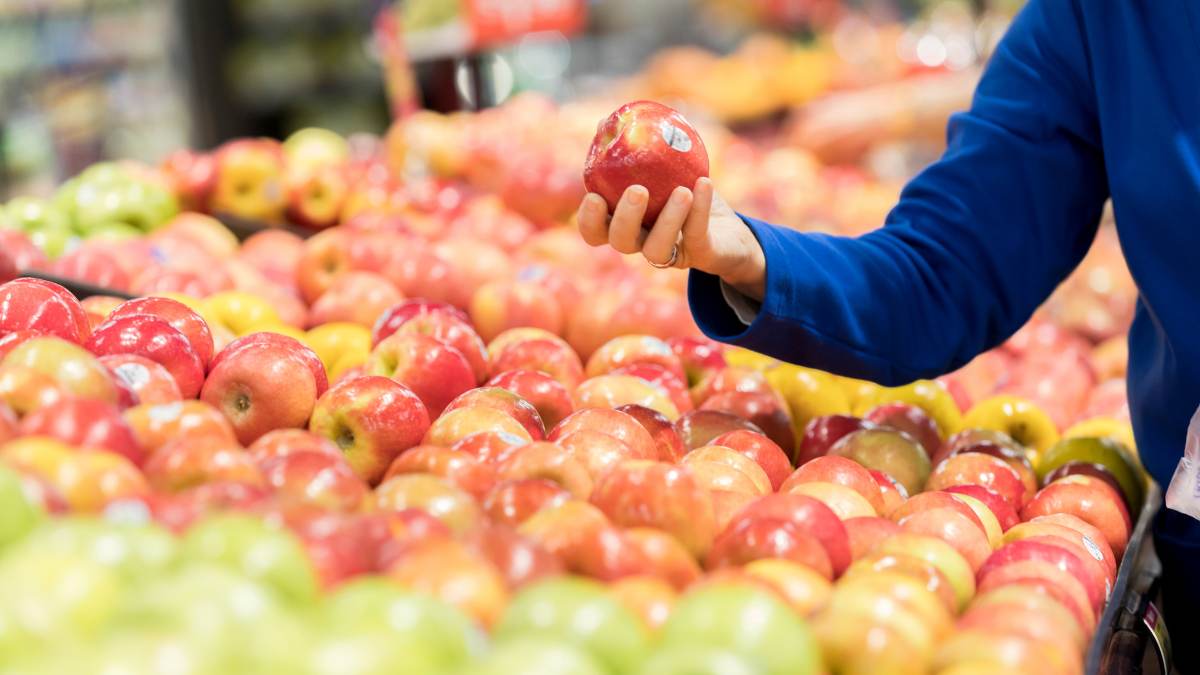
Harvest equipment is only one factor in what Canadians pay at the grocery store. Processing, transportation, energy, retail costs, global supply and demand, and many other forces influence retail prices. But recovering more usable crop from the same field supports a steadier, more efficient grain and oilseed supply.
Does every farm use swathers?
No. Some farmers swath crops, some straight-cut crops, and many use a combination depending on field conditions. Straight-cutting may suit fields with even crop maturity or oilseed varieties with pod shatter tolerance. Swathing may be preferred where crop maturity is less even, where lodging (when the crop is lying on the ground) is a concern or where it helps the farm manage its harvest capacity.
Learn More About Grocery Costs and Food Affordability



Sustainability and the Environment
Can swathing reduce harvest loss and waste?
It can, when it is used at the right time and in the right conditions. Properly timed swathing results in less green seeds in pods, as cutting the plant allows for even maturity. This then reduces the possibility of down-graded canola.
Farmers assess maturity, crop density, pod condition, weather, and their harvest schedule to choose the approach that best manages risks.
Does swathing affect soil or leftover crop?
No. Swathing temporarily concentrates cut crops in rows while stubble remains standing between them. Once the combine picks up the swath and harvests the seed or grain, the leftover straw and chaff are managed according to the farmer’s harvest and next-season seeding plan.
The farmer’s choice to swath or straight-cut a crop is typically part of a bigger system that considers crop residue, erosion protection, field traffic and the following crop. There is no single approach that is best for every Canadian field or season.
Learn More About Soil Health and Sustainability on the Farm
Farmer Health and Well-Being
How does a swather change harvest work?
Swathing adds an equipment pass to the harvest process, but it can help farmers spread the work of cutting and combining across a challenging season. That can be valuable when weather windows are narrow or when crop maturity varies across fields.
Modern swathers commonly have enclosed cabs, displays, lighting and controls designed for long workdays. They are large machines that need maintenance, careful transport, and a rested, attentive operator. Harvest planning remains important because adding a swather also means adding another machine to operate and move.
Are there safety considerations?
Yes. Swathers have moving knives, belts, rollers and other components that can be hazardous during servicing or when clearing a crop blockage. Canadian occupational-safety guidance advises operators to stop the engine, disconnect the power source and wait until all moving parts have stopped before servicing, cleaning, adjusting or unclogging machinery. Guards and shields should stay in place during operation.
Moving extra wide equipment between fields also requires care. Swathers have lights and reflectors, and where appropriate, can use a pilot vehicle during field changes.
Why does this matter to shoppers?
When farmers have tools to manage harvest timing, they can make careful decisions rather than rushing a crop or equipment operation under pressure. Safe and well-planned harvest work supports the people growing food and helps maintain a reliable supply of grains and oilseed products.
Common Questions
Why cut crops and leave them in rows instead of combining them right away?
A swather cuts the crop and places it in a swath (windrow) so it can cure and dry evenly before the combine picks it up and harvests it. For some crops and conditions, this can help manage maturity differences, harvest logistics, pod shattering risk, and weather uncertainty.
Does swathing always mean an earlier harvest?
Not necessarily. Cutting a green, immature crop does not automatically make it ready sooner. For example, swathing canola too early can lengthen curing time and lower yield and quality. At the right maturity stage, swathing can help align dry-down and, in some cases, allow combining earlier. Also, swathing a crop before a rain means it will take more time for that crop to dry because it is bunched together. Standing crops will dry faster after the rain.
Are swaths vulnerable to wind or rain?
They can be. Strong wind can move or roll swaths (windrows), while heavy rain can delay dry-down. Farmers weigh these risks against the risks of leaving a crop standing, which can include lodging (crop lying on the ground), pod shattering or late-season weather damage. Cutting height, swath formation, crop condition and the weather forecast all factor into the decision.
What Canadian Experts Say

Clinton Monchuk
Grain Farmer, Monchuk FarmsTake-Away for Grocery Shoppers
- Swathers are pre-harvesting tools that cut crops into rows so they can cure before combining.
- In canola, well-timed swathing can support maturity, yield, oil quality, and lower green-seed counts.
- Farmers decide whether to swath or straight-cut based on the crop, field conditions, weather and harvest capacity; neither choice is automatically best in every situation.
- Careful machinery operation, planning and safety practices help protect the people responsible for bringing Canadian crops from field to food.
Learn More About Farm Equipment

 Roasted Sweet Potato & Lentil Dip