
Astronauts travelling to Mars will not be able to stop at a grocery store. Food supplies will be costly to transport, growing space will be limited, and waste material can’t be hauled away.
With so many constraints, space is a demanding laboratory for food innovation. In preparation for space missions, Canadian researchers and entrepreneurs are developing technologies that will also produce nutritious food more efficiently here on Earth.
One example began with a farm kid and an idea he nicknamed “space bacon.”
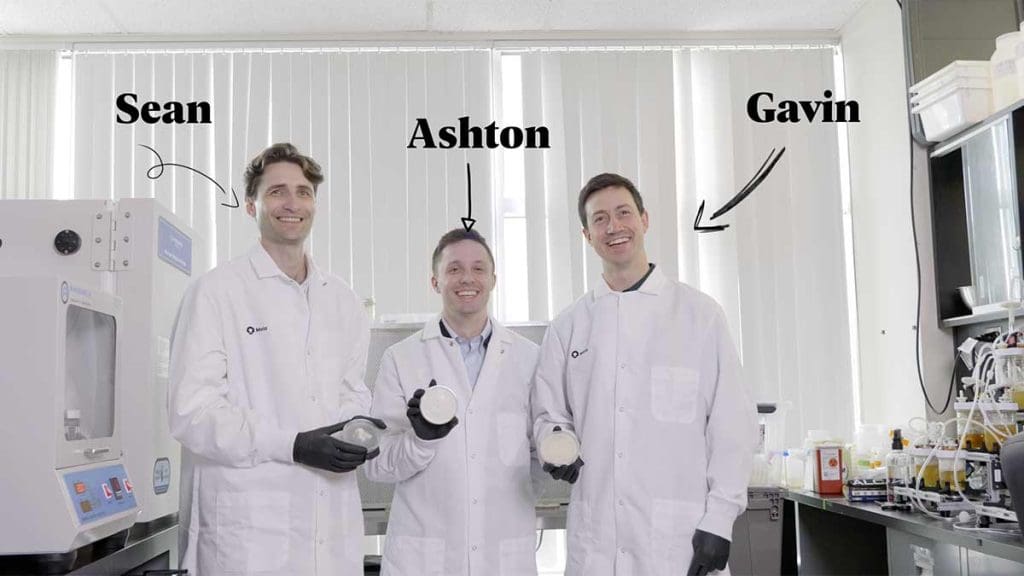
In 2014, Gavin Schneider was harvesting canola on his family’s southern Alberta farm late at night. Looking at the stars from the combine, he stopped to write a poem called Astronaut Farmer.
“My future just unveiled itself to me,” Schneider recalled during a 2026 Ag-West Bio presentation in Saskatoon. “I wanted to become the world’s most sophisticated food producer.”
Schneider worked in many areas of agriculture. He visited advanced greenhouse operations and began thinking about what else could be done with indoor growing space, beyond producing more vegetables. “What the world really needs,” he concluded, “is better protein production systems that can happen year-round and indoors.”
Going to space
In 2020, the Canadian Space Agency announced the Deep Space Food Challenge, a competition seeking new ways to produce nutritious, appealing food for long space missions. Successful methods would need to use minimal water and energy and create very little waste.
Schneider connected this challenge to his “astronaut farmer” ideas and sketched a compact food-production system on a napkin. It included strawberries, tomatoes, lettuce, and an unknown product he labelled space bacon.
“I didn’t really know how I was going to make this space bacon,” he admitted. But he knew he needed to find a way to make edible protein under space-type constraints.
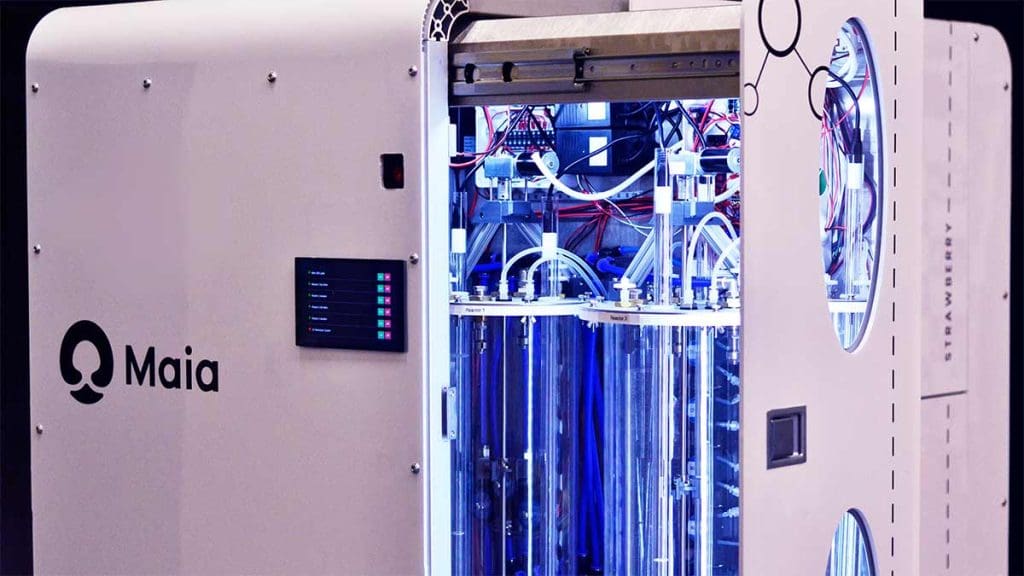
Schneider’s solution was mycelium – the network of root-like threads that form the base of a fungus. Mycelium can be produced through fermentation and turned into a protein-rich food ingredient. This solution eventually led to Maia Farms and became one component of CANGrow, a modular indoor food-production system.
To manage the waste produced by the system, CANGrow worked with Lomi, a British Columbia company that makes countertop systems for processing food scraps. Lomi’s technology reduced the volume of leftover plant material and created biomass that could be used to grow mushrooms.
“You actually have a fully integrated closed-loop system,” Schneider said, describing one of the features that appealed to the Canadian Space Agency.
The final prototype of CANGrow, led by Vancouver-based partner company Ecoation1 Innovative Solutions, won the Canadian Space Agency prize in April 2024. The system was smaller than two cubic metres and could produce more than 700 kilograms of food annually.
From “space bacon” to everyday food
Maia Farms is now applying what it learned in solving the space challenge to developing commercial food ingredients. The objective is not to persuade consumers to abandon familiar meals for futuristic space rations. It’s to make foods people already enjoy more nutritious or resource efficient.
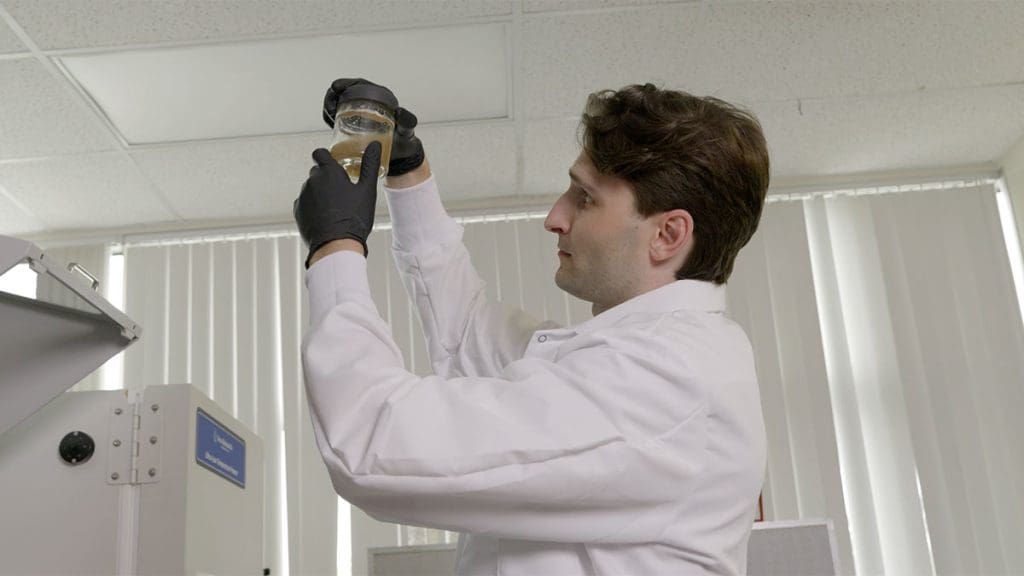
Maia’s fermentation process uses agricultural sidestreams, plant material left over after processing, transforming lower-value resources into higher-value mushroom-based ingredients that can be added to familiar foods. Adding pea protein to the mix resulted in a product with the taste and texture they were looking for.
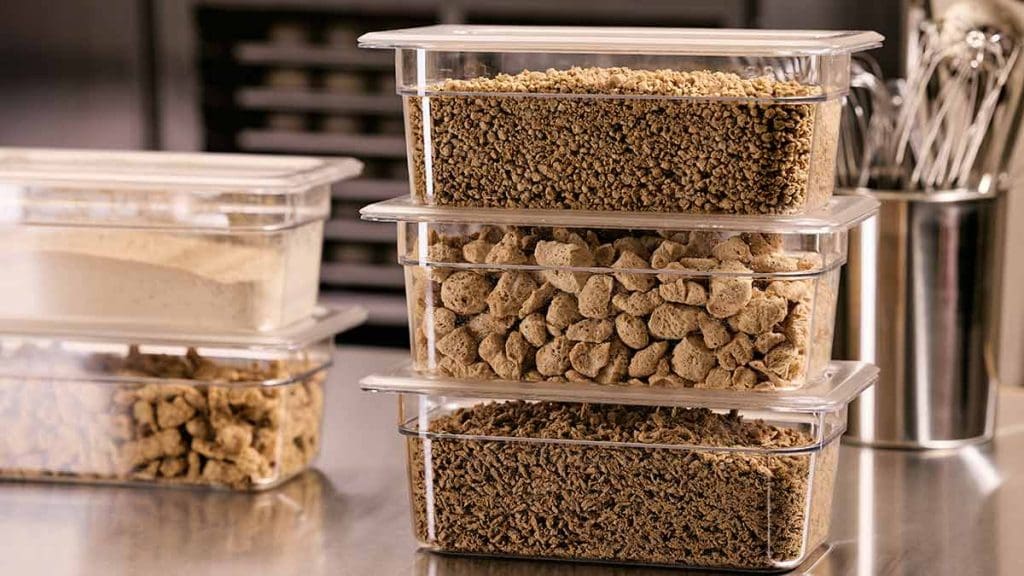
The company’s current product line include Maia Flour, a finely milled mushroom ingredient, and Maia Form, made from oyster mushrooms and peas. Maia Form contains approximately 66 per cent protein and is produced in ground, bites, strips and shred formats.
These products are manufactured on the prairies, where the peas can be sourced locally, and the Saskatchewan Food Centre in Saskatoon has the necessary equipment, technology, and expertise. Maia’s headquarters and lab operations are still in Vancouver, but as the company grows, they will increase production in Saskatchewan.
Maia has launched products with about 20 different food manufacturers. Burnaby-based Kula Foods uses Maia’s products to replicate the taste of beef, chicken, and goat in frozen, plant-based Afro-Caribbean dishes. In California, Butter Baked Cake Co uses Maia’s products to add moisture and nutrients to its gluten-free chocolate cupcakes. Sprague Foods adds Maia’s ingredients to its canned soups and chilis. Now Maia is working with food banks, where products like Maia’s that do not need refrigeration are particularly welcome.
The kingdom of fungi
Fungi occupy a unique biological space, sharing some characteristics with animals and some with plants. We are only just beginning to discover and name the millions of types of fungi on the planet, but they have been playing a crucial role in our food systems for centuries. Yeast are fungi that make dough rise and turn sugar into alcohol for wine and beer. Mushrooms are fungi we eat. Moulds are fungi that help make cheese.
For Schneider, fermentation is foundational to the future of food. “In the last 60 years, there’s been tremendous development in plant agriculture and row-crop production and greenhouse production,” he says. “We’re just at the beginning of applying these same technical thought patterns, science, engineering and discovery into the world of fungi.”
Schneider sees limitless potential in this line of research. “We’re at the early stages of what we can do with this type of organism,” he says. Schneider believes fungi can provide nutrient-dense foods and contribute to global food security, all while tasting good. “People want to chew and they want to bite and they want to feel full.”
The future
None of this means conventional agriculture is being replaced. CANGrow itself combined several kinds of innovation: crop genetics, greenhouse production, hydroponics, fermentation, waste processing and agricultural feedstocks. Each piece built on generations of farming and food-production knowledge.
Adding space just raised the stakes. When every litre of water, watt of electricity and gram of waste matters, researchers are forced to reconsider how all the pieces fit together.
Those ideas may one day help feed people on the moon or Mars. Their more immediate destination, however, could be an ordinary kitchen here on Earth.
Gavin Schneider describes how it feels to be at the forefront of these developments. “It’s like strapping yourself to a rocket ship. You know the general direction that this is going, but you don’t know what turns it’s going to take.”
Additional Articles to Explore







 Swathers: How Pre-Cutting Crops Helps Manage Harvest