

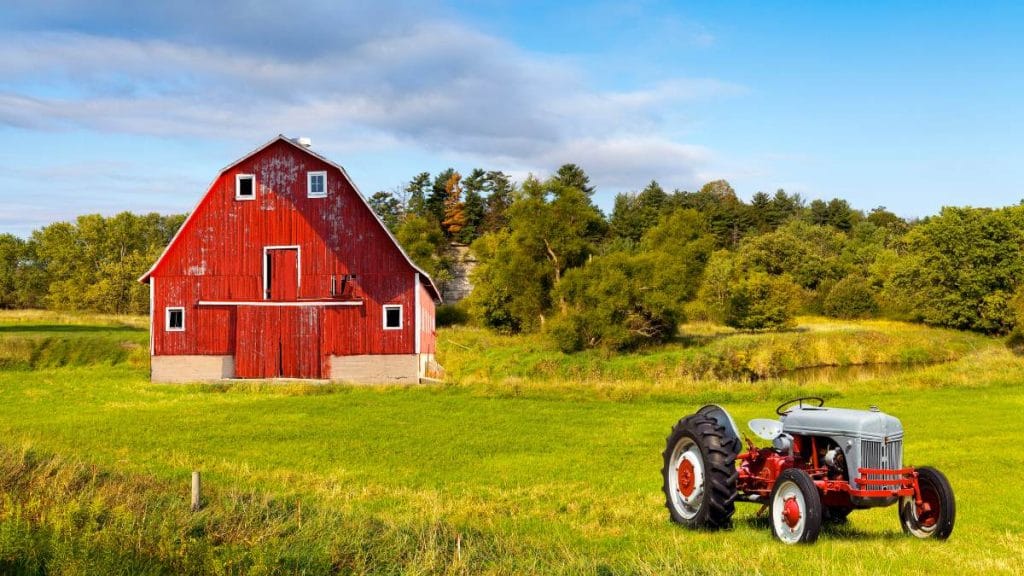
American Gothic, a red barn, or a small tractor without a cab are no longer the images that truly represent today’s farming in Canada. Many of the images and ideals we have of Canadian farmers have not looked like this for some time. So, what does a farm look like today in Canada?
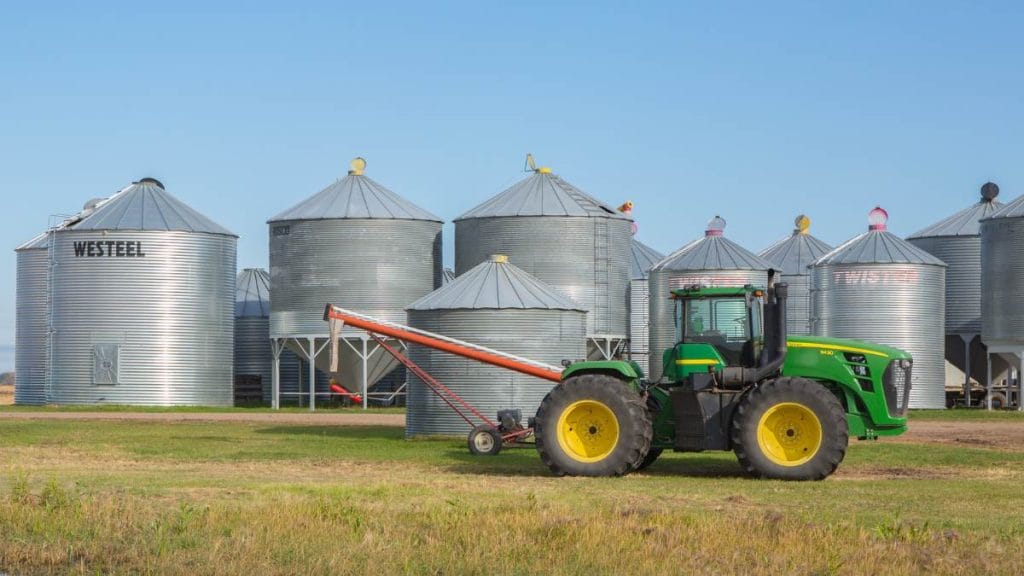
Farms come in all sizes and shapes, representing a large variety of commodities. But what is pretty apparent is that it takes a lot of hard work to make a living. It is not an easy or fast get-rich system. While most farms include a truck and big machinery/buildings/storage, it doesn’t mean they are rich. According to the 2021 Canadian Census, 54% of Canadian farms had operating incomes of less than $50,000. Of the 262,045 farms in operation across the country, less than a third (32%) saw incomes of $50K-<$100K, 12.5% operated at $100k-<$250K, and only 1.5% of all farmers in 2021 reported operating incomes greater than $250K. Many wrongly think farming is a simple life, but when fewer than 14% of all farm operations are bringing in incomes greater than $100K, this just signals that farmers work hard for the profits they do see. And most farms support several family members, if not multiple families.
Crops, Animals, and Horticulture
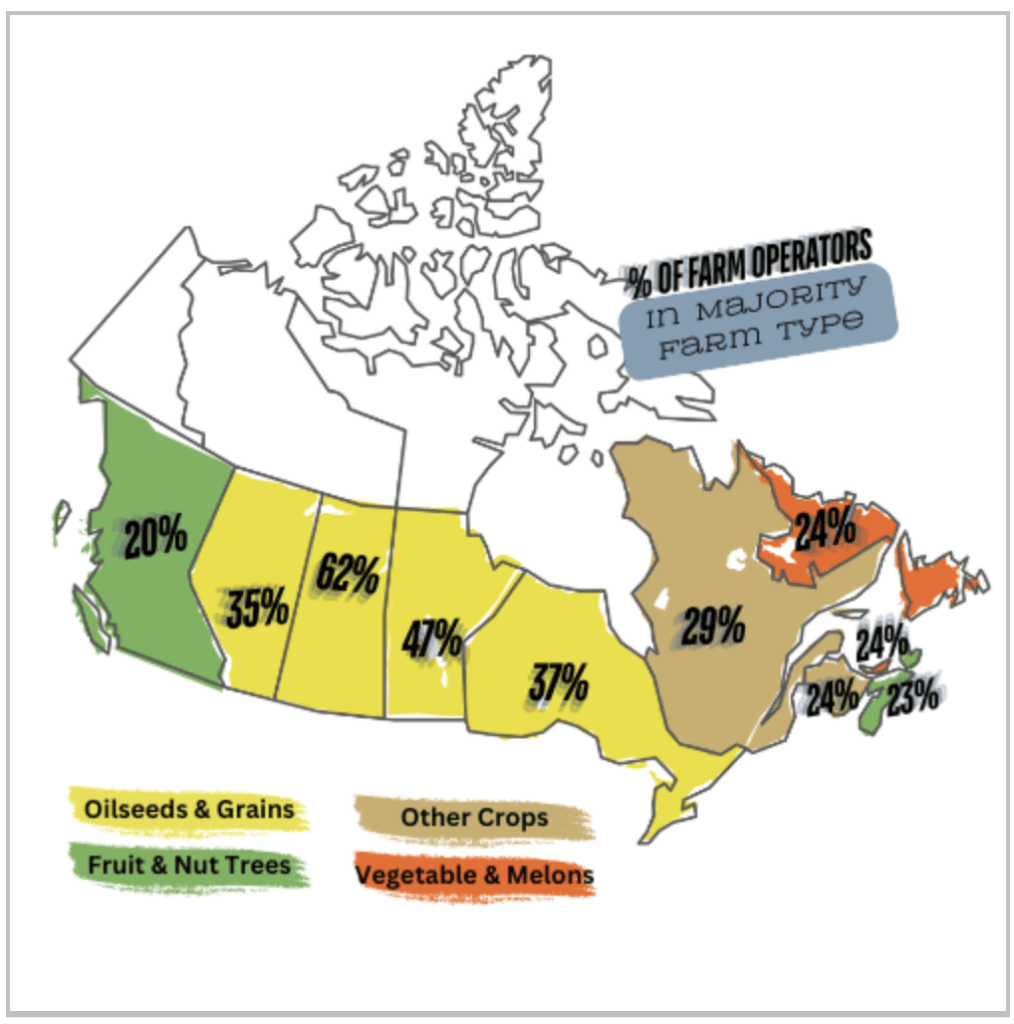
It is not all crop production here; we are a large nation with a diverse production of farming. The larger proportion of crop farms in 2021 were oilseed and grain farms, accounting for a third, and 16% were attributed to be of ‘other crop farming’. Livestock represents 40% of farm operations; 19% in beef cattle production, 8 % in other animal production (more niche livestock like bison and llamas), 6.3% in dairy cattle and milk production, and the remaining being a mix of hog, poultry, and sheep farm operations. The last 10% of our farming operations account for fruit and tree nut farming (4.3%), greenhouses and nurseries (3.2%), and vegetable and melon farming (3%), all of which are in Ontario, Quebec, and BC. With the changing climate, who knows what the future holds for the distribution of farm types. Greenhouse production may grow, or we may see orchards exiting the market.
What does a farmer look like
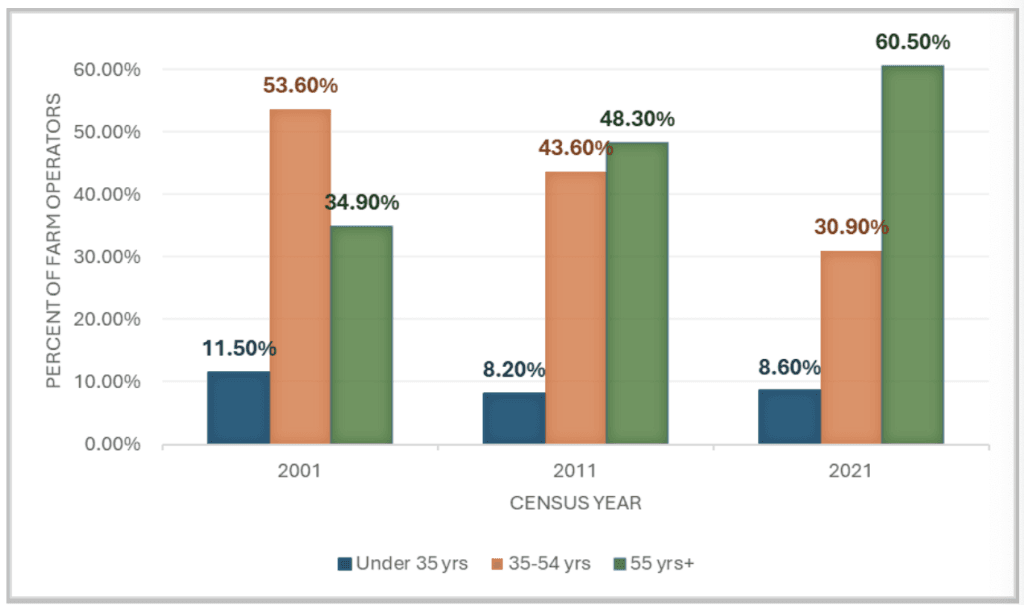
On paper, farmers have not changed all that much, according to the census: they are male and middle-aged. Over the past 20 years, male representation in the farming census has been declining, whereas the average age of the reporting farm operator is on the incline, at 56 years young in 2021. While the consumer may picture an older male farmer being the person operating the farm, we also know that many of these farms are run and operated by multiple persons, perhaps in a family, co-op, or corporation, in which multiple generations and both genders are making decisions.
What we don’t see often in the image of farming is the support system. While there is farming as a business, there is also the farming lifestyle. They often get combined, as for many farms in Canada, the farm life requires its operators to also receive payment from non-farm work (47%). This does not account for the financial support of family members who also work off-farm to help support the farming lifestyle. Yes, many farms have fancy new combines or have funds to have a hired hand, but that does not mean they are rolling in the cash. It just means they have evaluated those expenses as needs for their operations. In 2022, Statistics Canada reported that the average operating expenses of a farm had increased 13.6% from the year before, now costing over $575,000. Farmers, whether they have crops, animals, horticultural commodities, or processing, often require a lot of capital investment, risk management, inputs which they are price takers of, transport, and face the lowest prices of the market system. In 2022, the average gains of revenue over expenses varied widely amongst the commodities, with beef production averaging 4% more in revenues over expenses, while oilseed and grain farmers were able to secure 28% more in revenues.
The scales of farming
When looking specifically at farms which grow on arable Canadian soil, crop production and pasture land, the average area farmed in 2021 took place on 809 acres. In Western Canada, the prairie provinces represent the larger scale of production area, averaging 1,184 acres in Alberta, 1,766 in Saskatchewan, and 1,177 acres in Manitoba. Only 17.7% of farmed land is greater than 1,120 acres in Canada, whereas more than 14% of the farmland is operated on less than 70 acres.
Farming has always been viewed as a family business, but on paper, it’s still, by the majority, a sole proprietorship. However, there has been a declining number operating as sole proprietors, down 7% in the past 20 years to 51%. In contrast, family corporations have nearly doubled from 2001 to 2021 to 23%. Over this period, we have also seen the overall number of farm operations decrease by 23%.. This is a result of operators selling to other businesses, and may also be thanks to family farming and succession planning, which has allowed a farm to stay in a family and move from sole owners to incorporated.
Family corporations since 2001 have grown by fifty percent in farm numbers, and represent 23% of the farms utilizing Canada’s arable land in 2021. There are benefits to incorporation, especially when there is more than one operator or multiple generations. These include income splitting, estate planning, tax deductions and deferrals, and capital gains exemptions. Of course, there are disadvantages as well, but as farming is difficult to enter, incorporation makes it a smoother transition for those already in the family business.
Imagine a farm today
Today, farming can be a small family farm; an older gentleman with a fancy tractor; a young couple who rents the majority of their land from the older neighbour; a greenhouse for fresh herbs directly to restaurants; or it could be an incorporated farm with multiple generations of operators, who have crops and livestock, and a seed cleaning plant on the side. The image of today’s farmer is not one stock image. Farming is a broad topic, with different faces, scales, and commodities. One thing that we can generalize about today’s farms is that it is a lot of work!
Find more articles about science, sustainability, and innovations in food and agriculture from Savannah and colleagues at the SAIFood Blog.



 Oats & Well-Being: Frequently Asked Questions